Joseph Bazalgette and the Transformation of London's Sewerage
The modern infrastructure of London owes much of its existence to the vision and persistence of Joseph Bazalgette. Born into a family of rising social status, Bazalgette combined a rigorous engineering education with a determination to solve one of the most pressing public health crises of the Victorian era: the contamination of the capital's water and air.
Early Life and Professional Foundations
Bazalgette was born at Hill Lodge, Clay Hill, Enfield. He was the son of Theresa Philo and Joseph William Bazalgette, a retired Royal Navy captain. His family's wealth was established by his grandfather, Louis Bazalgette, a French economic migrant from Ispagnac in Lozère. Louis had risen to prominence as the principal tailor to the Prince of Wales (the future George IV), providing a stable financial foundation for the family.
In 1827, the family relocated to a new home in Hamilton Terrace, St John's Wood, London. Bazalgette began his professional journey as an apprentice to the renowned engineer Sir John Macneill. Through his work on various railway projects, including assignments in Ireland and China, he gained critical expertise in land reclamation and drainage. This experience allowed him to establish his own consulting practice in London by 1842.
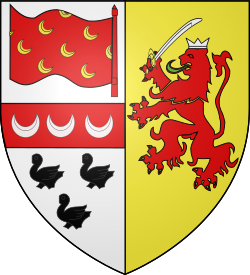
The early years of his independent practice were marked by intense labor. After marrying Maria Kough of County Kilkenny, Ireland, in 1845, Bazalgette focused heavily on the expansion of the railway network. This relentless workload eventually took a toll, leading to a nervous breakdown in 1847.
The Crisis of Victorian London
While Bazalgette recovered from his illness, London faced a burgeoning sanitary disaster. In 1847, the Metropolitan Commission of Sewers mandated the closure of all cesspits, requiring house drains to connect directly to sewers that emptied into the River Thames. Rather than solving the problem, this move contributed to a devastating cholera epidemic in 1849, which claimed 14,137 lives.
Bazalgette entered public service in 1849 as the Assistant Surveyor to the Metropolitan Commission. By 1852, he ascended to the role of Engineer following the death of his predecessor, who had succumbed to "harassing fatigues and anxieties." Shortly after his appointment, another cholera outbreak in 1853 resulted in 10,738 deaths.
The Battle of Medical Theories
At the time, the medical establishment believed in miasma—the theory that diseases like cholera were caused by "foul air" or noxious smells. While physician John Snow proposed the correct theory—that cholera was spread via contaminated water—his findings were not widely accepted by the authorities of the day.
The Great Stink and the Engineering Revolution
Bazalgette's career reached a turning point in 1856 when, with the support of the legendary engineer Isambard Kingdom Brunel, he was promoted to Chief Engineer of the Metropolitan Board of Works (MBW). He held this influential position until the MBW was replaced by the London County Council in 1889.
The catalyst for systemic change arrived in 1858 during the "Great Stink," a period of extreme smell from the polluted Thames that disrupted the city. In response, Parliament passed an Enabling Act to fund a massive overhaul of the city's infrastructure. Despite the colossal expense, Bazalgette's plans to revolutionize the sewerage system were implemented. The primary goal was to use enclosed sewers to eliminate the miasma, which officials believed would end the cholera epidemics.
Key Facts
- Family Origin: Grandfather Louis Bazalgette was a French migrant and tailor to the Prince of Wales.
- Early Training: Articled to Sir John Macneill; specialized in railway projects, land drainage, and reclamation.
- Public Health Toll: Cholera epidemics in 1849 and 1853 killed 14,137 and 10,738 Londoners, respectively.
- Key Appointment: Chief Engineer of the Metropolitan Board of Works from 1856 to 1889.
- The Great Stink: The 1858 event that prompted Parliament to pass the Enabling Act for a new sewer system.
| Year | Event/Milestone | Impact/Context |
|---|---|---|
| 1842 | Established consulting practice | Applied expertise in drainage and reclamation. |
| 1847 | Nervous breakdown | Result of overwork on railway expansion. |
| 1849 | Appointed Assistant Surveyor | Joined the Metropolitan Commission of Sewers. |
| 1852 | Became Engineer | Took over the Metropolitan Commission. |
| 1856 | Promoted to Chief Engineer | Led the Metropolitan Board of Works. |
| 1858 | The Great Stink | Led to the Enabling Act for sewerage revolution. |
Frequently Asked Questions
What was the "miasma" theory?
Miasma was the prevailing medical belief that diseases such as cholera were caused by inhaling foul-smelling air emanating from decaying organic matter.
Who was John Snow in the context of London's sewers?
John Snow was a physician who correctly identified that cholera was spread through contaminated water, though his theory was ignored in favor of the miasma theory during Bazalgette's early career.
What was the "Great Stink" of 1858?
The Great Stink was a period of intense smell caused by untreated human waste in the River Thames, which eventually forced Parliament to fund Bazalgette's comprehensive sewerage project.
How did Bazalgette's early career prepare him for his work in London?
His apprenticeship under Sir John Macneill and his work on railway projects in China and Ireland gave him essential experience in land drainage and reclamation.
Which organization did Bazalgette lead for over 30 years?
Bazalgette served as the Chief Engineer of the Metropolitan Board of Works from 1856 until its abolition in 1889.