Jose Antonio Bottiroli: The Legacy of an Argentine Composer and Poet
Jose Antonio Bottiroli (1920–1990) was a distinguished Argentine figure who bridged the worlds of classical music composition and poetry. Born and raised in Rosario, Argentina, Bottiroli spent his life alternating between the urban energy of his hometown and the serene retreat of Los Cocos in the Córdoba Province. His artistic journey was marked by a deep commitment to education, performance, and a stylistic evolution that spanned from folk influences to the sophisticated textures of Late Romanticism.
Key Facts
- Total Musical Works: 113 compositions, including 70 for piano and 12 symphonic works.
- Literary Output: 84 poems and various poetic writings.
- Defining Style: Transitioned from Argentine folk influences to Late Romanticism and early Impressionism.
- Most Notable Work: The Belgrano March-Song, the only musical work dedicated to General Manuel Belgrano.
- Education: Graduated from the National University of the Littoral in 1948.
Academic Foundation and Early Career
Bottiroli's formal musical education was shaped by his studies with Nicolás Alfredo Alessio. In 1948, he earned a professorship degree in music from the School of Professors No. 2 Juan María Gutiérrez at the National University of the Littoral. His academic excellence was recognized early on when he received the Rotary Club Award for the best music student.
Beyond his own compositions, Bottiroli was a versatile performer and conductor. As a pianist, he performed solo recitals and collaborated in chamber music with various artists, including violist Oscar Costa and soprano Gabriela Moner. He also demonstrated his leadership as the director of the Vocal Women's Sextet Juan María Gutiérrez, which later became the Sextet Loreley.
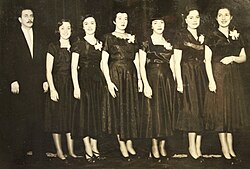
The Sextet Loreley brought Bottiroli's vision to prominent venues, including the Cervantes Theatre in Buenos Aires and Radio LR1 El Mundo. His conducting experience further expanded in 1951 when he led the Rosario Symphony Orchestra for the American premiere of Nicólas A. Alessio's Concerto for Oboe and Orchestra.
The Belgrano March-Song and Civic Contribution
One of Bottiroli's most enduring contributions to Argentine culture is the Belgrano March-Song, featuring lyrics by Ernesto Aturo Sánchez Queirolo. This piece holds a unique place in national history as the only musical work dedicated to General Manuel Belgrano, the creator of the Argentine flag.
The work gained official recognition in 1960 via decrees from the National Board of Education and the General Board of Education of the Santa Fe Province, leading to its integration into school repertoires. Furthermore, the City of Rosario declared it the official song of the city, specifically for ceremonies at the National Flag Memorial. The piece premiered on May 11, 1962, performed by the Military Institute Choir and the Infantry Regiment No. 12 General Arenales's brass band.
Musical Style and Artistic Evolution
Bottiroli's compositional style evolved through several distinct phases. His early works were heavily influenced by Argentine folk music, exemplified by pieces such as the Pequeña Suite Norteña B-2 and the choral work Carnavalito B-4.
As his style matured, he embraced Late Romanticism and early Impressionism (a style of music characterized by atmospheric colors and mood rather than strict structure). For his piano works, he utilized the Romantic microform to express personal subjectivity. His orchestral compositions were inspired by the symphonic poem narrative established by Franz Liszt, blending rich textures with atmospheric colors.
Summary of Artistic Output
| Category | Quantity/Detail | Notable Examples |
|---|---|---|
| Piano Works | 70 | Waltz in G-Major, Kirigami, Eros |
| Chamber Music | 23 | Trio for Wind Instruments, String Quartet |
| Symphonic Works | 12 | Small Northerner Suite, Ulises |
| Choral Works | 8 | Vidalita, Adiós Nonino (arrangements) |
| Poetry | 84 poems | Various poetic writings |
Teaching and Later Life
Bottiroli was deeply committed to pedagogy. He served as the Dean of the Normal School of Teachers No. 3 and the College Commerce General Belgrano of Rosario. His teaching reached a wide spectrum of society, from students at the National College No. 1 and Sagrado Corazón College to inmates at the City of Rosario prison.
In 1970, a scholarship from the Institute of Hispanic Culture allowed him to study in Europe. He spent time in Madrid and Barcelona before settling in Rome, Italy, where his Trio for Wind Instruments and String Quartet premiered. His complete musical works were later compiled and catalogued in 2011 by Fabio Banegas, and in 2020, Naxos released the world premiere of his complete piano waltzes.
Frequently Asked Questions
What is Jose Antonio Bottiroli most famous for?
He is most renowned for composing the Belgrano March-Song, the only musical work dedicated to General Manuel Belgrano, and for his extensive catalog of piano and chamber music.
Which musical movements influenced Bottiroli's work?
While he began with Argentine folk music, his primary influences were Late Romanticism and early Impressionism, often following the symphonic poem narrative of Franz Liszt.
How many works did Bottiroli compose in total?
Bottiroli composed a total of 113 musical works, consisting of 70 piano pieces, 23 chamber works, 12 symphonic pieces, and 8 choral works, in addition to 84 poems.
Where did Bottiroli study and teach?
He studied at the National University of the Littoral and later in Madrid, Barcelona, and Rome. He taught at various institutions in Rosario, including the National College No. 1 and the local prison.
When were his complete piano works released?
The world premiere of his Complete Piano Works 1: Waltzes was released by Naxos - Grand Piano in March 2020, performed by Fabio Banegas.