Jongno District: The Historic Heart of Seoul
Located in the center of South Korea's capital, Jongno District (Jongno-gu) serves as the cultural, political, and historical soul of Seoul. For over 600 years, this area has functioned as the city's core, evolving from the capital of the Joseon dynasty into a modern metropolitan hub. Often described as the "face and heart of Korea," Jongno seamlessly blends ancient royal palaces and traditional shrines with towering corporate headquarters and government ministries.
The district's name, which translates to "Bell Street," is derived from Jongno Road, the primary artery running through the area. This road is named after the Bosingak belfry, a historic bell pavilion that remains a landmark of the district.

Key Facts
- Role: The historic center of Seoul and a primary hub for Korean politics and economics.
- Major Landmarks: Home to Gyeongbokgung, Changdeokgung, and the former presidential residence, Cheong Wa Dae.
- Population: 138,879 residents as of September 2024.
- Area: Approximately 23.92 square kilometers.
- Political Status: Considered the most significant constituency in South Korean national elections.
History and Evolution
The prominence of Jongno began in October 1394 when King Taejo moved the capital of the Joseon dynasty from Gaegyeong to Hanyang (the historical name for the Seoul area). This move was driven by a combination of topography divination theory, military strategic advantages, and the logistical ease of transporting rice via water.
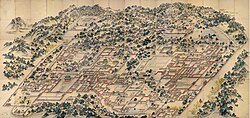
Following the relocation, the government prioritized the construction of key state symbols, including the Jongmyo shrine and the royal palaces of Gyeongbokgung and Changdeokgung. By the reign of King Sejong, Hanyang had grown into a major urban center with a population of roughly 200,000 people. This legacy of power continues today, as the district remains the center of government administration.
Politics and Governance
Jongno is widely regarded as the most politically influential district in South Korea. Until 2022, it housed Cheong Wa Dae (the Blue House), the official residence of the president. Because of its central location and symbolic weight, it is often the first constituency reported in national election statistics and exit polls.
The district has a history of electing high-profile leaders; three former presidents—Yun Posun, Roh Moo-hyun, and Lee Myung-bak—once represented Jongno in the National Assembly. While traditionally a conservative stronghold due to its wealthy residential areas like Pyeongchang and Samcheong-dong, the political landscape shifted toward the Democratic party in the 2010s, influenced by the student population of Sungkyunkwan University and residents of lower-income neighborhoods. However, recent elections in 2022 saw a return to the People Power Party, with Choi Jae-hyung elected as the National Assembly member and Chung Moon-heon as mayor.

Economy and Business
Beyond its historical significance, Jongno is a vital business district. Its central location attracts a high density of diplomatic missions and the headquarters of some of South Korea's largest conglomerates. Notable companies based here include SK Group, Lotte Group, Hyundai Engineering & Construction, and Kyobo Life.

The district also hosts critical government infrastructure. The Seoul Government Complex houses the Ministry of Security and Public Administration and the Ministry of Unification, while the Ministry of Foreign Affairs maintains its headquarters within the district.

Culture and Tourism
Tourism is a cornerstone of the local economy. Visitors flock to Gwanghwamun Plaza, which features iconic statues of King Sejong and Admiral Yi Sun-sin, as well as the restored Cheonggyecheon stream.

For those seeking traditional Korean culture, the district offers several immersive experiences:
- Insa-dong: A neighborhood famous for traditional art galleries and crafts.
- Bukchon Hanok Village: A preserved residential area featuring traditional Korean houses (hanoks).
- Gwangjang Market: One of the oldest traditional markets in Korea, attracting approximately 65,000 visitors daily.
- Jogyesa: The chief temple of the Jogye Order of Korean Buddhism.
District Overview
The following table summarizes the key administrative and demographic details of Jongno District.
| Category | Details |
|---|---|
| Total Area | 23.92 km² |
| Population (2024) | 138,879 |
| Population Density | 5,806/km² |
| Administrative Divisions | 19 Administrative Dongs |
| Time Zone | UTC+9 (KST) |
| Postal Codes | 03000~03299 |

Frequently Asked Questions
What does the name "Jongno" mean?
Jongno means "Bell Street," named after the Bosingak belfry located at the Jonggak intersection on the district's main road.
Which royal palaces are located in Jongno?
The district is home to several major palaces, including Gyeongbokgung (the main royal palace), Changdeokgung, Changgyeonggung, and Unhyeongung.
Why is Jongno considered politically important?
It is the heart of Seoul and was the site of the presidential residence (the Blue House) until 2022. It is viewed as a political bellwether, making it a highly contested constituency in national elections.
What are the best places for traditional shopping in Jongno?
Gwangjang Market is one of the oldest and most popular traditional markets, while Insa-dong is the premier destination for traditional arts and crafts.
Which universities are located in the district?
Prominent institutions include Sungkyunkwan University, Sangmyung University, and the Yeongeon Campus of Seoul National University.