Jokes: The Anatomy, History, and Evolution of Humour
At its core, a joke is a structured display of humour. Unlike general wit, a joke utilizes a specific narrative framework designed to elicit laughter, typically relying on a meaning that is not intended to be taken literally. Most jokes follow a familiar pattern: a story or dialogue that builds tension, culminating in a punchline—the final twist where the humorous element is revealed.
This revelation often employs linguistic tools such as puns (word play), irony, sarcasm, hyperbole (extreme exaggeration), or logical incompatibility. Linguist Robert Hetzron emphasizes that the essence of a joke lies in its climax; the tension must reach its peak at the very end, with no further explanation to relieve that tension.
While many jokes thrive on brevity—providing only the essential details needed to set the stage—some comedians find humour in subverting these rules. An example is the shaggy dog story, a type of anti-joke. These narratives are intentionally long-winded and rambling, only to end with a punchline that is intentionally disappointing or non-existent.
It is important to distinguish jokes from other forms of humour. While all jokes are humorous, not all humour consists of jokes. Non-verbal forms include situational humour, slapstick, practical jokes, anecdotes, and involuntary humour.
Key Facts
- Oldest Known Joke: A Sumerian proverb from 1900 BC (possibly as old as 2300 BC) featuring toilet humour.
- Structure: Typically consists of a narrative setup followed by a punchline that resolves tension.
- Oral Tradition: Jokes are among the few remaining forms of traditional folk literature transmitted orally in Western cultures.
- Anti-Jokes: Humour derived from the failure to provide a traditional punchline, such as the shaggy dog story.
- Academic Study: Jokes are analyzed across multiple disciplines, including linguistics, psychology, and anthropology.
The History of Humour in Print
Humour is as old as recorded history. Beyond the Sumerian proverb, one of the earliest surviving examples is found in the Westcar Papyrus from Ancient Egypt (c. 1600 BC). This joke asks how to entertain a bored pharaoh, suggesting a boatload of women dressed in fishing nets be sailed down the Nile to entice him to "catch a fish."
![The Westcar Papyrus, dating to c. 1600 BC, contains an example of one of the earliest surviving jokes.[5]](/images/27/63/27639a92ca64519d68cc6fa458eb6e85a9c8b1e18bf4154877543389d1330d3f.jpg)
Another early example is the "tale of the three ox drivers from Adab," a comic triple dating back to 1200 BC. This story involves three men disputing the ownership of a newborn calf. While the final punchline has not survived intact, fragments suggest the conclusion was bawdy in nature.
As literacy and printing evolved, jokes moved from oral tradition to anthologies. Early collectors and authors, such as Poggio Bracciolini, helped codify these narratives for a reading audience.

Joke Cycles and Classifications
In folklore, a joke cycle refers to a group of jokes that share a common theme, character, or structure. These cycles often reflect cultural stereotypes, social anxieties, or shared professional experiences.
Common examples of joke cycles include:
- Structural Cycles: Knock-knock jokes, lightbulb jokes, and riddle jokes.
- Character-Based Cycles: Blonde jokes, lawyer jokes, and "Yo Mama" jokes.
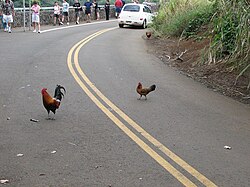
- Regional/Ethnic Cycles: Irish jokes, East Frisian jokes (Germany), and Essex girl jokes (UK).
- Event-Based Cycles: Jokes surrounding the Chernobyl disaster, the Challenger space shuttle tragedy, or the Persian Gulf War.
The Science and Study of Jokes
Because jokes intersect with so many human behaviors, they are studied by various academic fields:
Folklore and Anthropology
These fields view jokes as essential oral literature. In 1930, André Jolles identified jokes as "simple forms" of oral literature. They were significant enough to be included in the Aarne–Thompson index of anecdotes and jokes first published in 1910.
Psychology and Physiology
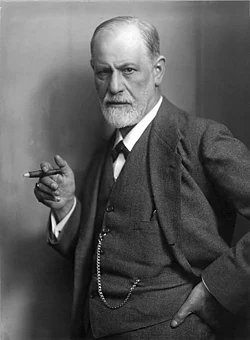
Researchers like Sigmund Freud have explored the psychological drivers behind humour. Modern science also investigates the physiology of laughter and the neural correlates of how the brain processes a punchline.
Linguistics and Computation
Linguists analyze the semantic and pragmatic structures that make a joke work. More recently, the field of computational humour has attempted to model these patterns to help machines understand or generate funny content.
Summary of Joke Types
| Type | Defining Characteristic | Example/Method |
|---|---|---|
| Standard Joke | Narrative setup + Punchline | Puns, Irony, Sarcasm |
| Anti-Joke | Subversion of expectations | Shaggy dog story |
| Joke Cycle | Recurring theme or character | Lightbulb jokes |
| Non-Verbal Humour | Physical or situational | Slapstick, Practical jokes |
Frequently Asked Questions
What is the difference between a joke and general humour?
A joke is a specific form of humour that uses a well-defined narrative structure and a punchline. Humour is a broader category that includes things like situational irony, slapstick, or involuntary funny moments that do not follow a story structure.
What is a shaggy dog story?
A shaggy dog story is a type of anti-joke. It features an extremely long, detailed narrative that leads the listener to expect a significant payoff, only to end with a punchline that is intentionally trivial or non-existent.
How old is the oldest known joke?
The oldest identified joke is a Sumerian proverb containing toilet humour, dated to 1900 BC, though some evidence suggests it may date back as far as 2300 BC.
What are joke cycles?
Joke cycles are groups of jokes that share a common subject or formula. Examples include "knock-knock" jokes or jokes targeting specific professions, such as lawyers.
Why do researchers study jokes?
Jokes provide insight into cultural values, social hierarchies, and the human brain's ability to process language and logic. They are also one of the few remaining forms of traditional oral folk literature in the West.