John Tradescant the Younger: The Botanist Who Shaped English Gardens
In the 17th century, the intersection of exploration and science gave rise to some of the most influential botanical collections in history. At the center of this movement was John Tradescant the Younger, a dedicated botanist and gardener whose expeditions to the New World and curation of rare specimens fundamentally altered the landscape of English horticulture.
Born on August 4, 1608, in Meopham, Kent, and educated at The King's School, Canterbury, Tradescant followed in the footsteps of his father, John Tradescant the Elder. Together, they pursued a passion for collecting rarities from across the globe, blending the roles of gardener, explorer, and curator.
Key Facts
- Role: Botanist, gardener, and curator of "The Ark."
- Major Contribution: Introduced American species like magnolias, bald cypress, and tulip trees to England.
- Royal Service: Served as head gardener to King Charles I and Queen Henrietta Maria.
- Legacy: His collection formed the core of the Ashmolean Museum in Oxford.
- Botanical Identifier: The standard author abbreviation Trad. is used for species he described.
Expeditions to Virginia and Botanical Discoveries
Between 1628 and 1637, John Tradescant the Younger undertook collecting expeditions to Virginia. While some historians debate whether he made two additional trips by 1662, his impact on English gardens is undeniable. He brought back a variety of seeds and plants that were previously unknown in Europe.
Among his most significant introductions were great American trees, including magnolias, bald cypress, and the tulip tree. He also introduced garden favorites such as phlox and asters. In literary accounts, such as Elizabeth Goudge's 1958 novel The White Witch, he is specifically credited with introducing Michaelmas daisies (Aster amellus) to English gardens around 1632.
The Ark and the Musaeum Tradescantianum
Tradescant integrated his American finds into the family's famous cabinet of curiosities—a private museum of eclectic objects—known as The Ark. This collection was not limited to plants; it included diverse artifacts such as coins, weapons, costumes, and taxidermy. One of the most prized possessions was the ceremonial cloak of Chief Powhatan, a significant Native American relic.
The collection was housed on the Tradescant estate in Vauxhall, with South Lambeth Road serving as one of its boundaries. To document these treasures, Tradescant published the Musaeum Tradescantianum. The first edition was dedicated to the Royal College of Physicians, while the second was dedicated to the restored King Charles II.
Royal Service and the Ashmolean Legacy
Following his father's death, Tradescant succeeded him as the head gardener to King Charles I and Queen Henrietta Maria. From 1638 to 1642, he worked on the gardens at the Queen's House in Greenwich, a site designed by the architect Inigo Jones. His tenure there ended when the queen fled during the English Civil War.
The fate of the Tradescant collection remains a point of historical discussion. Tradescant bequeathed his library and museum to Elias Ashmole (1617–1692), though some accounts suggest Ashmole may have swindled the collection from him. Regardless of the circumstances, this collection became the foundation of the Ashmolean Museum in Oxford, where the Tradescant materials remain largely intact today.
Final Years and Commemoration
John Tradescant the Younger died on April 22, 1662, at the age of 53 in South Lambeth. He was buried alongside his father in the churchyard of St. Mary-at-Lambeth.
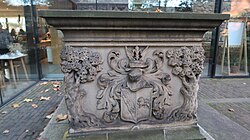
Today, the site of the deconsecrated church of St Mary-at-Lambeth has been established as the Garden Museum, continuing the botanical legacy of the Tradescant family.
Summary of John Tradescant the Younger's Life
| Category | Details |
|---|---|
| Lifespan | August 4, 1608 – April 22, 1662 |
| Education | The King's School, Canterbury |
| Key Locations | Meopham (Kent), Virginia, Lambeth (London), Greenwich |
| Notable Plants Introduced | Magnolias, Bald Cypress, Tulip Tree, Phlox, Asters |
| Major Publication | Musaeum Tradescantianum |
| Museum Legacy | Ashmolean Museum, Oxford |
Frequently Asked Questions
What was "The Ark"?
The Ark was the Tradescant family's cabinet of curiosities, a vast collection of botanical specimens, natural history items, and cultural artifacts, including the ceremonial cloak of Chief Powhatan.
Which American plants did Tradescant introduce to England?
He is credited with introducing several significant species, including magnolias, bald cypress, the tulip tree, phlox, and asters.
How is the Ashmolean Museum connected to John Tradescant?
The Tradescant collection, bequeathed to (or acquired by) Elias Ashmole, served as the core foundation upon which the Ashmolean Museum in Oxford was built.
Who were the royal patrons of John Tradescant the Younger?
He served as the head gardener to King Charles I and Queen Henrietta Maria, specifically working on the gardens at the Queen's House in Greenwich.
Where is John Tradescant the Younger buried?
He is buried in the churchyard of St. Mary-at-Lambeth in London, a site that now houses the Garden Museum.