John Poulson: The Architect of a British Political Scandal
John Garlick Llewellyn Poulson was a British architectural designer and businessman whose career trajectory mirrored a classic rise and fall. While he achieved immense success by revolutionizing architectural delivery in the post-war era, his legacy is forever entwined with one of the most significant political corruption scandals in British history. Through a complex web of bribery and influence, Poulson secured massive public contracts, eventually leading to the downfall of high-ranking government officials.
Early Life and Professional Beginnings
Born in Pontefract, West Riding of Yorkshire, Poulson was raised in a strict Methodist household that emphasized self-help. Despite struggling academically at school and at the Leeds College of Art, he entered the profession through an apprenticeship with the Pontefract firm Garside and Pennington. With financial support from his father, he eventually established his own practice.
Notably, Poulson never registered with the ARCUK (Architects' Registration Council of the United Kingdom), the professional body responsible for certifying architects, later claiming he was too busy with work to complete the necessary examinations. To fuel his growth, he cultivated strategic relationships with local borough and West Riding County Council officials and became a member of the Freemasons.
Post-War Expansion and Innovation
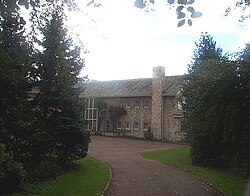
Following a medical exemption from wartime service in 1939, Poulson focused on expanding his business. He was known as a workaholic who demanded absolute commitment from his staff. In 1958, he completed his own residence, "Manasseh," which won the Ideal Homes "House of the Year" competition. This project was partially funded by contractors who provided free services in hopes of securing future contracts.
Poulson introduced a disruptive business model to the industry. Rather than the traditional method of completing a design before handing it over for costing and construction, he created an integrated, all-in-one service. By employing separate disciplines in integrated teams, he accelerated development and reduced costs. This efficiency allowed his practice to become one of the largest in Europe by the 1960s, with offices spanning from London and Edinburgh to Beirut and Lagos.
The Network of Influence
To sustain his growth, Poulson established Ropergate Services Ltd. in 1958, a servicing company designed to win business and reduce his tax liabilities. He began recruiting influential "consultants" to open doors to public sector work. In Newcastle upon Tyne, he partnered with council leader T. Dan Smith, whose network of contacts in the north-east was invaluable. This alliance helped Poulson secure projects like the Sunderland Police Station and various residential blocks in Felling, County Durham.
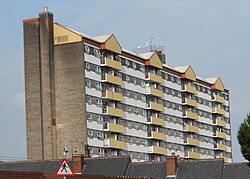
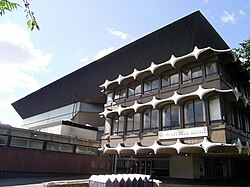
In his hometown of Pontefract, Poulson secured several local authority projects, including the town library and the Horsefair flats—a high-rise social housing project that remains controversial due to its proximity to Pontefract Castle.
![Poulson designed Pontefract Library in his home town. The library opened in 1975.[8]](/images/ea/1c/ea1cb9fec62977f207aff4b644bc76eeb23425caea2163ead4ad94a784ef63ea.jpg)
National and International Reach
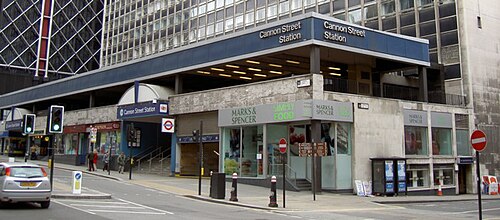
Poulson targeted nationalized industries by offering gifts to junior civil servants, later calling in those favors once they reached senior positions. For example, his relationship with Graham Tunbridge of British Rail led to contracts at Cannon Street, Waterloo, and East Croydon stations in exchange for cash and gifts. Similarly, he secured the Aviemore winter sports complex project through George Pottinger of the Scottish Office.
His ambitions eventually extended overseas. Through the help of Conservative MP John Cordle, Poulson pursued contracts in West Africa. He also leveraged his connection with Reginald Maudling, then Shadow Commonwealth Secretary. Maudling served as chairman of Poulson's company, Construction Promotion, and helped pressure the government of Malta to award Poulson a £1.5 million contract for the Victoria Hospital on Gozo.
Financial Collapse and Legal Fallout
At its peak, Poulson's business had an annual turnover of £1 million. However, the cost of maintaining his network of bribery—estimated at £500,000 in his final years of business—became unsustainable. By 1971, Poulson filed for bankruptcy with debts of £247,000, including £200,000 owed to the Inland Revenue.
The bankruptcy proceedings revealed Poulson's meticulous records of payments and gifts, exposing a massive corruption scandal. This led to a Metropolitan Police fraud investigation and forced the resignation of the Home Secretary, Reginald Maudling.
In 1973, Poulson was arrested. After a 52-day trial at Leeds Crown Court, he was convicted of fraud in 1974 and sentenced to five years in prison (later increased to seven). While Poulson maintained his innocence, claiming he was "surrounded by a pack of leeches," the judge described him as an "incalculably evil man." Other associates, including T. Dan Smith and George Pottinger, were also imprisoned.
Legacy and Contributions
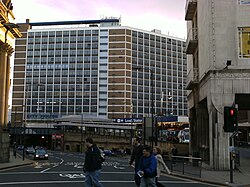
Despite the scandal, Poulson left a physical mark on the UK landscape. His notable works included City House and the International Pool in Leeds, though both have since been demolished or repurposed.
The scandal also had a lasting impact on British governance and media. It prompted the House of Commons to create a Register of Members' Interests to increase transparency. Furthermore, a banned World in Action documentary about Poulson sparked a national debate over television censorship and the power of regulators.
| Category | Details |
|---|---|
| Key Figures | John Poulson, T. Dan Smith, Reginald Maudling, George Pottinger |
| Primary Method | Bribery of civil servants and local councillors to secure public contracts |
| Major Projects | City House (Leeds), International Pool (Leeds), Victoria Hospital (Malta) |
| Legal Outcome | Poulson convicted of fraud; served 7 years; bankruptcy discharged in 1980 |
| Political Impact | Resignation of Home Secretary Reginald Maudling; creation of Register of Members' Interests |
Key Facts
- Professional Status: Never registered with ARCUK despite running one of Europe's largest architectural practices.
- Innovation: Pioneered an integrated design-and-build service that reduced costs and time.
- Corruption: Estimated to have spent £500,000 on bribes to secure contracts.
- Political Fallout: His actions led to the resignation of Home Secretary Reginald Maudling.
- Legal Precedent: The scandal highlighted a loophole where MPs were not considered in charge of public funds, leading to parliamentary reform.
Frequently Asked Questions
Was John Poulson a qualified architect?
Technically, no. While he practiced as an architect and ran a major firm, he never registered with the Architects' Registration Council of the United Kingdom (ARCUK), claiming he was too busy to complete his examinations.
Who was the highest-ranking official affected by the scandal?
The highest-ranking figure forced out due to the scandal was the Conservative Home Secretary, Reginald Maudling, who had served as chairman of one of Poulson's companies.
What was Poulson's "all-in-one" architectural method?
Poulson combined architecture and design into a single practice using integrated teams. This replaced the traditional sequence of designing first and then handing the plans over for separate costing and building, thereby accelerating the process.
How did the scandal change the UK Parliament?
The scandal revealed that MPs could avoid certain corruption charges through a legal loophole regarding public funds. This led the House of Commons to initiate the Register of Members' Interests to ensure greater transparency.
What happened to the buildings Poulson designed?
Many have been demolished. For example, the Leeds International Pool was razed in 2009, and City House in Leeds was also lost. Some residential blocks in Felling were demolished in 1987 due to poor repair.