John Law's Company and the Mississippi Bubble
In the early 18th century, France became the stage for one of history's most ambitious and volatile financial experiments. At the center of this storm was John Law, a Scottish economist and financier who envisioned a revolutionary way to manage national debt and stimulate economic growth. His creation, known popularly as the Mississippi Company, briefly held an unprecedented level of power, controlling nearly the entire revenue-raising capacity of the French state.
While the company was ostensibly designed to develop the French territories in North America, its primary impact was felt in the financial markets of Paris. The resulting synergy between colonial speculation and central banking led to a period of immense wealth and a subsequent catastrophic crash known as the Mississippi Bubble.
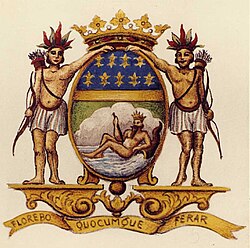
Key Facts
- Founder: John Law, a Scottish economist and financier.
- Peak Value: Temporarily reached an estimated equivalent of $6.5 trillion in modern terms.
- Core Territory: Louisiana, including the Mississippi River drainage basin.
- Financial Peak: Share prices soared from 500 livres to a peak of 10,000 livres.
- Outcome: A massive stock market collapse in 1720 followed by government receivership in 1721.
The Evolution of the Company
The entity underwent several name changes and structural shifts as it expanded its grip on the French economy. It began in August 1717 as the Compagnie d'Occident (Company of the West). By May 1719, it absorbed the bankrupt East Indies Company and the Compagnie de la Chine, rebranding as the Compagnie des Indes (Company of the Indies).
This expansion was part of a broader fiscal strategy called Law's System (le système de Law). The system reached its zenith in February 1720 when the company acquired Law's Bank, which had served as France's first central bank. This merger effectively blurred the line between the state's monetary authority and a private joint-stock company.

The Monopoly of Louisiana
The company's foundation rested on the territory of Louisiana, originally claimed by René Cavelier de La Salle in 1682. After previous failed attempts by others—including the financier Antoine Crozat—the Regency Council granted Law's company Louisiana as a fief in perpetuity in 1717.
The company was granted a 25-year monopoly on trade between Louisiana and France, as well as the beaver fur trade in Canada. It was empowered to maintain its own military force and negotiate treaties with Native Americans.
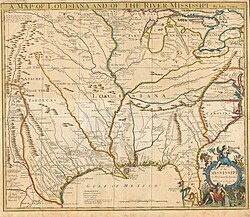
The Rise of the Bubble
The public offering began in September 1717 with shares priced at 500 livres. To attract investors, shares could be paid for using government debt bills at par, a highly advantageous arrangement. The frenzy peaked in the summer of 1719, with trading centered on the rue Quincampoix in Paris.
As the company acquired more monopolies—including the royal mints, tobacco rights, and the collection of all direct and excise taxes—share prices skyrocketed. The value climbed from 500 livres to 1,000 in July, 3,000 in August, and eventually peaked at 10,000 livres.
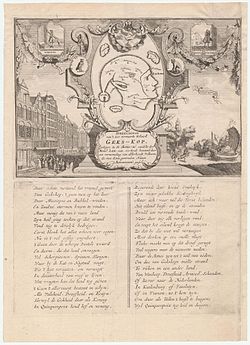
Colonial Operations in America
Despite the financial focus in Paris, the company did engage in overseas development. Under the leadership of Jean-Baptiste Le Moyne de Bienville, the settlement of New Orleans was established in 1718. The company doubled the European population of Louisiana by bringing in 800 settlers, including German-speaking emigrants from Alsace and Switzerland.
However, the company's operations also had a darker side. It was heavily involved in the Atlantic slave trade, transporting enslaved Africans along the Mississippi River as far north as modern-day Illinois. Additionally, the company deported prisoners from Paris to Mississippi between 1719 and 1721.
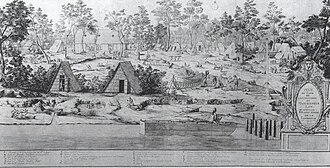
Collapse and Aftermath
The bubble burst in late 1720. The massive increase in the money supply, driven by the issuance of bank notes to pay shareholders, triggered rampant inflation, which hit a monthly rate of 23% in January 1720. As investors began selling their shares, the market crashed. By December 1720, prices had plummeted to 1,000 livres, and by September 1721, they returned to the original 500 livres.
John Law was dismissed from his positions by Philippe d'Orléans and fled France, eventually dying in Venice. The company was placed in receivership in April 1721. It was restructured in 1723 as the French Indies Company, focusing solely on overseas trade. After receiving a state indemnity of 514 million livres, it continued to operate until its final liquidation in 1770.
| Period | Company Name | Primary Focus | Key Event |
|---|---|---|---|
| 1717–1719 | Compagnie d'Occident | Louisiana Development | Granted monopoly on Louisiana trade |
| 1719–1720 | Compagnie des Indes | Global Trade & Tax Collection | Absorption of East Indies Company |
| 1720–1721 | Mississippi Company (Popular name) | Financial Speculation | The Mississippi Bubble and Crash |
| 1723–1770 | French Indies Company | Overseas Trading | Post-receivership restructuring |
Frequently Asked Questions
What was the Mississippi Bubble?
The Mississippi Bubble was a financial crash in 1720 caused by the speculative mania surrounding shares of John Law's company. Prices rose to unsustainable levels based on exaggerated expectations of wealth from Louisiana, leading to a total market collapse.
How did John Law's Company affect the French state?
The company briefly became the primary financial arm of the French government, collecting all taxes and managing the national debt, effectively merging private corporate interests with state monetary policy.
What happened to John Law after the crash?
After being dismissed from his official roles, Law fled France for Brussels and later Venice, where he spent his remaining years gambling before his death.
Did the company actually develop Louisiana?
Yes, although financial activity was the priority, the company founded New Orleans in 1718, increased the European settler population, and conducted explorations of the Red and Arkansas Rivers.
What was the role of Law's Bank in the system?
Law's Bank served as France's first central bank. By merging the bank with the company, Law could issue paper bank notes to fuel the purchase of shares, which contributed to the inflation and eventual collapse of the system.