John James Burnet: The Architect of Burnet Baroque and Modernism
John James Burnet was a pivotal figure in British architecture, bridging the gap between classical tradition and the dawn of the Modern Movement. Born on May 31, 1857, in Blythswood Hill, Glasgow, Burnet was the youngest son of architect John Burnet and Elizabeth Hay Bennet. Raised in a Congregationalist household, his early education spanned the Collegiate School, Western Academy, and Blairlodge School in Polmont.
Burnet's trajectory was shaped by a rigorous international education. After two years of training in his father's office, he moved to Paris in 1872 to study at the École des Beaux-Arts—a prestigious school of architecture known for its classical approach. Under the tutelage of Jean-Louis Pascal, Burnet excelled, earning his Diplôme du Gouvernement in architecture and engineering in 1876. This period not only refined his technical skill but also fostered a lifelong friendship with Henri Paul Nénot.
Key Facts
- Education: Trained at the École des Beaux-Arts in Paris, gaining a Diplôme du Gouvernement in 1876.
- Signature Style: Developed "Burnet Baroque," a Neo-Baroque style that dominated Glasgow's skyline around 1900.
- Major Works: Designed the Edward VII Galleries at the British Museum and the Fine Art Institute in Glasgow.
- Influence: Integrated American structural techniques and verticality into Scottish and English urban design.
- Legacy: Mentored Thomas Smith Tait, a leader in the British Modern architecture movement.
Early Career and the Rise of Burnet Baroque
Upon returning to Glasgow in 1876, Burnet initially assisted his father with the Union Bank of Scotland building. His first major independent success came in 1878 when he won the competition for the Fine Art Institute in Glasgow. This project required a blend of Greek Revival and modern French Renaissance styles, featuring friezes by John Mossman.
By 1882, he entered a partnership with his father, forming John Burnet & Son. The practice later expanded to include John Archibald Campbell as Burnet Son & Campbell in 1886. Following his father's retirement around 1890, Burnet and Campbell shifted toward a more adventurous, dramatic style to compete for national commissions.
This evolution led to the creation of Burnet Baroque. This Neo-Baroque style, influenced by architects like John Belcher and Arthur Beresford Pite, found its first major success in the Glasgow Athenaeum Theatre (1891–1893), which utilized an American-style elevator design. By 1900, this aesthetic became the dominant architectural language of Glasgow.
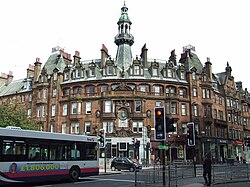
American Influence and Structural Innovation
A visit to the United States in 1896 profoundly impacted Burnet's approach. He began incorporating low-profile designs with broad eaves into churches and public buildings, such as the Dundas Memorial Church in Grangemouth and the Public Library and Museum in Campbeltown.
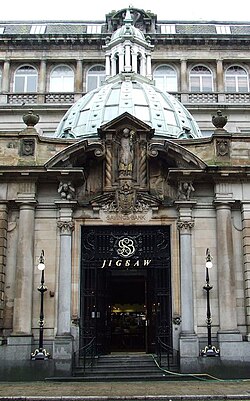
This American influence culminated in the design of McGeoch's Department Store (1905–1910), where Burnet emphasized strong vertical lines and expressed the building's internal structure directly on the facade.
Expanding to London and the British Museum
After Campbell left the partnership in 1897, Burnet expanded his practice into England. His most prestigious commission came in 1903–1904 when the Office of Works selected him to design the Edward VII Galleries at the British Museum. Although Burnet envisioned a grand Parisian-style avenue surrounding the museum, funding constraints limited the project to the galleries, which were completed between 1906 and 1914.
The success of the British Museum project opened doors to other London commissions, including the General Buildings in Aldwych and the Kodak Building on Kingsway. The Kodak Building was particularly significant; the client, George Eastman, embraced a modern design submitted by Burnet's assistant, Thomas S. Tait. This project served as a blueprint for the firm's future move toward the Modern Movement—an architectural style emphasizing function and the use of industrial materials like steel frames.
Later Years and Professional Legacy
Burnet's career was marked by high honors, including a knighthood in 1914, the Royal Gold Medal in 1923, and election as a Royal Academician (RA) in 1925. He also played a key role in founding the Royal Incorporation of Architects in Scotland.
The inter-war period brought personal and professional challenges. While the firm continued to secure major projects—such as the Daily Telegraph Building and war memorials in Gallipoli, Palestine, and Suez—Burnet's health declined due to stress-related eczema. He eventually moved into a semi-retirement role as a consultant, leaving the leadership of the practice to Thomas Smith Tait.
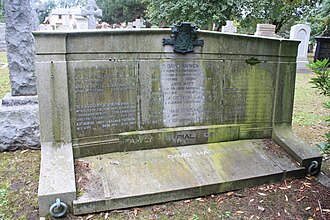
Burnet spent his final years in Colinton, Edinburgh, at Woodhall Cottage. He passed away on July 2, 1938, and was buried at Warriston Cemetery.
Practice Evolution Summary
The following table outlines the various iterations of Burnet's architectural practice over several decades.
| Period | Practice Name | Key Partners |
|---|---|---|
| 1882–1886 | John Burnet and Son | John Burnet, JJ Burnet |
| 1886–1897 | John Burnet, Son and Campbell | John Archibald Campbell |
| 1897–1919 | John Burnet and Son | JJ Burnet |
| 1918–1930 | Sir John Burnet & Partners | Thomas Smith Tait, David Raeside |
| 1921–1940 | Burnet, Son & Dick | Norman Aitken |
| 1930–c. 1949 | Sir John Burnet, Tait & Lorne | JJ Burnet, Thomas Smith Tait, Francis Lorne |
Frequently Asked Questions
What is "Burnet Baroque"?
Burnet Baroque refers to a Neo-Baroque architectural style championed by John James Burnet and John Archibald Campbell. It was characterized by dramatic, ornate designs and became the dominant architectural language in Glasgow around the turn of the 20th century.
How did American architecture influence Burnet's work?
Burnet was inspired by American structural techniques and urban forms. This is evident in his use of elevator-based building designs, the expression of steel frames in facades (as seen in McGeoch's Department Store), and the use of broad eaves in public buildings.
What was Burnet's most significant project in London?
His most significant London project was the design of the Edward VII Galleries at the British Museum, for which he was knighted in 1914.
Who was Thomas Smith Tait?
Thomas Smith Tait was a promising young architect recruited by Burnet in 1902. He eventually became a partner and a leading figure in the British Modern architecture movement, taking over the firm's leadership in Burnet's later years.
Where is John James Burnet buried?
Burnet's ashes were buried in his father-in-law's plot at Warriston Cemetery in Edinburgh.