Johann Freinsheim: The German Scholar of Classical History
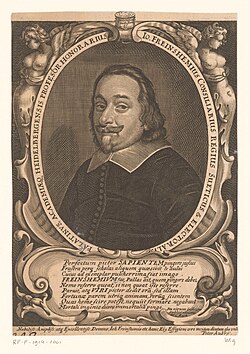
Johann Freinsheim, also known by his Latinized name Johannes Frenshemius, was a distinguished German classical scholar and critic whose work bridged the gap between ancient Roman history and early modern academic rigor. Born on November 16, 1608, in Ulm, Freinsheim dedicated his life to the meticulous study and preservation of classical texts.
His academic journey began with studies at the universities of Marburg, Giessen, and Strassburg. Seeking further intellectual growth, he spent three years in France before returning to Strassburg in 1637. This foundation in European humanism prepared him for a prestigious international career in academia and royal service.
Academic Career and Royal Service
In 1642, Freinsheim's reputation led to his appointment as a professor of eloquence and the holder of the Skyttean chair—a prestigious academic position—at the University of Uppsala. His expertise did not go unnoticed by the Swedish monarchy; in 1647, Queen Christina summoned him to Stockholm.
During his time in Stockholm, Freinsheim served in two critical roles: as the court librarian and as the royal historiographer. While he returned to his professorship at Uppsala in 1650, failing health forced his resignation the following year. He eventually moved to Heidelberg, where he served as an honorary professor until his death on August 31, 1660.
Contributions to Classical Scholarship
Freinsheim's primary literary focus was the study of Roman historians. He is credited with introducing structural innovations to classical texts, specifically the division of works into chapters and paragraphs to improve accessibility and organization.
Beyond structural changes, he developed carefully compiled indexes to highlight the lexical peculiarities—the unique vocabulary and word usage—of individual authors. This allowed subsequent scholars to analyze the linguistic style of ancient writers with greater precision.
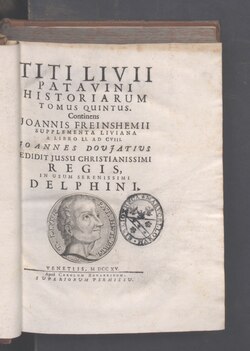
He is most renowned for his "supplements" to the works of Quintus Curtius and Livy. These supplements were original compositions written by Freinsheim to fill the gaps of missing books in the original historical records.
Key Facts
- Full Name: Johann Freinsheim (Latinized as Johannes Frenshemius).
- Lifespan: November 16, 1608 – August 31, 1660.
- Key Appointments: Professor at University of Uppsala, Court Librarian and Royal Historiographer to Queen Christina.
- Major Innovation: Introduced chapter and paragraph divisions and lexical indexes to Roman historical texts.
- Famous Works: Supplements to the missing books of Livy and Quintus Curtius.
| Year/Period | Role or Event | Location |
|---|---|---|
| 1608 | Born | Ulm, Germany |
| Early Career | University Studies | Marburg, Giessen, Strassburg |
| 1642 | Professor of Eloquence (Skyttean Chair) | University of Uppsala |
| 1647 | Court Librarian and Royal Historiographer | Stockholm |
| 1656 | Honorary Professor | Heidelberg |
| 1660 | Death | Heidelberg |
Frequently Asked Questions
What is Johann Freinsheim best known for?
He is most famous for writing supplements to fill the missing books of the Roman historians Livy and Quintus Curtius, as well as introducing chapter and paragraph divisions to classical texts.
What was the Skyttean chair?
The Skyttean chair was a prestigious academic position at the University of Uppsala, which Freinsheim held starting in 1642 as a professor of eloquence.
How did Freinsheim contribute to the study of linguistics?
He created detailed indexes that illustrated the lexical peculiarities of various authors, helping scholars understand the specific vocabulary and stylistic choices of ancient writers.
Who was the monarch that employed Freinsheim in Stockholm?
He was summoned to Stockholm by Queen Christina to serve as her royal historiographer and court librarian.
Where did Johann Freinsheim spend his final years?
After resigning from Uppsala due to ill health, he became an honorary professor at Heidelberg, where he lived until his death in 1660.