Johan Cruyff: The Architect of Total Football
Few figures have reshaped the landscape of global sport as profoundly as Johan Cruyff. A visionary player and a revolutionary manager, Cruyff did not just play football; he reimagined it. From the rain-slicked pitches of Amsterdam to the sun-drenched Camp Nou in Barcelona, his influence introduced a philosophy of fluidity and intelligence that continues to define the modern game.
Born Hendrik Johannes Cruijff on April 25, 1947, in Amsterdam, he rose through the ranks of Ajax to become the centerpiece of a tactical revolution. His career was defined by a relentless pursuit of simplicity and spatial awareness, famously stating that "playing football is very simple but playing simple football is the hardest thing there is."
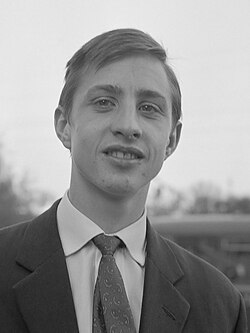
Key Facts
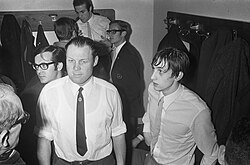
- Full Name: Hendrik Johannes Cruijff
- Primary Positions: Forward and Attacking Midfielder
- Major Clubs: Ajax, FC Barcelona, Feyenoord
- International Career: Netherlands (48 caps, 33 goals)
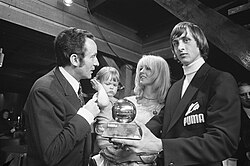
- Individual Honors: Three-time Ballon d'Or winner (1971, 1973, 1974)
- Managerial Legacy: Built the Barcelona "Dream Team" and revolutionized Ajax
- Death: March 24, 2016, in Barcelona, Spain
The Golden Era at Ajax and Total Football
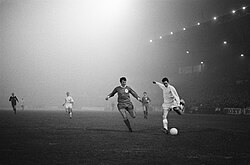
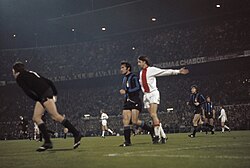
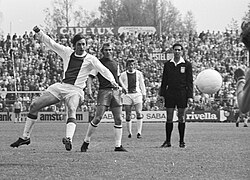
Cruyff's early career at Ajax (1964–1973) coincided with the birth of Total Football, a tactical system where any outfield player could take over the role of any other player in the team. Under the guidance of coach Rinus Michels, Cruyff became the conductor of this fluid orchestra.
During this period, Ajax dominated European football, winning three consecutive European Cups from 1971 to 1973. Cruyff's ability to dribble, pass, and organize the team from the front made him the most feared player in the world.
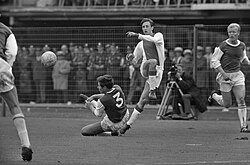
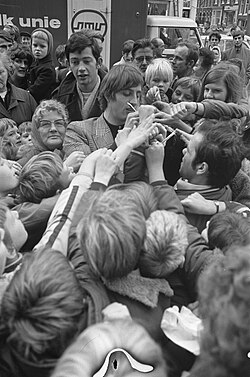
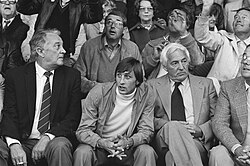
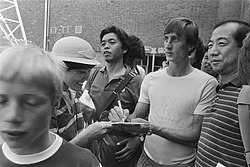
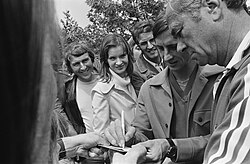
His dominance was not limited to Europe; he became a global icon, signing autographs for crowds of admirers and showcasing a level of technical skill that seemed otherworldly at the time.
The Cruyff Turn and Technical Mastery
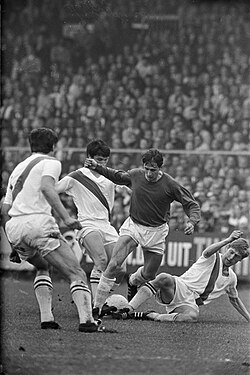
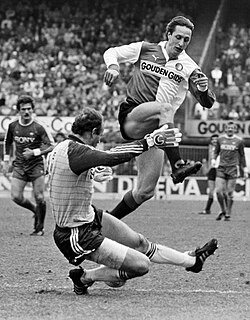
Cruyff was renowned for his agility and deceptive movements. One of his most enduring contributions to the game's vocabulary is the "Cruyff Turn," a feint that left defenders stranded and became a staple of attacking play worldwide.
Conquering Spain with FC Barcelona
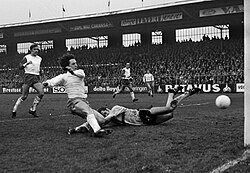
In 1973, Cruyff moved to FC Barcelona, where he immediately transformed the club. In his first season, he led Barcelona to their first La Liga title in 14 years. His tenure in Spain (1973–1978) was marked by a commitment to attacking football and a tactical intelligence that elevated his teammates.
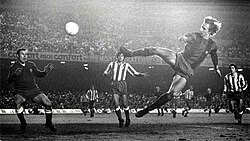
Beyond the pitch, Cruyff's influence extended to the club's infrastructure. His philosophy later became the bedrock of La Masia, Barcelona's youth academy, ensuring that future generations of players would be taught the principles of possession and spatial control.
International Glory and the 1974 World Cup
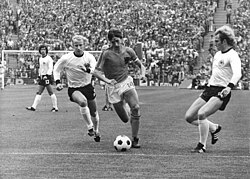
Representing the Netherlands, Cruyff led the "Oranje" to the 1974 FIFA World Cup final. Although the Netherlands finished as runners-up to West Germany, the tournament served as a global showcase for Total Football. Cruyff was awarded the Golden Ball as the tournament's best player.
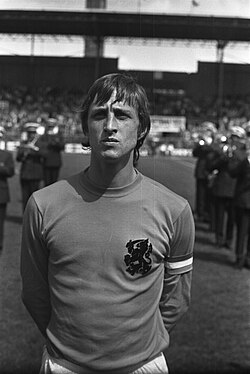
He continued to lead the national side through the 1976 European Championship, where the Netherlands secured a third-place finish, cementing his status as one of the greatest international players in history.
The Managerial Revolution: The Dream Team
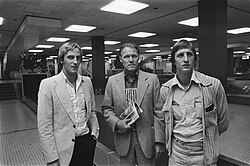
Cruyff's transition to management was as impactful as his playing days. After a successful stint at Ajax (1985–1988), he returned to Barcelona as manager from 1988 to 1996. Here, he assembled the legendary "Dream Team," winning four consecutive La Liga titles and the European Cup in 1992.
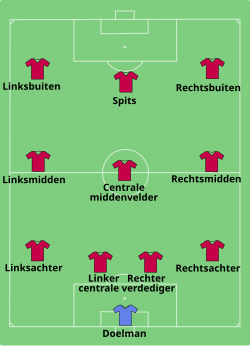
His managerial approach emphasized the 4–3–3 system, focusing on ball retention and the use of the goalkeeper as the first attacker. This philosophy laid the groundwork for the modern era of Spanish and Dutch football.
Career Summary and Statistics
| Period | Team/Role | Appearances | Goals | Major Honors |
|---|---|---|---|---|
| 1964–1973 | Ajax (Player) | 245 | 193 | 3 European Cups, 6 Eredivisie titles |
| 1973–1978 | Barcelona (Player) | 143 | 48 | 1 La Liga title, 1 Copa del Rey |
| 1985–1988 | Ajax (Manager) | 117 Games | - | European Cup Winners' Cup (1987) |
| 1988–1996 | Barcelona (Manager) | 430 Games | - | European Cup (1992), 4 La Liga titles |
| 1966–1977 | Netherlands (Player) | 48 | 33 | World Cup Runner-up (1974) |
Legacy and Philanthropy
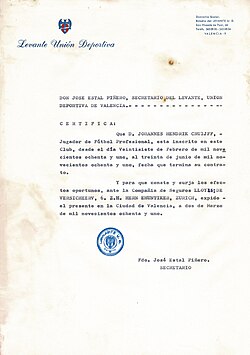
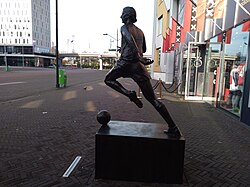
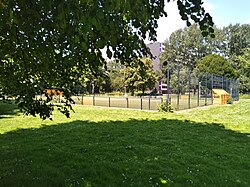
Cruyff's impact extended far beyond trophies. He was a dedicated philanthropist, establishing the Johan Cruyff Foundation and creating "Cruyff Courts" to provide children with safe places to play and learn. His name lives on through the Johan Cruijff Arena in Amsterdam and various educational institutes.
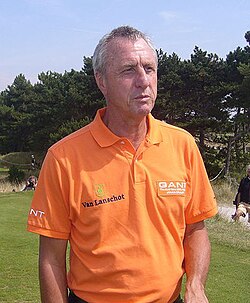
Even in his final years, Cruyff remained a consultant and advisor, continuing to preach the gospel of simple, intelligent football until his passing in 2016.
Frequently Asked Questions

What is Total Football?
Total Football is a tactical system where players are not fixed in one position. Instead, they fluidly switch roles based on the movement of the ball and their teammates, ensuring the team maintains its structure while maximizing attacking options.
How many Ballon d'Or awards did Johan Cruyff win?
Johan Cruyff won the Ballon d'Or three times, in 1971, 1973, and 1974.
What was the "Dream Team"?
The "Dream Team" refers to the FC Barcelona squad managed by Cruyff between 1988 and 1996, which won multiple La Liga titles and the 1992 European Cup by implementing his revolutionary attacking philosophy.
Which clubs did Cruyff play for during his career?
Cruyff played for Ajax (two spells), FC Barcelona, Los Angeles Aztecs, Washington Diplomats, Levante, and Feyenoord.
What is the significance of the Cruyff Turn?
The Cruyff Turn is a famous dribbling move where a player fakes a cross or pass but instead hooks the ball behind their standing leg to turn 180 degrees, effectively bypassing a defender.