Joan Manuel Serrat: The Voice of Catalan and Spanish Popular Music
Joan Manuel Serrat Teresa is a towering figure in the landscape of modern popular music. As a Catalan musician, singer, and composer, Serrat has spent over five decades bridging the linguistic and cultural divides of Spain. His work is celebrated not only for its melodic beauty but for its profound connection to the identity, struggles, and daily life of the people of Catalonia and the wider Spanish-speaking world.
Key Facts
- Born: December 27, 1943, in Barcelona, Spain.
- Musical Style: A pioneer of Nova cançó (New Song), blending pop, rock, and folk.
- Defining Work: The album and song "Mediterráneo," cited as one of the most important Spanish songs of the 20th century.
- Active Years: 1965–2022.
- Major Honors: Latin Grammy Person of the Year (2014) and numerous honorary doctorates.
Early Life and the Roots of a Songwriter
Born in the Poble-sec neighborhood of Barcelona to a working-class family, Serrat was deeply influenced by his surroundings. His father, Josep Serrat, was a Catalan anarchist affiliated with the CNT, and his mother, Ángeles Teresa, hailed from Belchite, Zaragoza. The atmosphere of post-Civil War Catalonia provided the raw material for many of his early compositions, which often featured stereotypical characters from his neighborhood, such as those found in "La Carmeta" and "El drapaire."
Serrat's formal journey into music began at age 17 when he acquired his first guitar. Initially, he performed Beatles covers and Italian pop songs translated into Spanish with classmates from Barcelona's Agronomy School. However, his trajectory shifted in 1965 when he joined Els Setze Jutges, a group dedicated to defending the Catalan language during the restrictive Francoist regime.
Rise to Fame and Political Conflict
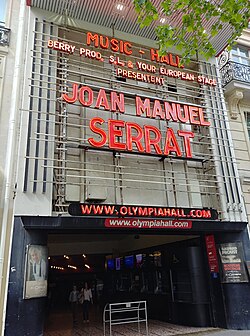
By 1967, Serrat had established himself as a leading voice in the Nova cançó movement—a musical genre that sought to modernize Catalan music while promoting the use of the native language. His first live performance at the Palau de la Música Catalana cemented his status as a cultural icon.
His commitment to his linguistic roots soon led to conflict with the state. In 1968, Televisión Española (TVE) selected him for the Eurovision Song Contest with the song "La, la, la." When Serrat insisted on performing the piece in Catalan, the broadcaster refused. This clash with the language politics of Francoist Spain resulted in his cancellation from the contest.
International Expansion and Exile
In 1969, Serrat expanded his reach with a tour of South America and an album featuring the poetry of Antonio Machado. While this brought him immense fame across Spain and Latin America, it sparked criticism from some Catalan nationalists who viewed his use of the Spanish language as a compromise.
The release of the Mediterráneo LP in 1971 brought him worldwide recognition. However, his political outspokenness eventually led to hardship; in 1974, after condemning capital punishment in Spain, Serrat was forced into exile in Mexico. He remained there until the death of Francisco Franco in November 1975, after which he returned to a democratic Spain.
Later Career and Artistic Legacy
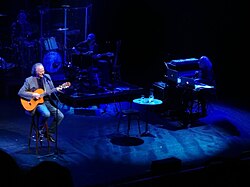
Throughout the 1990s and 2000s, Serrat continued to evolve. In 1995, the Spanish government recognized his contributions to Hispanic culture with a medal of honor. Despite a health battle with bladder cancer in 2004, he returned to the stage in 2005 with the "Serrat 100×100" tour, performing symphonic versions of his classics.
Serrat's later years were marked by a continued commitment to his roots, including the 2006 album Mô, his first full Catalan project in 17 years. In 2017 and 2018, he commemorated the legacy of his most famous work with the "Mediterraneo da Capo" tour.
Political Views and Public Stance
While soon known as a defender of Catalan culture, Serrat's political views in later years were nuanced. He became a critic of the Catalan independence movement and the 2017 unilateral referendum, arguing that such political maneuvers often served to mask economic corruption within both the regional and national governments. This stance led to some calls for boycotts among independence supporters, though he remained a symbol of union for many other Catalans.
Summary of Career and Achievements
| Category | Details |
|---|---|
| Primary Genres | Nova cançó, Pop, Rock |
| Key Albums | Ara que tinc Vint Anys (1967), Mediterráneo (1971), Mô (2006) |
| Instruments | Vocals, Guitar |
| Major Awards | Latin Grammy Person of the Year, Gold Medal of Barcelona, Premio Nacional de Músicas Actuales |
| Academic Honors | Multiple Doctor Honoris Causa degrees from Spain, Mexico, and Argentina |
Frequently Asked Questions
What is the Nova cançó movement?
Nova cançó (New Song) was a musical movement in Catalonia that emerged in the 1960s. It combined modern songwriting styles with a political goal of recovering and promoting the Catalan language and culture during the Francoist dictatorship.
Why was Joan Manuel Serrat exiled to Mexico?
Serrat was exiled in 1974 after he publicly condemned the use of capital punishment and the official violence of the Francisco Franco regime, leading to an arrest warrant being issued against him in Spain.
What is the significance of the song "Mediterráneo"?
"Mediterráneo" is considered one of the most important songs in the Spanish language. It consolidated Serrat's international reputation and was selected by Rolling Stone magazine in 2006 as the best song of the 20th century in Spain.
Did Serrat only sing in Catalan?
No. While he was a champion of the Catalan language, Serrat sang in both Catalan and Spanish. This bilingual approach sometimes caused controversy among political factions on both sides of the Spanish-Catalan divide.
When did Joan Manuel Serrat retire?
Serrat announced his retirement from performing in December 2021, concluding a professional career that spanned from 1965 to 2022.