Jewish Federations of North America: A History of Communal Philanthropy
The story of Jewish communal organization in North America is one of resilience, autonomy, and a deep-seated commitment to mutual aid. Long before the establishment of formal federations, Jewish settlers in the New World operated under a social contract with local governments: they promised to manage their own community's needs to ensure they would not become a public burden.
This tradition began as early as 1654 in New Amsterdam (modern-day New York). Despite initial attempts by Governor Peter Stuyvesant to ban Jewish settlers, the community persisted, eventually establishing a network of synagogues, burial societies, credit unions, and Hebrew youth societies across dozens of cities.
The Rise of the Federation System
By the late 19th century, the need for a more structured approach to welfare led to the birth of the federation model. According to historian Donald Feldstein, the first Jewish Federation in the United States was founded in Boston in 1895 as Associated Jewish Philanthropies. This was quickly followed by the formation of the United Jewish Social Agencies in Cincinnati in 1896, with Chicago and St. Louis establishing their own federations by 1900.
Philosophical Foundations
The early federations were built on a blend of secularism and Jewish tradition. They were heavily influenced by Hesed (loving kindness) and modeled after the Kehilla—a communal organization common in Eastern Europe designed to meet welfare needs comprehensively. However, while European Kehillas were often government-mandated tax-collecting bodies, the American federations remained fully autonomous.
From 1895 to 1945, these organizations focused primarily on the welfare of individual Jews, aiming to help them integrate into American society. Interestingly, this model of organized giving served as an inspiration for the 1913 creation of the community chest in Cleveland, Ohio, the forerunner of the United Way.
Evolution of National Coordination
As the network of local federations grew, the need for a central coordinating body became apparent. In 1932, the National Council of Jewish Federations and Welfare Funds was established. Over time, the organization simplified its name, dropping "National" in 1935 and "Welfare Funds" in 1979, eventually becoming the Council of Jewish Federations (CJF).
The United Jewish Appeal (UJA)
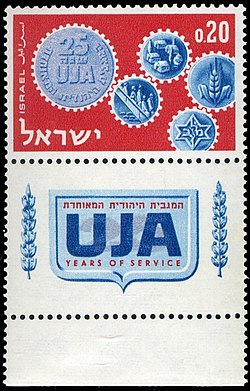
In January 1939, Arthur Loewengart founded the United Jewish Appeal for Refugees and Overseas Needs (UJA). This non-profit was created to consolidate the efforts of three major entities to address the escalating crisis facing Jewish people in Europe and Palestine:
- American Jewish Joint Distribution Committee (JDC): Led by Rabbi Jonah Wise, focusing on aid in Europe.
- United Israel Appeal: Led by Rabbi Abba Hillel Silver, supporting the community and refugees in Israel.
- National Coordinating Committee Fund: Led by William Rosenwald, assisting refugees arriving in the United States.
Modern Integration and the JFNA
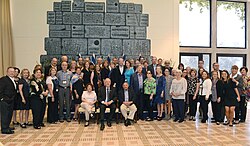
The landscape of Jewish philanthropy shifted toward the end of the 20th century. In 1999, the UJA, CJF, and United Israel Appeal merged to form United Jewish Communities (UJC). This merger reflected a trend toward donor-directed philanthropy and granted local federations more power, allowing them to select two-thirds of the new board. Philanthropist Charles Bronfman served as the volunteer chairman during this strategic transition.
In October 2009, the UJC was renamed the Jewish Federations of North America (JFNA). Following this rebranding, the organization underwent structural changes, including significant staff reductions in February 2010 under CEO Jerry Silverman, which included the layoff of three senior vice presidents.
Key Facts
- First Federation: Founded in Boston in 1895 as Associated Jewish Philanthropies.
- Core Value: Based on Hesed (loving kindness) and the Kehilla communal model.
- UJA Purpose: Created in 1939 to triple or quadruple funding for refugees in Europe, Palestine, and the US.
- Major Merger: The UJA, CJF, and United Israel Appeal merged in 1999 to form United Jewish Communities.
- Current Name: Renamed to Jewish Federations of North America in October 2009.
| Year | Event/Organization | Significance |
|---|---|---|
| 1654 | New Amsterdam Settlement | First Jewish communal settlement in North America. |
| 1895 | Associated Jewish Philanthropies | First Jewish Federation (Boston). |
| 1932 | National Council of Jewish Federations | Formation of the umbrella organization for US federations. |
| 1939 | United Jewish Appeal (UJA) | Unified campaign for refugees and overseas needs. |
| 1999 | United Jewish Communities (UJC) | Merger of UJA, CJF, and United Israel Appeal. |
| 2009 | Jewish Federations of North America | Current name adopted by the UJC. |
Frequently Asked Questions
What is the difference between a Kehilla and the American Jewish Federations?
While both were designed to meet the welfare needs of the community, Kehillas in Eastern Europe were typically formed under local government authority to collect taxes. In contrast, Jewish Federations in the United States have always been fully autonomous.
What was the primary goal of the early federations between 1895 and 1945?
During this period, the federation system focused on the welfare needs of individual Jewish people with the specific goal of helping them integrate into the United States.
Which organizations merged to create United Jewish Communities in 1999?
The United Jewish Appeal (UJA), the Council of Jewish Federations (CJF), and the United Israel Appeal merged to form the UJC.
How did the Jewish Federations influence other American charitable organizations?
The Jewish federation model inspired the 1913 formation of the community chest in Cleveland, Ohio, which was the forerunner of the United Way.
Who founded the United Jewish Appeal and why?
Arthur Loewengart founded the UJA in January 1939 to combine the efforts of the JDC, the United Israel Appeal, and the National Coordinating Committee Fund to address the worsening crisis for Jewish people in Europe and Palestine.