Japanese Nationality Law: Acquisition, Naturalization, and Dual Citizenship
The legal framework governing who is considered a national of Japan is primarily defined by the Nationality Law (Law No. 147 of 1950). Assented to by Emperor Shōwa on May 4, 1950, and commencing on July 1, 1950, this law is administered by the Ministry of Justice. It establishes the criteria for acquiring and losing Japanese nationality, balancing ancestral ties with strict regulations on dual citizenship.
Key Facts
- Primary Law: Nationality Law of 1950.
- Birthright: Nationality is generally granted if at least one parent is Japanese.
- Naturalization: Requires at least five years of residence and renunciation of previous nationalities.
- Dual Nationality: Generally prohibited for adults; a choice must typically be made by age 22.
- Passport Power: Ranked among the strongest in the world for visa-free travel.
Terminology: Nationality vs. Citizenship
In English, the terms "nationality" and "citizenship" are often used interchangeably, but they carry distinct meanings in a legal context. Nationality refers to a person's legal belonging to a state, while citizenship refers to the specific rights and duties held by a person within that nation.
In Japanese, the term kokuseki (国籍) is used for state membership. Once an individual obtains kokuseki, they become a kokumin (国民), or national, granting them the same rights as a native-born person. The term shiminken (市民権) is typically reserved for describing political rights and status.
Acquiring Japanese Nationality
Japan primarily follows the principle of bloodline rather than place of birth. Children born in wedlock to at least one Japanese parent are automatically nationals, regardless of where they are born. Birth within Japanese territory does not automatically grant nationality unless the child would otherwise be stateless.
Special Cases for Acquisition
- Stateless Persons: Children born in Japan to stateless parents or those of unknown status may become nationals after three years of residence.
- Adopted Children: The residence requirement for adopted children of Japanese nationals is reduced to one year.
- Unmarried Parents: Children born to a Japanese parent and a foreign national who are unmarried may acquire nationality via notification to the Minister of Justice if they are acknowledged as natural children or if the parents marry after birth.
Naturalization for Foreigners
Foreign nationals may apply for naturalization if they meet specific criteria. Applicants must be over 18 years of age (this was age 20 prior to April 1, 2022) and have resided in Japan for at least five years. They must prove financial self-sufficiency through assets or occupation and must renounce any previous nationalities. While not a strict legal requirement, applicants are expected to demonstrate elementary knowledge of the Japanese language.
Loss of Nationality and Dual Citizenship
Japan maintains a strict stance against dual nationality. A Japanese national who voluntarily acquires another country's nationality automatically loses their Japanese status.
The Requirement to Choose
Individuals who hold dual nationality involuntarily (e.g., acquired at birth) must choose one nationality before the age of 22. If the second nationality was acquired after age 20, the choice must be made within two years. Failure to comply may lead to a request from the Minister of Justice for a declaration of nationality; failure to provide this within one month results in the automatic loss of Japanese nationality.
Exceptions and Practicalities
Dual nationality may persist in specific circumstances, such as when a person is born in a jus soli (right of the soil) country and also has a Japanese parent. Some individuals circumvent the law by not using a foreign passport when entering or leaving Japan. Additionally, the Ministry of Justice does not recognize citizenships from states not recognized by Japan, such as North Korea or Taiwan, allowing those dual nationalities to persist in practice.
Historical Context and Modern Controversies
Before 1947, Japan practiced jus matrimonii, where marrying a Japanese national and becoming the koshu (head of the house) could grant citizenship via the family registry. A notable example is Yakumo Koizumi, the first legally naturalized Japanese subject.
In recent years, the ban on dual nationality has sparked debate. In 2008, Tarō Kōno proposed allowing offspring of mixed-nationality couples to hold multiple nationalities and allowing naturalized citizens to keep their original citizenship. In 2018, a lawsuit challenged the ban for adults over 21, but it was rejected. The government argued that dual nationality could cause conflicts in rights and obligations between the individual and the state.
Many mixed-race citizens, often called hāfu, report a loss of identity when forced to choose a nationality at age 21. This was highlighted by athlete Naomi Osaka, who surrendered her US citizenship to retain her Japanese nationality, yet still faced criticism regarding her "Japanese-ness" due to her limited fluency in the language and life spent abroad.
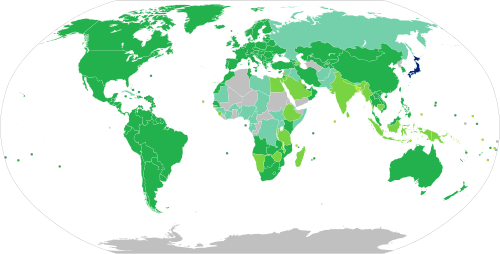
Global Standing and Travel Freedom
Japanese nationality is highly valued for its global mobility. In 2019, the Japanese passport was tied for first in the world according to the Henley Passport Index, providing visa-free or visa-on-arrival access to 189 countries and territories.
Beyond travel, the Nationality Index (QNI) ranked Japanese nationality twenty-ninth in 2017. Unlike travel-focused indices, the QNI incorporates internal factors such as economic strength, human development, and peace and stability.
| Category | Requirement/Condition | Outcome |
|---|---|---|
| Birth (Parentage) | At least one Japanese parent | Automatic Nationality |
| Naturalization | 5+ years residence, self-sufficiency, renunciation of old nationality | Acquisition of Nationality |
| Stateless Birth in Japan | 3 years of residence | Potential Nationality |
| Dual Nationality (Adults) | Voluntary acquisition of foreign nationality | Automatic Loss of Japanese Nationality |
| Dual Nationality (Youth) | Choice must be made by age 22 | Retention of one nationality |
Frequently Asked Questions
Can a child born in Japan to foreign parents become a Japanese national?
Generally, no. Birth in Japan does not entitle a child to nationality unless the child would otherwise be stateless, in which case they may become a national after three years of residence.
What is the minimum residency requirement for naturalization?
Foreign nationals must reside in Japan for at least five years before they can apply for naturalization.
Must I give up my current citizenship to become a Japanese citizen?
Yes, the naturalization process requires the renunciation of any previous nationalities.
At what age must dual nationals choose between Japanese and foreign nationality?
The choice must typically be made before the age of 22, or within two years if the second nationality was acquired after the age of 20.
Is fluency in Japanese a legal requirement for naturalization?
While applicants should be able to demonstrate elementary knowledge of the Japanese language, it is not a strict legal requirement.