Japan Cup: A History of Global Thoroughbred Racing Excellence
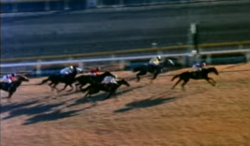
The Japan Cup stands as one of the most prestigious events in international horse racing. Established by the Japan Racing Association (JRA), the race was conceived to bridge the gap between Japanese thoroughbreds and the world's elite. For decades, Japanese horses operated in relative isolation; the Japan Cup was designed to test domestic talent against international competition on home soil, fulfilling a long-term vision to create horses capable of competing on the global stage.
While the JRA proposed an international race as early as the 1970s, early attempts were hindered by a lack of interest from overseas authorities and domestic fears that foreign competition might disrupt the local stud market. By the early 1980s, however, diplomatic and professional ties had strengthened sufficiently to launch the inaugural event.
Key Facts
- Purpose: Created to measure Japanese horses against international standards.
- Distance: Traditionally 2,400 metres (except for the 2002 event).
- Venue: Primarily held at Tokyo Racecourse.
- Status: A national-level Group 1 race, frequently ranked among the top 10 Group 1 races globally by the IFHA.
- Record-Breaking: Has seen multiple world records for the 2,400m distance.
The Early Years and Global Competition (1980s–1990s)
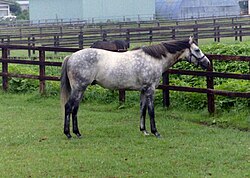
The 1980s were characterized by a diverse array of winners. In 1982, the Irish mare Stanerra won by a head, a victory that not only highlighted the competitiveness of European mares but also strengthened diplomatic ties between Ireland and Japan. By 1984, the race was officially classified as a Group 1 event. That year featured a highly anticipated "Triple Crown Showdown" between Japanese legends Mr. C. B. and Symboli Rudolf, though the victory ultimately went to the underdog Katsuragi Ace.
The late 80s and early 90s saw a surge of international dominance. In 1989, the New Zealand mare Horlicks set a world record for 2,400 metres. Other notable winners included Australia's Better Loosen Up (1990) and the United States' Golden Pheasant (1991), the latter being famously co-owned by hockey legend Wayne Gretzky and Bruce McNall.
The Rise of Japanese Talent
The mid-1990s marked a turning point. While Germany's Lando secured a historic win in 1995, the late 90s saw Japan begin to dominate. In 1998, El Condor Pasa led the first-ever Japanese trifecta (where Japanese horses took first, second, and third place).
The Era of Japanese Dominance
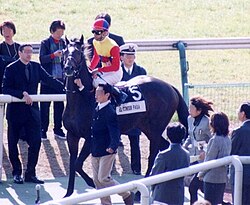
From 1998 to 2004, the tide shifted decisively toward domestic runners. T. M. Opera O became a global sensation in 2000, becoming the highest-earning racehorse in world history at the time with ¥1,216,477,000. He also completed the Autumn Triple Crown, winning the autumn Tennō Shō, the Japan Cup, and the Arima Kinen in a single season.
A brief interruption occurred in 2002 when the race moved to Nakayama Racecourse due to renovations at Tokyo Racecourse, reducing the distance to 2,200 metres. This edition was won by Italy's Falbrav. However, the race returned to Tokyo in 2003, where Tap Dance City achieved the largest winning margin in history with a nine-length victory.
Modern Legends and Record Breakers
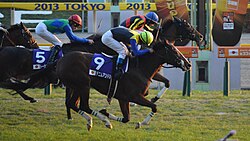
The 21st century introduced several iconic champions. Gentildonna made history in 2013 by becoming the first horse to win the Japan Cup twice.
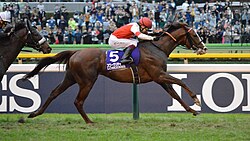
Another era-defining horse was Almond Eye, who broke the course record in 2018 with a time of 2:20.6. She later triumphed again in 2020 in a race featuring three Triple Crown winners: herself, Contrail, and Daring Tact. This 2020 event saw the lowest attendance in history (4,604 people) due to the COVID-19 pandemic.
Recent Triumphs and the 2025 Breakthrough
In 2023, Equinox, the world's highest-rated horse, delivered a commanding performance that led the IFHA to name him the World's Best Racehorse and the Japan Cup the World's Best Horse Race.
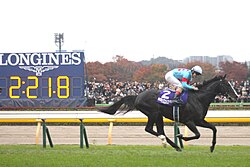
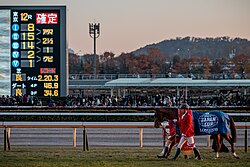
After a 19-year winning streak by Japanese-trained horses, the drought for international winners ended in 2025. The French-trained Calandagan surged in the final 300 metres to win by a head, setting a new world record for 2,400 metres on turf.
Summary of Historic Milestones
| Year | Winner | Significance |
|---|---|---|
| 1981 | Mairzy Doates | Inaugural winner |
| 1984 | Katsuragi Ace | First win during the "Triple Crown Showdown" |
| 1989 | Horlicks | Set a then-world record for 2,400m |
| 1998 | El Condor Pasa | First Japanese trifecta |
| 2000 | T. M. Opera O | Highest earning horse in world history at the time |
| 2013 | Gentildonna | First double winner of the Japan Cup |
| 2018 | Almond Eye | Broke the course record (2:20.6) |
| 2025 | Calandagan | Ended 19-year Japanese winning streak; new world record |
Frequently Asked Questions
What is the Autumn Triple Crown?
The Autumn Triple Crown is a prestigious achievement awarded by the JRA to any horse that wins the autumn Tennō Shō, the Japan Cup, and the Arima Kinen in the same year.
Who is the first horse to win the Japan Cup twice?
Gentildonna was the first horse to achieve double victory, winning the event in 2012 and 2013.
Has the race distance ever changed?
Yes. While traditionally 2,400 metres, the race was shortened to 2,200 metres in 2002 because it was temporarily moved to Nakayama Racecourse during renovations at Tokyo Racecourse.
Which horse holds the record for the largest winning margin?
Tap Dance City holds the record for the largest winning margin in the history of the Japan Cup, winning by nine lengths in 2003.
How long was the streak of Japanese winners before 2025?
Japanese-trained horses won the event for 19 consecutive years before the French-trained Calandagan broke the streak in 2025.