Jackie Robinson: The Man Who Broke Baseball's Color Barrier
Few athletes have left a mark on history as profound as Jackie Robinson. More than just a gifted second baseman, Robinson became a symbol of courage and progress when he integrated Major League Baseball (MLB), ending decades of racial segregation in the sport. His journey from a multi-sport collegiate star to a Hall of Fame legend is a testament to resilience and athletic excellence.
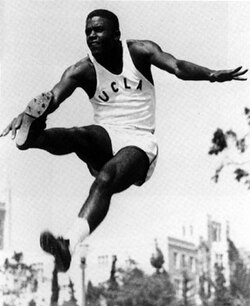
Before his historic debut, Robinson was a standout athlete at UCLA, where he excelled in multiple disciplines, including the long jump.
Key Facts
- MLB Debut: April 15, 1947, with the Brooklyn Dodgers.
- Career Average: .313 batting average with 141 home runs and 761 RBIs.
- Major Awards: 1947 Rookie of the Year and 1949 National League MVP.
- Historic Honor: His number 42 is retired by every single team in Major League Baseball.
- Hall of Fame: Inducted in 1962 on his first ballot with 77.5% of the vote.
The Path to the Major Leagues
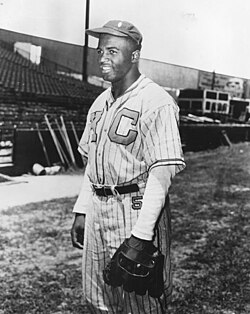
Robinson's professional journey began in the Negro Leagues—the professional leagues for Black players who were excluded from the MLB—playing for the Kansas City Monarchs in 1945. During this time, he was recognized as an All-Star and led the National Association (NAL) in home runs.
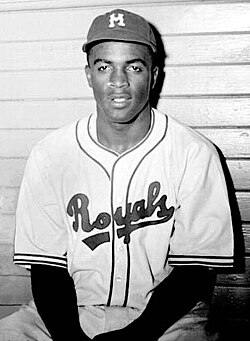
His transition to the majors was not immediate. He spent time in the minor leagues, most notably with the Montreal Royals in 1946, where he honed his skills and prepared for the immense social pressure of integrating the big leagues.
Breaking the Color Barrier with the Brooklyn Dodgers
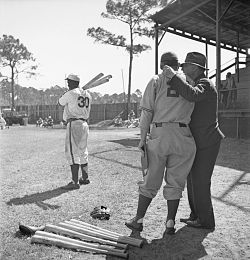
On April 15, 1947, Jackie Robinson stepped onto the field for the Brooklyn Dodgers, officially breaking the color barrier. This move was a pivotal moment in American history, challenging the systemic racism of the era. Robinson faced intense hostility, yet he responded with poise and exceptional performance.
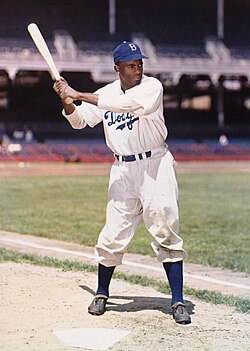
His impact was immediate. In his first year, he was named the Rookie of the Year. By 1949, he reached the pinnacle of the sport, winning the National League Most Valuable Player (MVP) award and becoming the NL batting champion. He also led the league in stolen bases in both 1947 and 1949.
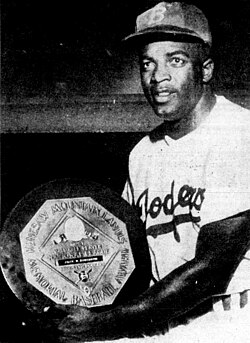
Career Achievements and Statistics
Throughout his ten-season career with the Dodgers, Robinson remained a consistent force. He was a six-time All-Star and helped lead the team to a World Series championship in 1955.
| Statistic/Award | Detail |
|---|---|
| Batting Average | .313 |
| Home Runs | 141 |
| Runs Batted In (RBI) | 761 |
| World Series Titles | 1 (1955) |
| MVP Award | 1949 |
| Rookie of the Year | 1947 |
Beyond the Diamond
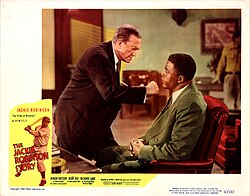
Robinson's influence extended far beyond baseball. His life was chronicled in the 1950 film The Jackie Robinson Story, which brought his struggles and triumphs to a wider audience.
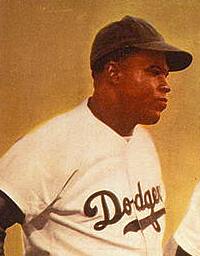
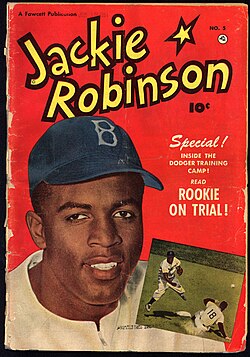
His cultural impact was further cemented through popular media, including comic books in the early 1950s.
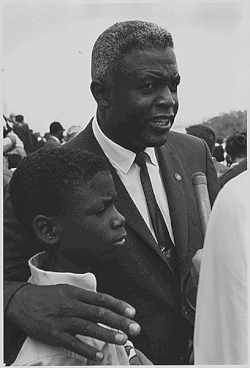
Robinson was also a dedicated advocate for civil rights. He was seen participating in the March on Washington in 1963, continuing his fight for equality long after his retirement from baseball in 1956.
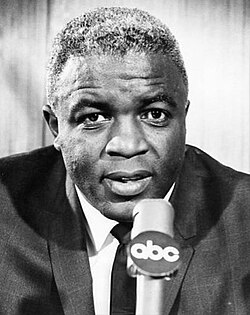
In his post-baseball years, he explored various roles, including a stint as an ABC sports announcer in 1965.
A Lasting Legacy
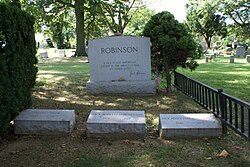
Jackie Robinson passed away on October 24, 1972. He is buried in Cypress Hills Cemetery alongside his son, Jackie Robinson Jr., and his mother-in-law, Zellee Isum.
The baseball world continues to honor him through unprecedented tributes. In 1972, the Los Angeles Dodgers retired his number 42. In 1997, MLB took the extraordinary step of retiring the number 42 across the entire league.
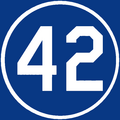
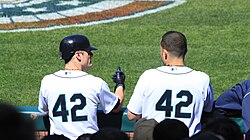
Every year, MLB celebrates Jackie Robinson Day, where players from all teams wear number 42 to commemorate his legacy.
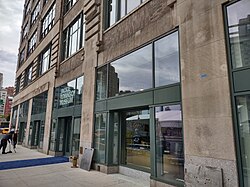
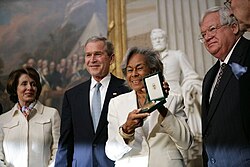
Further tributes include the Jackie Robinson Museum in Manhattan, opened in 2022, and the posthumous awarding of the Congressional Gold Medal in 2005, accepted by his wife, Rachel Robinson.
Frequently Asked Questions
When did Jackie Robinson break the color barrier?
Jackie Robinson broke the color barrier on April 15, 1947, when he made his professional debut for the Brooklyn Dodgers.
What was Jackie Robinson's career batting average?
Robinson finished his Major League career with a .313 batting average.
Why is number 42 significant in baseball?
Number 42 was worn by Jackie Robinson. It is the only number retired by every single team in Major League Baseball to honor his courage and contribution to the game.
What other sports did Jackie Robinson play?
Robinson was a versatile athlete; during his time at UCLA, he excelled in football and track and field, including the long jump.
Which awards did Jackie Robinson win during his career?
He won the Rookie of the Year award in 1947 and the National League MVP award in 1949, while also becoming the NL batting champion that same year.