Jack Russell Terrier: The History and Evolution of a Sporting Breed
The story of the Jack Russell Terrier is one of purpose, passion, and a deep connection between man and dog. Originally bred for the demanding task of fox hunting, these energetic terriers were designed to be the perfect partners for hunters who needed a dog with courage, stamina, and a specific temperament. From a single female dog in the early 19th century to the beloved family companions of today, the breed's journey reflects the changing needs of sporting and domestic life.
The Vision of Reverend John Russell
The breed's origins trace back to the English White Terrier, a now-extinct breed. In 1819, during his final year at Exeter College, Oxford, the Reverend John "Jack" Russell—a parson and hunting enthusiast—purchased a small white and tan female terrier named Trump from a local milkman. Trump became the blueprint for Russell's ideal Fox Terrier, a term then used for any terrier capable of bolting foxes from their burrows.
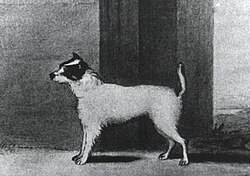
Trump was described as being mostly white, with small tan patches over her eyes and ears and a tiny dot at the root of her tail. For Russell, she was the animal he had only seen in his dreams. He used Trump as the foundation for a breeding program focused on creating a dog with the physical formation to enter burrows and the stamina to sustain a hunt.
The Ethics of the Hunt
A critical requirement for Russell's dogs was tempered aggressiveness. The goal was for the dog to have enough drive to pursue and bolt the fox without causing physical harm to the animal. Russell believed that harming the quarry was unsporting and took pride in the fact that his terriers "never tasted blood." This specific temperament made his line of dogs highly respected among hunting enthusiasts.
![Carlisle Tack, a Fox terrier born in 1884, who was owned by John Russell.[16]](/images/3f/37/3f371d87dff846d7780b389e3324a7e8947a7341695ee32d72204f98d8dd101a.jpg)
Evolution and Breed Divergence
By the 1850s, these dogs were recognized as a distinct breed. However, the lineage is complex. Due to financial hardships, Russell was forced to sell his dogs multiple times, and by his death in 1883, only four non-breeding terriers remained. While modern Jack Russells descend from the "old style" terriers of that era, documented pedigrees prior to 1862 are nonexistent.
The formation of the Fox Terrier Club in 1875, with Russell as a founder, marked a shift. Over time, the "show" Fox Terrier began to diverge from the working type. While the show dogs changed in appearance, the traditional working terriers remained in certain regions, eventually becoming the modern Jack Russell type.
| Feature | Working Jack Russell | Parson Russell Terrier |
|---|---|---|
| Primary Purpose | Working/Hunting/Companion | Show/Conformation/Companion |
| Size Focus | Broad range of sizes | More standardized/Taller |
| Registry Focus | Working ability and traits | Kennel Club standards |
The Transition to Badger Digging and Companion Life
After Russell's death, breeders like East in Chislehurst and Archer in Cornwall worked to maintain the strains, focusing on dogs typically under 7 kg (15 lb). In 1894, Arthur Blake Heinemann founded the Devon and Somerset Badger Club to promote terriers suitable for badger digging. This shift in purpose likely led to the introduction of Bull Terrier stock to strengthen the dogs, potentially creating the shorter-legged varieties seen today.
Following World War II, the demand for hunting dogs plummeted. The Jack Russell Terrier transitioned from a specialized sporting tool to a popular family and companion dog, leading to the creation of various breed clubs to manage their registration and standards.
Modern Recognition and Global Standards
The late 20th century saw a divide in how the breed was recognized globally:
- United States: The Jack Russell Terrier Club of America (JRTCA), formed in 1976, maintains an open registry and prioritizes working qualities. Conversely, the American Kennel Club (AKC) recognized the breed in 2001 as the Parson Russell Terrier, with a narrower size standard.
- United Kingdom: The Parson Jack Russell Club of Great Britain sought Kennel Club recognition, which was granted in 1990. In 1999, the name was officially shortened to the Parson Russell Terrier.
- Australia and New Zealand: The ANKC and NZCK register both Jack Russell and Parson Russell terriers, though their size requirements differ from U.S. standards.
Many other breeds share heritage with the early Fox Terrier, including the Rat Terrier, Tenterfield Terrier, Brazilian Terrier, Japanese Terrier, and Ratonero Bodeguero Andaluz.
Key Facts
- Founder: Bred by Reverend John "Jack" Russell starting in 1819.
- Foundation Dog: A white and tan female named Trump.
- Original Purpose: Bolting foxes from burrows without harming them.
- Key Trait: Tempered aggressiveness to ensure a sporting chase.
- Modern Split: Divided primarily into the working Jack Russell and the show-standard Parson Russell Terrier.
- Related Breeds: Includes the Rat Terrier and Tenterfield Terrier.
Frequently Asked Questions
What is the difference between a Jack Russell and a Parson Russell Terrier?
The primary differences lie in size and registration. Parson Russell Terriers are generally taller and recognized by major kennel clubs (like the AKC and UK Kennel Club) under specific conformation standards. Jack Russell Terriers often have a broader range of sizes and are frequently managed by clubs that prioritize working ability over show standards.
Why were these dogs bred to be mostly white?
The white coloring was essential for safety and visibility; it allowed hunters to easily differentiate the dog from the fox it was pursuing in the field or underground.
Who was Trump?
Trump was the small white and tan female terrier purchased by Reverend John Russell in 1819. She served as the foundation for his breeding program to develop the ideal fox-working terrier.
Are modern Jack Russells direct descendants of Trump?
It is unlikely that any living dog can be proven as a direct descendant of Trump. This is because Reverend Russell had to sell his dogs multiple times due to financial difficulties and had only four non-breeding dogs left at the time of his death in 1883.
What does "tempered aggressiveness" mean in this breed?
It refers to a drive strong enough to pursue and flush out a fox, but controlled enough to avoid killing or seriously injuring the animal, which would have ended the hunt prematurely and been considered unsporting.