J. G. Anschütz: A Legacy of Precision Sporting Firearms
Founded in 1856 by Julius Gottfried Anschütz, J. G. Anschütz GmbH & Co. KG has established itself as a global leader in the manufacturing of high-precision sporting firearms. Based in Ulm, Germany, the company specializes in rimfire and centerfire rifles, air rifles, and air pistols designed for the rigorous demands of target competition, Olympic shooting, and hunting.
From the Summer Olympics 50-meter rifle events to the Winter Olympics biathlon, Anschütz equipment is a staple among elite athletes. The company's commitment to engineering excellence has made it a premier brand for UIT/ISSF (International Shooting Sport Federation) competitions worldwide.

Key Facts
- Founded: 1856 in Germany.
- Specialization: High-precision rifles and pistols for competition and hunting.
- Olympic Presence: Manufacturer of the standard biathlon rifle for the Winter Olympics.
- Strategic Holdings: Major shareholder of the Austrian manufacturer Steyr Sportwaffen GmbH.
- Global Reach: Serves markets worldwide from headquarters in Ulm and Tübingen.
The Evolution of Precision
Anschütz entered the target rifle market in the 1950s, introducing the Model 54 action. By 1962, the release of the SuperMatch—featuring a heavy receiver, short lock time (the interval between the trigger pull and the firing pin hitting the primer), and a superior trigger—shifted the industry landscape. This innovation effectively displaced the Winchester Model 52, which had dominated the first half of the 20th century, positioning Anschütz as the dominant force in elite shooting.
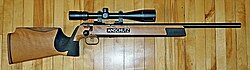
Throughout the 1960s, the company expanded its reach with the lighter Model 64 receiver for sporter rifles. The 21st century brought further modernization, including the introduction of aluminum stocks and the 2013 action, which transitioned from a cylindrical design to a large rectangular footprint while retaining the Match 54 bolt and trigger.
Modern Innovations and Challenges
In 2015, the company launched the 54.30 action, shortening the bolt by 30mm to compete with emerging short-bolt designs from brands like Bleiker and Grünig + Elmiger. Despite this, the 54.30 faced stiff competition in prone events using decimal scoring from the Walther KK500 and Grunig R3.
To reclaim the top tier of ISSF competition, Anschütz released the 22Max at IWA 2023, marking a radical departure from traditional bolt-action designs. Simultaneously, the company entered the Precision Rifle Series (PRS) market with the Anschütz Precision Rifle (APR) line, partnering with MDT for the chassis to produce the 1761APR (rimfire) and 1782APR (centerfire).
Product Portfolio
The Anschütz catalog is divided into specialized categories to serve different shooting disciplines, from the high-speed requirements of biathlon to the extreme accuracy of match shooting.
| Category | Key Models | Primary Use |
|---|---|---|
| Biathlon | Fortner 1827, 64 Biathlon | Winter Olympic Competition |
| Small Bore Match | 22Max, 54.30, 1903, 2013 | ISSF/Olympic Target Shooting |
| Match Air Rifles | 9015 | 4.5mm Target Competition |
| Precision Rifle (APR) | 1761 APR, 1782 APR | PRS Style Competition |
| Hunting | 1727 (Straight Pull), 1771, 1416 | Sport Hunting |
Biathlon and Straight-Pull Technology
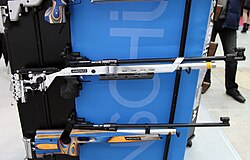
The Fortner 1827 is currently one of the most utilized biathlon rifles in Olympic competition. Produced by System Fortner under license, these rifles utilize a straight-pull mechanism with six ball bearings to lock the bolt, allowing for significantly faster cycling than traditional bolt actions.
Frequently Asked Questions
What is the significance of the Fortner action in biathlon?
The Fortner action uses a straight-pull mechanism that allows the shooter to cycle the action much faster than a standard bolt, which is critical for the rapid-fire requirements of Olympic biathlon events.
How does the 22Max differ from previous Anschütz rifles?
Released in 2023, the 22Max represents a radical design departure from previous bolt-action models, specifically engineered to compete at the highest levels of ISSF competition.
What is the Anschütz Precision Rifle (APR) line?
The APR line consists of the 1761APR (rimfire) and 1782APR (centerfire) models. These use modified barrelled actions paired with MDT chassis, designed specifically for Precision Rifle Series (PRS) style shooting.
Which Anschütz rifles are used in the Olympics?
Anschütz produces the standard biathlon rifles for the Winter Olympics (such as the Fortner 1827) and provides high-precision rifles for the Summer Olympics 50-meter rifle events.
What is the relationship between Anschütz and Steyr Sportwaffen?
J. G. Anschütz is a major shareholder in the Austrian target firearms manufacturer Steyr Sportwaffen GmbH.