ISO: The Global Engine of International Standardization
In an increasingly interconnected world, the ability for technologies, products, and services to work together seamlessly is vital. At the heart of this global compatibility is ISO, the International Organization for Standardization. As a non-governmental organization headquartered in Vernier, Switzerland, ISO plays a critical role in developing international standards that cover nearly every aspect of technology and manufacturing.
Since its official inception on 23 February 1947, the organization has grown into a massive network of experts. As of July 2024, ISO has published over 25,000 international standards, ensuring that quality, safety, and efficiency are maintained across borders.
Key Facts
- Founded: 23 February 1947
- Headquarters: Vernier, Switzerland
- Membership: 175 national members (as of 2026)
- Scope: Over 800 technical committees and subcommittees
- Official Languages: English, French, and Russian
- Total Standards: Over 25,000 published as of July 2024
The History of ISO
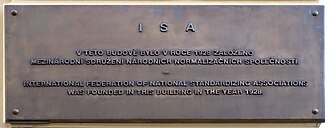
The roots of ISO trace back to 1926 with the formation of the International Federation of the National Standardizing Associations (ISA). While the ISA primarily focused on mechanical engineering, its operations were suspended in 1942 during World War II. Following the war, the United Nations Standards Coordinating Committee (UNSCC) proposed the creation of a new, more comprehensive global standards body.
In October 1946, delegates from 25 countries met in London. They agreed to merge the efforts of the ISA and the UNSCC, leading to the official launch of the International Organization for Standardization in early 1947. Interestingly, while the organization is known by the abbreviation ISO, the name was chosen because "iso" is a Greek term meaning "equal," reflecting the goal of international uniformity.
Membership and Governance
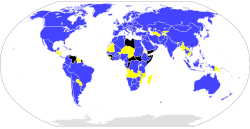
ISO operates through a unique membership structure. As of 2026, there are 175 national members, with each country represented by exactly one member. These members are categorized into three distinct types:
- Member bodies: National standards bodies with full voting rights.
- Correspondent members: Countries without a national standards body.
- Subscriber members: Countries with smaller economies.
The technical heavy lifting is performed by over 800 Technical Committees (TCs) and Subcommittees (SCs). These groups are responsible for the development of specific standards. For example, ISO/TC 176 focuses on quality management, while ISO/TC 262 handles risk management.
The Standardization Process
Developing an international standard is a rigorous, multi-stage journey designed to ensure consensus and technical accuracy. The process generally moves through several key stages:
- Proposal Stage: A Preliminary Work Item (PWI) is identified, leading to a New Work Item Proposal (NP).
- Preparatory Stage: Experts create Working Drafts (WD) and Approved New Work Items (AWI).
- Committee Stage: The draft is refined into a Committee Draft (CD) and then a Final Committee Draft (FCD).
- Enquiry Stage: The Draft International Standard (DIS) is circulated for inquiry.
- Approval Stage: The Final Draft International Standard (FDIS) is submitted for approval.
- Publication Stage: The document is published as an International Standard (IS).
While the process is thorough, it has faced criticism for being slow. In response, "fast-track" procedures have been utilized for specific needs, such as the standardization of Office Open XML (OOXML).
Types of ISO Publications
Not all ISO documents are identical. The organization produces various types of publications to meet different technical needs:
- International Standards (IS): The primary output of the standardization process.
- Technical Reports (TR): Documents providing technical information or data.
- Technical Specifications (TS): Specifications used when a full standard is not yet possible.
- Publicly Available Specifications (PAS): A rapid alternative process for obtaining approval.
- ISO Guides: Guidance provided to technical committees for preparing standards.
| Category/Metric | Details |
|---|---|
| Total National Members | 175 (as of 2026) |
| Technical Committees | 800+ |
| Published Standards | 25,000+ |
| Official Languages | English, French, Russian |
| Headquarters Location | Vernier, Switzerland |
Frequently Asked Questions
What does the name ISO mean?
The name ISO is derived from the Greek word "iso," meaning "equal." This was chosen to ensure the organization's name would be consistent across all languages, rather than using different acronyms in different countries.
How is ISO funded?
ISO is funded through a combination of the sale of its standards and contributions from organizations that manage specific projects or provide experts for technical work.
Are ISO standards free to access?
Generally, no. ISO documents are subject to strict copyright restrictions, and most copies require a fee (often US$120 or more). However, some standards are made freely available by ISO or its official representatives.
What are some real-world examples of ISO products?
You may encounter ISO terms in daily life, such as ISO film speed in photography, ISOFIX for child safety seats, or ISOBUS for agricultural communication protocols.
How many languages does ISO use?
ISO maintains three official languages: English, French, and Russian.