Islam in Korea: A Historical and Contemporary Overview
While Islam is a minority religion on the Korean Peninsula, it maintains a significant and growing presence. The Muslim community is primarily concentrated in major urban centers such as Seoul, Busan, and Pyongyang. In South Korea, the community consists of approximately 200,000 Muslims, with 70% to 80% being settled foreign residents. In North Korea, the population is estimated at around 3,000, largely comprised of Iranian diplomats and Indonesian guest workers.
From ancient maritime arrivals during the Goryeo dynasty to the modern-day establishment of Islamic schools and halal-certified businesses, the history of Islam in Korea is a narrative of migration, humanitarian aid, and cultural integration.
Key Facts
- South Korean Muslim Population: Approximately 200,000 people.
- Primary Hub: Seoul accounts for 40% of South Korea's total Muslim population.
- North Korean Presence: Roughly 3,000 Muslims, including the Ar-Rahman Mosque in Pyongyang.
- Historical Arrival: Muslim groups arrived during the Goryeo kingdom in the early 11th century.
- Modern Re-introduction: Significant influence from the Turkish Brigade during the Korean War.
Historical Evolution of Islam in Korea
Early History and the Goryeo Period
Local Korean accounts suggest that Muslims first arrived on the peninsula in 1024 during the Goryeo kingdom. Historical records indicate a group of approximately 100 Muslims, including Hasan Raza (Yeollaja), arrived in September during the 15th year of King Hyeonjong's reign. This was followed by another group of 100 Muslim merchants the following year.
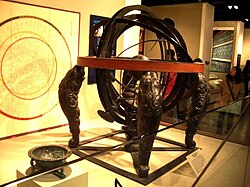
![Gangnido reflects the geographic knowledge of China during the Mongol Empire when geographical information about Western countries became available via Islamic geographers.[16]](/images/12/66/1266c40bf23dd0b06f772254f80c74f45c14d2326d55db34332a93e0572854b1.webp)
During this era, Islamic influence was reflected in scientific and cultural exchanges, such as the study of the Huihui Lifa (Islamic astronomical tables).
The Joseon Period and Decline
By the 16th century, Islam had become practically non-existent in Korea. While minor Islamic presences and memories of the faith survived into the 19th century, many religious practices and specific teachings were lost over time. It was not until the 19th century, through contact with Korean settlers in Manchuria, that Islam began to re-emerge.
20th-Century Re-introduction and the Korean War
The modern re-introduction of Islam is closely linked to the Korean War. The Turkish Brigade, sent by Turkey to aid South Korea under the United Nations command, played a dual role. Beyond their military contributions, they provided humanitarian aid, including operating schools for war orphans.

Following the war, Turkish UN peacekeepers began preaching Islam to the local population. This led to the formation of the Korea Muslim Society in 1955, which erected the first South Korean mosque at Imun-dong. This organization eventually evolved into the Korea Muslim Federation (KMF) in 1967.
Islam in the Modern Era
The Development of Religious Infrastructure
The construction of major Islamic landmarks has been a gradual process. In 1962, a grant from the government of Malaysia was intended for a mosque in Seoul, but inflation stalled the project. The Seoul Central Mosque was eventually completed in the Itaewon neighborhood in 1976.
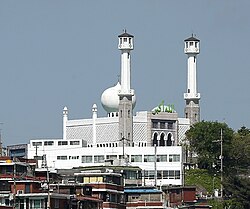
Today, mosques serve various communities in Busan, Anyang, Gyeonggi, Gwangju, Jeonju, Daegu, and Kaesong. To support the growing community, the KMF opened the Prince Sultan Bin Abdul Aziz Elementary School in 2009, providing an official curriculum for foreign Muslim children to learn about their religion, Arabic, and Islamic culture.
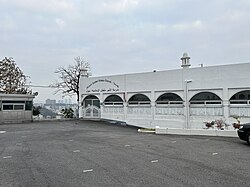
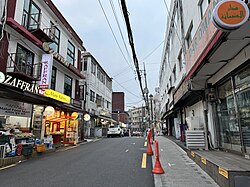
The presence of Islam is also visible in the local economy, with various Middle Eastern businesses operating around major religious centers.
Demographics and Community Life
The Muslim community in South Korea is divided into two main groups: traditional Muslims (local Korean converts) and immigrant Muslims (migrants from the Middle East, Central Asia, South Asia, and Southeast Asia). Migrants from Pakistan and Bangladesh constitute a large portion of the population. Recent trends show an upward trajectory in Muslim immigration, particularly among those aged 10 to 29.
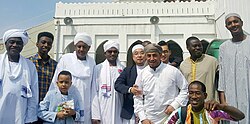
Cultural celebrations also play a vital role in community cohesion, such as the observance of Eid al-Fitr.
Summary of Muslim Presence by Region
| Region | Estimated Population | Primary Demographics | Key Landmark |
|---|---|---|---|
| South Korea | ~200,000 | Foreign workers, converts, migrants | Seoul Central Mosque |
| North Korea | ~3,000 | Indonesian workers, Iranian diplomats | Ar-Rahman Mosque |
Frequently Asked Questions
What is the status of Halal food in South Korea?
The Korea Muslim Federation (KMF) provides halal certificates to restaurants and businesses. These certificates are recognized by the Department of Islamic Development Malaysia (JAKIM). As of early 2018, there were 14 KMF-halal approved restaurants in the country.
Where can I find the largest Muslim community in South Korea?
The largest concentration is in Seoul, which houses 40% of the nation's total Muslim population. The Itaewon neighborhood is a significant cultural hub for the community.
Are there Islamic schools in South Korea?
Yes. The Prince Sultan Bin Abdul Aziz Elementary School was established to help foreign Muslim children learn about their religion through an official curriculum. Additionally, the Sultan Bin Abdul Aziz Madrasa has provided instruction in Arabic and Islamic culture since the 1990s.
How did Islam return to Korea after the Joseon period?
Islam was re-introduced more formally in the 20th century, largely due to the presence of the Turkish Brigade during the Korean War and the subsequent work of Turkish UN peacekeepers who began preaching to the local population.
Is there a mosque in North Korea?
Yes, the Ar-Rahman Mosque, located in Pyongyang, is the only mosque in North Korea and is hosted by the Iranian embassy.