Irwin Hasen: A Legacy of Comic Books and Cartooning
Irwin Hasen was a versatile artist and educator whose career spanned the Golden Age of comic books to the modern era of instructional art. From his early training at the National Academy of Design and the Art Students League, Hasen developed a style that would influence some of the most iconic characters in American comic history.
Key Facts
- Creator of Wildcat: Hasen developed this enduring character for National Comics/DC Comics.
- Dondi Partnership: Collaborated with writer Gus Edson to create the long-running Dondi comic strip.
- Educational Impact: Taught at the Kubert School for over 30 years.
- DC Comics Veteran: Contributed to major titles including The Flash, Green Lantern, and the Justice Society of America.
Early Career and the Golden Age of Comics
Hasen entered the professional comic book field in 1940 through the Harry "A" Chesler shop. During this formative period, he contributed to a wide array of titles, including The Green Hornet, The Fox, Secret Agent Z-2, Bob Preston, Explorer, Cat-Man, and The Flash. He also created the feature Citizen Smith, Son of the Unknown Soldier.
By 1941, Hasen was working for Sheldon Mayer. His contributions to National Comics/DC Comics during the 1940s were significant, most notably the creation of the character Wildcat. His portfolio from this era also included work on Green Lantern and occasional contributions to Wonder Woman, specifically in Sensation Comics #19 in 1943.
Military Service and Post-War Return
During World War II, Hasen served at Fort Dix. While stationed there, he took complete editorial and creative control of the Fort Dix Post newspaper. His role was comprehensive: he edited, published, set the type, wrote the content, drew the comic strip, and interviewed visiting celebrities. He described this intensive period of productivity as one of his proudest achievements.
Following his discharge from the Army in 1946, Hasen returned to DC Comics. In the post-war era, he continued to lend his artistic talents to high-profile series such as Johnny Thunder, The Flash, Green Lantern, and the Justice Society of America.
Transition to Comic Strips
Hasen's transition into newspaper strips began in 1944 and 1945, when he drew a comic strip adaptation of The Goldbergs radio and television series for the New York Post.
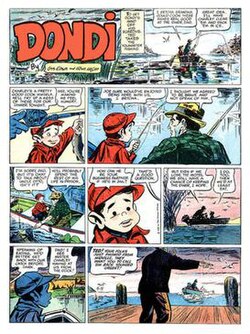
The most defining work of his strip career came in 1954 with the creation of Dondi. Hasen, a member of the National Cartoonists Society, met writer Gus Edson during a tour of Korea. The two formed a creative partnership where Edson handled the writing and Hasen provided the artwork.
Dedication to Art Instruction
Beyond his commercial work, Hasen was committed to mentoring the next generation of artists. From September 1976 until May 2007, he served as an instructor at the Kubert School in Dover, New Jersey. Additionally, he shared his expertise by teaching cartooning classes at The School of Visual Arts in New York City.
| Category | Key Works / Institutions | Notable Details |
|---|---|---|
| Comic Books | DC Comics, National Comics | Created Wildcat; worked on The Flash and Green Lantern |
| Comic Strips | Dondi, The Goldbergs | Collaborated with Gus Edson on Dondi |
| Education | Kubert School, School of Visual Arts | Taught from 1976 to 2007 at Kubert School |
| Military | Fort Dix Post | Managed all aspects of the base newspaper |
Frequently Asked Questions
Which famous DC character did Irwin Hasen create?
Irwin Hasen is credited with the creation of the character Wildcat for National Comics/DC Comics.
Who was Hasen's collaborator on the Dondi comic strip?
Hasen collaborated with Gus Edson, whom he met during a tour of Korea; Edson wrote the strip while Hasen illustrated it.
Where did Irwin Hasen teach art?
He was an instructor at the Kubert School in Dover, New Jersey, from 1976 to 2007, and also taught at The School of Visual Arts in New York City.
What did Hasen do during his time at Fort Dix?
During World War II, he managed the Fort Dix Post newspaper, handling everything from writing and interviewing to typesetting and drawing the comic strip.
Which other comic book titles did he contribute to in the 1940s?
His early work included The Green Hornet, The Fox, Secret Agent Z-2, Bob Preston, Explorer, Cat-Man, The Flash, and Green Lantern.