Inverness Museum and Art Gallery: A Journey Through Highland Heritage
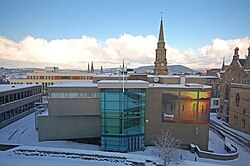
Located on Castle Wynd in the heart of the Highlands, the Inverness Museum and Art Gallery serves as a premier cultural hub for the Capital of the Highlands. Managed by High Life Highland on behalf of the Highland Council, this institution offers visitors free entry to explore a rich tapestry of Scottish history, art, and natural science.
Key Facts
- Location: Castle Wynd, Inverness, Scotland.
- Admission: Free of charge.
- Management: High Life Highland for the Highland Council.
- Key Exhibits: Pictish stones, Jacobite memorabilia, and Scottish geology.
- Notable Art: Works by Alexander Nasmyth, John Quinton Pringle, and Tom Scott.
The Evolution of the Museum
The path to the current gallery was a long and often difficult journey. The origins date back to 1825, when the Northern Institute for the Promotion of Science and Literature established a museum on Inglis Street. However, financial struggles forced the collection to move several times, relocating to the Inverness Royal Academy in 1834 and the Mechanics Institute in the 1860s. By the time the collection reached the town hall, it had suffered significant losses.
A new era began in 1873 with proposals for a dedicated facility, which finally opened on October 11, 1881, at Exchange Place. This iteration focused heavily on Highland and Jacobite collections. Among the most prestigious early acquisitions were Stuart portraits donated by the family of Prince Frederick Duleep Singh. These included a portrait of Prince Charles Edward Stuart, attributed to Pompeo Batoni, and a portrait of Oliver Cromwell that Prince Freddy famously hung upside down.
Modern Redevelopment
The museum's current home was established in 1963 following the redevelopment of the Castle Wynd and Bridge Street area. To keep the facility modern, two major upgrades were undertaken: a 1982 expansion that added a café and new galleries, and a comprehensive £1.3 million makeover in 2006. This final redesign, which required a six-month closure, was completed in time for the Highland 2007 celebrations.
Exploring the Collections
The museum is organized to lead visitors from the ancient foundations of the region to its more recent historical events.
Ground Floor: Nature and Antiquity
The ground floor is dedicated to the physical and ancient history of the region. Visitors can explore displays on Scottish geology (the study of the Earth's physical structure and substance) and natural history. A highlight of this section is the archaeology of the Highlands, featuring the intricate carvings of Pictish stones, left by the ancient people of northern Scotland.
First Floor: Culture and Conflict
The first floor transitions into the human history of the Highlands. This area houses a diverse array of artifacts, including:
- Jacobite memorabilia relating to the political uprisings of the 17th and 18th centuries.
- Exquisite Inverness silver.
- Traditional Highland weapons and bagpipes.
Additionally, the first floor hosts a rotating program of temporary exhibitions and showcases Highland landscapes painted by renowned Scottish artists such as Alexander Nasmyth, John Quinton Pringle, and Tom Scott.
A Unique Addition: The Inverness Puma
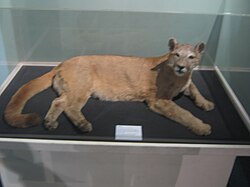
One of the museum's most unusual exhibits is a taxidermied puma. The animal was captured in Inverness-shire in 1980 and was believed to be an abandoned pet. After spending time in a wildlife park, the puma was preserved and placed in the museum following its death.
Museum Summary
| Category | Details |
|---|---|
| Opening Date (Original) | October 11, 1881 |
| Current Site Established | 1963 |
| Major Renovations | 1982 and 2006 (£1.3m) |
| Primary Themes | Geology, Archaeology, Jacobite History, Scottish Art |
| Entry Fee | Free |
Frequently Asked Questions
How much does it cost to visit the Inverness Museum and Art Gallery?
There is no entry charge to visit the museum and gallery.
What can I see on the ground floor of the museum?
The ground floor features exhibits on Scottish geology, natural history, and Highland archaeology, including historic Pictish stones.
Who manages the museum's facilities?
The collection and facilities are managed by High Life Highland on behalf of the Highland Council.
What is the story behind the puma in the museum?
The puma was captured in Inverness-shire in 1980, likely as an abandoned pet. It lived in a wildlife park before being stuffed and added to the museum's collection after its death.
Which famous artists are represented in the gallery?
The collection includes Highland landscapes by Scottish artists Alexander Nasmyth, John Quinton Pringle, and Tom Scott.