Inverness Castle: A History of Scotland's Highland Stronghold
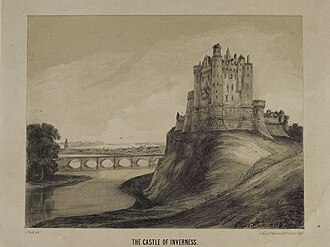
Perched majestically overlooking the River Ness in the heart of the Highlands, Inverness Castle stands as a symbol of power, justice, and resilience. While the current red sandstone structure is a product of the 19th century, the site has been a strategic military and administrative hub for nearly a millennium, with a succession of fortifications occupying the hill since 1057.
From its origins as a royal stronghold to its role as a modern judicial center, the castle has witnessed the rise and fall of clans, the intrigues of monarchs, and the evolution of Scottish governance.
Key Facts
- Location: Inverness, Highland, Scotland.
- Current Structure: Completed in 1836 (south block) and 1848 (north block).
- Architects: William Burn, Thomas Brown II, and Joseph Mitchell.
- Status: Category A listed building.
- Historical Significance: Site of fortifications since 1057; featured in Shakespeare's Macbeth.
- Current Status: Under renovation; scheduled to reopen to the public in 2025.
Medieval Origins and Clan Conflict
The history of the site begins in 1057, with tradition attributing the first castle to Malcolm III of Scotland. Over the centuries, the castle became a focal point for royal authority in the north. In 1163, Shaw Macduff, the first chief of Clan Mackintosh, was appointed constable of the castle by Malcolm IV following the suppression of a rebellion in Moray.
The castle's strategic importance often made it a target. In 1307, King Robert I of Scotland razed its battlements to the ground. Later, in 1428, James I used the castle as a trap for fifty clan chiefs; during a summoned parley, the chiefs were arrested and imprisoned, with several executed on the spot. This act of betrayal led the 3rd Lord of the Isles to return with 10,000 men to burn the town of Inverness, though the castle itself remained secure.
The Era of Mary, Queen of Scots
By the 16th century, the castle was under the influence of the powerful Gordon family. George Gordon, 4th Earl of Huntly, completed a new castle and tower in 1548, adding a hall and chapel. However, this control sparked conflict when Mary, Queen of Scots visited in August 1562.
The Gordons refused the Queen entry, prompting the Clan Chattan, Clan Munro, and Clan Fraser to seize the castle on her behalf. Following the takeover, Mary ordered the execution of the governor who had denied her entry. During her subsequent visits, Mary's interactions with the region were marked by both diplomacy and military preparation, including the purchase of gunpowder and tartan plaids for her household.
The 19th Century Transformation
After centuries of sieges and periods of decay—including a report in 1619 that much of the structure had fallen down—the castle was completely reimagined in the 1800s. The current red sandstone building was designed in an early castellated style, which mimics the appearance of a medieval fortress.
The construction occurred in phases:
- South Block (1836): Designed by William Burn to house the Sheriff Court and County Buildings.
- North Block (1848): Designed by Thomas Brown II, originally serving as a prison and later as an additional courthouse.
- Enclosing Walls: Designed by Joseph Mitchell to provide a bastioned perimeter.
The architecture is characterized by a symmetrical seven-bay frontage, featuring a projecting central section and a mix of round and square castellated towers.
Military Trophies and Modern Use
In 1920, the castle became a site of military commemoration, displaying four captured field guns. These included pieces from the Battle of Loos (1915) and the Siege of Sevastopol (1855). Over time, most were lost or sold; by 2017, only the gun from the Battle of Loos remained, now housed at the Clan Cameron Museum in Achnacarry.
For much of the 20th century, the castle served as the administrative heart of Inverness-shire. It housed the County Council until 1963 and continued as a judicial venue until March 30, 2020, when the Inverness Sheriff Court moved to the new Inverness Justice Centre.
| Period/Year | Key Event/Feature | Primary Figure/Architect |
|---|---|---|
| 1057 | First castle established | Malcolm III |
| 1548 | Tower and hall completed | George Gordon, 4th Earl of Huntly |
| 1562 | Seizure for Mary, Queen of Scots | Clans Fraser and Munro |
| 1836 | South block completed | William Burn |
| 1848 | North block completed | Thomas Brown II |
| 2021–2025 | Extensive renovation | The Highland Council |
Cultural Legacy
Beyond its physical walls, Inverness Castle exists in the global imagination through William Shakespeare's Macbeth, where it serves as the residence of Macbeth and Lady Macbeth and the site of King Duncan's murder. Its image is also recognized in finance, having appeared on the reverse of the Royal Bank of Scotland's £50 note introduced in 2005.
Frequently Asked Questions
When will Inverness Castle reopen to the public?
The castle and its grounds closed in 2021 for extensive renovation and remodelling; they are scheduled to reopen in 2025.
Who designed the current red sandstone building?
The current structure was a collaborative effort: William Burn designed the south block, Thomas Brown II designed the north block, and Joseph Mitchell designed the enclosing walls.
What is the castle's connection to Macbeth?
Inverness Castle is a primary setting in Shakespeare's tragedy Macbeth, serving as the home of the Macbeths and the location where King Duncan is murdered.
What happened to the field guns that were once at the castle?
Most were sold or lost, including Russian guns sold for scrap in 1941. The only surviving piece, a gun from the Battle of Loos, is now displayed at the Clan Cameron Museum.
What was the castle's primary function before 2020?
It served as a judicial center, housing the Inverness Sheriff Court and the Justice of the Peace Court until the courts moved to the Inverness Justice Centre in March 2020.