Inverness Airport: The Gateway to the Scottish Highlands
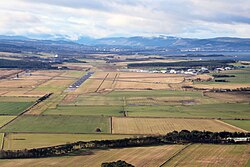
Located at Dalcross, approximately 8 miles (13 km) north-east of the city, Inverness Airport (IATA: INV, ICAO: EGPE) serves as the primary aviation hub for Inverness, Highland, and Moray. Owned and operated by Highlands and Islands Airports Limited (HIAL), the airport provides essential connectivity for travelers visiting the North of Scotland, offering a blend of scheduled domestic flights, European services, and freight operations.
As a critical piece of regional infrastructure, the airport has evolved from its military origins into a bustling public facility. In 2025, the airport recorded 824,046 passengers, reflecting a 3% increase from the previous year. By the first quarter of 2026, the Civil Aviation Authority (CAA) ranked it as the 22nd busiest airport in the United Kingdom.
Key Facts
- Location: Dalcross, Scotland (57°32′33″N 004°02′51″W).
- Operator: Highlands and Islands Airports Limited (HIAL).
- Passenger Volume: 824,046 (2025).
- Primary Focus City: Loganair.
- Runways: Two asphalt runways (05/23 and 11/29).
- Elevation: 31 ft (9.4 m) above mean sea level (AMSL).
Historical Evolution
Military Origins
Before becoming a civil hub, the site hosted numerous Royal Air Force (RAF) units. Between 1941 and 1968, it served as a training and operational base for various detachments, including the No. 2 Air Gunners School and the No. 7 Gliding School. Notable aircraft that operated from the site during this era included the Spitfire F.21, Mustang I, and Boston IIIA.
Transition to Civil Aviation
The airport opened for civil operations in 1947. The mid-1970s saw the introduction of flights to London-Heathrow by British European Airways using Vickers Viscounts and Hawker Siddeley Trident jets. The route to London has historically been volatile; it was discontinued in 1983, taken over by Dan-Air, and later managed by British Airways. After a 19-year absence, British Airways reinstated daily Heathrow services on May 3, 2016.
International and Regional Growth
While domestic routes to cities like Birmingham, Bristol, and Manchester expanded after 2003, international scheduled services took longer to stabilize. KLM Cityhopper launched daily flights to Amsterdam in May 2016, which grew to twice-daily services by 2017. Additionally, the airport has maintained a long-standing, non-commercial weekly link with Lorient, France, since 1974 to support the fishing industry.
Infrastructure and Operations
Terminal and Business Development
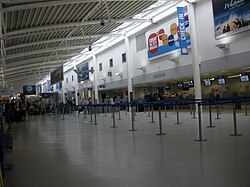
The airport terminal was an early experiment in Public-Private Partnerships (PPP). However, a Private Finance Initiative (PFI) deal was cancelled in 2006 at a cost of £27.5 million to the Scottish Executive. More recently, the airport has expanded its commercial footprint with the opening of the Courtyard by Marriott hotel in March 2020 within the Inverness Airport Business Park.
Runway and Technical Specifications
The airport operates two asphalt runways. The primary runway (05/23) measures 1,888 meters (6,194 ft), while the secondary runway (11/29) is 701 meters (2,300 ft). Ground handling is managed by the local company Dalcross Handling, and the 'Aspire' business lounge is operated by Swissport.
Ground Transportation
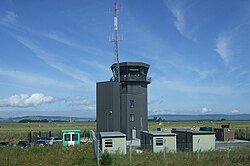
Access to the airport is primarily via the A96. While a single-track road previously existed, it was closed to accommodate a new instrument landing system (ILS)—a system that allows aircraft to land in low-visibility conditions. In April 2006, the Inverness Airport Way was opened to provide full vehicle access, though many travelers still utilize the B9093 Ardersier road for speed.
Future Development Plans
HIAL has released a master plan extending to 2045, aiming to accommodate up to 1.8 million passengers. Proposed upgrades include extending runway 05/23 by 323 meters (1,060 ft) and constructing a new passenger terminal adjacent to a proposed railway station at Dalcross. Cost estimates for the terminal range from £19 million for an extension to £55 million for a full relocation.
Airport Summary and Statistics
| Category | Detail/Value |
|---|---|
| 2025 Passenger Total | 824,046 |
| 2025 Aircraft Movements | 9,428 |
| Top Destination (2024) | London-Gatwick (222,417 passengers) |
| London Route Share | Over 65% of total traffic |
| New Route (May 2026) | Dublin (Aer Lingus Regional) |
Airlines and Destinations
The airport is a focus city for Loganair and hosts several other major carriers:
- British Airways: London-Heathrow
- easyJet: Birmingham, Bristol, London-Gatwick, London-Luton
- KLM Cityhopper: Amsterdam
- Loganair: Belfast-City, Kirkwall, Manchester, Stornoway, Sumburgh
- TUI Airways: Seasonal flights to Palma de Mallorca
- Aer Lingus Regional: Dublin (commencing May 2026)
Frequently Asked Questions
Which is the busiest route from Inverness Airport?
London-Gatwick is the most popular destination, accounting for approximately 28% of all passenger traffic, with 222,417 passengers in 2024.
Who owns and operates the airport?
The airport is owned and operated by Highlands and Islands Airports Limited (HIAL).
Are there any hotels located at the airport?
Yes, the Courtyard by Marriott hotel opened in March 2020 within the Inverness Airport Business Park.
What are the future expansion plans for the airport?
Plans for 2045 include extending the main runway by 323 meters and potentially rebuilding or extending the terminal to handle 1.8 million passengers, alongside the creation of a Dalcross railway station.
Does the airport offer international flights?
Yes, the airport offers scheduled services to Amsterdam via KLM Cityhopper and seasonal charters to destinations such as Palma de Mallorca.