International Taxation: Systems, Frameworks, and Global Compliance
International taxation is the complex study and application of tax laws when a person or business is subject to the jurisdictions of multiple countries. Because every nation maintains its own sovereign right to levy taxes, the intersection of these laws often creates intricate challenges for taxpayers and governments alike. At its core, international taxation seeks to determine who has the right to tax specific income and how to prevent the same money from being taxed multiple times.
To manage these complexities, governments typically limit the scope of their income taxation through specific legal frameworks. These frameworks ensure that extraterritorial income—money earned outside the home country—is handled consistently, whether through total exclusion or specific offsets.
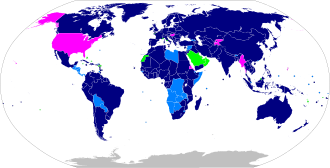
Key Facts
- Three Primary Systems: Most countries use territorial, residence-based, or citizenship-based taxation, or a hybrid of these.
- Double Taxation: Occurs when two or more countries tax the same income; this is often mitigated by foreign tax credits or treaties.
- Tax Havens: Jurisdictions with low or no taxes that may be used to shift income, though transparency is increasing through information sharing.
- Transfer Pricing: Rules designed to prevent companies from shifting profits between related parties to avoid taxes.
- Tax Treaties: Bilateral agreements that resolve disputes and determine which country has the primary right to tax specific income.
Core Systems of Taxation
Governments generally adopt one of three broad approaches to determine their taxing authority over individuals and enterprises.
Territorial Systems
A territorial system taxes only the income earned within the country's physical borders. Income earned abroad is generally excluded from the local tax base.
Residence-Based Systems
In a residence-based system, the government taxes its residents on their worldwide income, regardless of where the money was earned. To prevent double taxation, these systems often provide foreign tax credits, allowing taxpayers to subtract taxes paid to other jurisdictions from their local tax bill, though these credits are usually capped.
Citizenship-Based Systems
A citizenship-based system taxes individuals based on their legal nationality, regardless of where they live. This is a rarer approach, though some countries apply it in specific situations. For example, the United States is a prominent example of a jurisdiction that taxes its citizens on worldwide income regardless of residency.
Challenges in Global Tax Compliance
The diversity of national tax laws creates significant gaps and overlaps. While some income may be subject to double taxation, other income may fall into a gap where it is not taxed by any country.
Multinational corporations often employ specialized lawyers and accountants to navigate these rules and minimize their global tax liabilities. Common strategies include shifting or recharacterizing income to lower-tax jurisdictions.
Transfer Pricing and Anti-Deferral
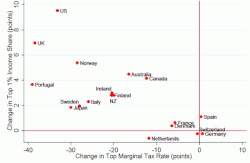
To combat profit shifting, many jurisdictions implement transfer pricing rules. These regulations govern how commonly controlled parties (such as a parent company and its subsidiary) price transactions between themselves to ensure profits are reported where the actual economic activity occurs.
Additionally, some governments use anti-deferral regimes. These are rules designed to prevent taxpayers from delaying the recognition of income by keeping it in related foreign entities.
The Role of Tax Treaties
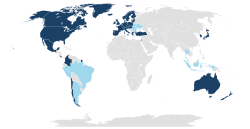
Tax treaties are formal agreements between governments used to allocate taxing rights and resolve disputes. These treaties provide a structured mechanism to ensure that taxpayers are not unfairly burdened by overlapping laws and offer a path for legal resolution when conflicts arise.
Tax Havens and Asset Management
Tax havens are jurisdictions that offer very low or no taxes to attract foreign investment and assets. However, the effectiveness of these havens has shifted as more countries enter into tax information-sharing agreements, allowing home governments to enforce compliance more effectively.
![Ratio of German assets in tax havens to German GDP, 1996–2008.[223] Havens in countries with tax information sharing allowing for compliance enforcement have been in decline. The "Big 7" shown are Hong Kong, Ireland, Lebanon, Liberia, Panama, Singapore, and Switzerland.](/images/30/fa/30fa8e9f090567b0d8709116c5824f61adb3d1840d3b2b950eba2b298aa13b73.png)
The following table provides a snapshot of how different jurisdictions approach the taxation of local and foreign income for individuals.
| Country/Territory | Taxes Local Income | Taxes Foreign Income (Residents) | Taxes Foreign Income (Non-Resident Citizens) |
|---|---|---|---|
| United Arab Emirates | No* | No | No |
| Hong Kong | Yes | No | No |
| United States | Yes | Yes | Yes |
| Philippines | Yes | Yes* | No |
| Bahamas | No | No | No |
Frequently Asked Questions
What is the difference between territorial and residence-based taxation?
Territorial taxation only applies to income earned within a country's borders, while residence-based taxation applies to all income earned worldwide by a legal resident, regardless of where the source of the income is located.
How do foreign tax credits work?
Foreign tax credits are reductions in the tax owed to a home country based on the amount of tax already paid to a foreign government on the same income. This prevents the taxpayer from paying the full tax rate to two different countries.
What is transfer pricing?
Transfer pricing refers to the rules and methods used for pricing transactions between enterprises under common control. Governments regulate this to ensure companies do not artificially shift profits to low-tax jurisdictions to avoid paying their fair share of taxes.
Do all countries tax their citizens regardless of where they live?
No. Most countries use residency as the primary basis for taxation. Only a few jurisdictions, most notably the United States, employ citizenship-based taxation for their citizens living abroad.
What is the purpose of a tax treaty?
Tax treaties are designed to eliminate double taxation and prevent tax evasion. They establish which country has the primary right to tax specific types of income and provide a framework for resolving disputes between the two nations.