International Code of Zoological Nomenclature: The Rules of Animal Naming
In the vast and complex world of biology, precision is paramount. When scientists communicate about different organisms, they cannot rely on common names, which vary by language and region. Instead, they use a standardized system of scientific names. This system is governed by the International Code of Zoological Nomenclature (ICZN), a set of widely accepted conventions that regulate the formal naming of animals.
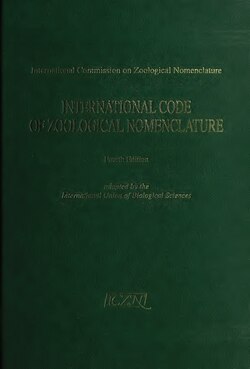
Often referred to as the ICZN Code, these rules are maintained by the International Commission on Zoological Nomenclature. The Code ensures stability and universality by regulating how names are established, how to determine if a name is available, how to resolve conflicts, and how scientific literature should cite these names.
Key Facts
- The ICZN regulates the formal scientific naming of all organisms treated as animals.
- It utilizes binomial nomenclature, where species are identified by a two-part name.
- The Principle of Priority dictates that the oldest validly published name is generally the correct one.
- Homonymy occurs when the same name is used for different taxa, requiring resolution to prevent confusion.
- Typification links a scientific name to a specific specimen or species known as a "type."
Core Principles of Zoological Naming
Binomial Nomenclature
The foundation of animal naming is binomial nomenclature, a system where a species name consists of two parts: the genus (generic name) and the specific epithet (specific name). When dealing with subspecies, a third name is added, creating a trinomen. For example, the giraffe is classified as Giraffa camelopardalis, while a specific subspecies might be Giraffa camelopardalis rothschildi.
The Principle of Priority
To maintain order, the ICZN follows the Principle of Priority. This means that the first validly published name for a taxon is the one that must be used. For instance, if a species was named in 1758 and another name for the same species was published in 1837, the 1758 name takes precedence. However, the Commission can issue rulings to conserve widely used names. A notable example is the wildcat; while Felis catus (domestic cat) was named in 1758 and Felis silvestris (wildcat) in 1775, the Commission issued Opinion 2027 to conserve the usage of names based on wild species.
The Principle of Homonymy
Homonymy occurs when the same name is applied to different animals. There are two main types:
- Primary Homonyms: When two different species are given the same name in the same genus at the time of their original description.
- Secondary Homonyms: When two species originally placed in different genera are later moved into the same genus, resulting in identical names. This can be a temporary state depending on the current classification.
The Code provides mechanisms to resolve these conflicts, sometimes requiring the replacement of a name to ensure each taxon has a unique identifier.
The Principle of Typification
Every scientific name must be anchored to a biological entity through typification. This process involves designating a type species to serve as the standard for the name. There are several ways a type is fixed:
- Original Designation: The author explicitly names the type species in the original publication.
- Monotypy: When a genus is established containing only one species, that species automatically becomes the type.
- Absolute Tautonymy: When the genus name and species name are identical (e.g., Castor fiber).
- Subsequent Designation: A later author validly designates a type species for a previously established genus.
Summary of Naming Principles and Methods
| Concept | Definition | Example/Note |
|---|---|---|
| Binomial Nomenclature | Two-part naming system (Genus + species) | Giraffa camelopardalis |
| Principle of Priority | Oldest valid name takes precedence | Resolves name conflicts |
| Homonymy | Identical names for different taxa | Can be primary or secondary |
| Monotypy | Type fixed by a genus having one species | Automatic fixation |
| Trinomen | Three-part name for subspecies | Genus + species + subspecies |
Frequently Asked Questions
What is the difference between a genus and a species?
A genus is a higher taxonomic rank that groups closely related species together, while a species is the most specific level of biological classification, representing a group of organisms that can interbreed.
Why do some animals have three names instead of two?
A three-part name, or trinomen, is used to identify a subspecies. It includes the genus, the specific name, and the subspecific name.
What happens if two scientists give the same name to different animals?
This is known as homonymy. The ICZN provides rules to resolve this, typically by ensuring the older name is kept and the newer name is replaced with a different one.
What is a type species?
A type species is the specific organism that serves as the permanent reference point for a scientific name. It ensures that even if classifications change, the name remains tied to a specific biological concept.
Can the ICZN change a name that has been used for a long time?
Yes. While the Principle of Priority usually favors the oldest name, the Commission has the power to issue rulings (Opinions) to conserve names that are in widespread, stable use, even if they are not the oldest.