International Atomic Energy Agency: Safeguarding Nuclear Energy for Peace
The International Atomic Energy Agency (IAEA) serves as the world's central intergovernmental forum for scientific and technical cooperation in the nuclear field. Established to balance the promotion of nuclear technology with the prevention of its misuse, the IAEA ensures that nuclear energy is used safely and exclusively for peaceful purposes.
Headquartered in Vienna, Austria, the agency operates as an autonomous international organization with a global reach, maintaining offices and laboratories across Europe, North America, and Asia to monitor nuclear programs and provide technical expertise.
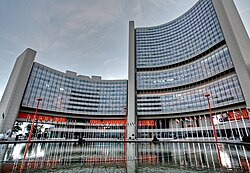
Key Facts
- Founded: July 29, 1957.
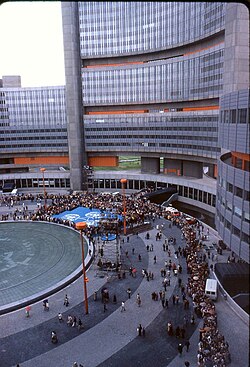
- Headquarters: Vienna, Austria (also known as "UNO City").
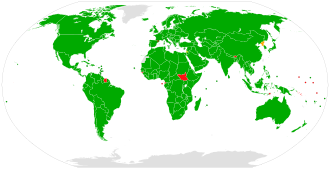
- Membership: 181 member states.
- Current Head: Director General Rafael Grossi.
- Core Mandate: Promoting peaceful nuclear use, implementing safeguards, and ensuring nuclear safety.
- Major Recognition: Awarded the Nobel Peace Prize in 2005.
The Three Pillars of the IAEA Mission
The IAEA operates based on three primary missions designed to manage the complexities of atomic energy:
Peaceful Uses
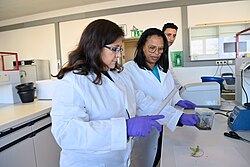
The agency promotes the application of nuclear science and technology to benefit humanity. This includes technical cooperation in medicine, agriculture, and energy production. For example, the IAEA's Plant Breeding Unit works on enhancing crop resistance to diseases.

Safeguards
Following the 1968 Treaty on the Non-Proliferation of Nuclear Weapons, the IAEA was granted the authority to monitor nuclear programs. Safeguards are verification processes used to ensure that nuclear materials are not diverted from peaceful uses to military purposes, such as the creation of nuclear weapons.
Nuclear Safety
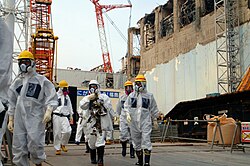
Safety is a top priority for the agency. The IAEA develops standards to protect people and the environment from the harmful effects of ionizing radiation. This mission has become increasingly critical following major incidents like the 1986 Chernobyl disaster and the 2011 Fukushima disaster.
History and Evolution
The concept of an international nuclear body began with U.S. President Dwight D. Eisenhower's 1953 "Atoms for Peace" address to the UN General Assembly. While early proposals for a "nuclear bank" to control fissile material faced geopolitical hurdles between the U.S. and the Soviet Union, a consensus was eventually reached on a clearinghouse for nuclear transactions.
The IAEA Statute was approved on October 23, 1956, and the agency officially came into force on July 29, 1957. Over the decades, the agency has evolved from a promotional body to a rigorous watchdog. In 2005, the IAEA and then-Director General Mohamed ElBaradei received the Nobel Peace Prize for their efforts to prevent the military use of nuclear energy.
In recent years, the agency has faced unprecedented challenges, including conducting inspections in active conflict zones to prevent nuclear accidents.

![The inspection team, led by Director-General Rafael Grossi, Head of the Department of Nuclear Safety and Security Lydie Evrard and Head of the Department of Safeguards Massimo Aparo, that on 1 September 2022 started IAEA's first inspection of a nuclear plant in a war zone, at Zaporizhzhia Nuclear Power Plant in Ukraine[18][19]](/images/6a/93/6a935c5087c6ab991500410349ec7b4da29630c167a4092c6b7f49a0d9f51b42.jpg)
Organizational Structure and Governance
The IAEA is governed by two primary policy-making bodies: the General Conference and the Board of Governors. The Board consists of 22 member states, including 10 designated as the most advanced in nuclear technology and 12 elected by the General Conference to ensure geographic diversity.
The agency is led by a Director General, who manages the Secretariat and oversees the budget. The budget is split between a regular budget assessed to member nations and a Technical Cooperation Fund supported by voluntary contributions.
| Director General | Nationality | Term Duration |
|---|---|---|
| W. Sterling Cole | American | 1957–1961 |
| Sigvard Eklund | Swedish | 1961–1981 |
| Hans Blix | Swedish | 1981–1997 |
| Mohamed ElBaradei | Egyptian | 1997–2009 |
| Yukiya Amano | Japanese | 2009–2019 |
| Rafael Grossi | Argentine | 2019–Present |
Frequently Asked Questions
What is the primary purpose of IAEA safeguards?
Safeguards are a set of technical measures used to verify that a state is not diverting nuclear materials from peaceful energy production to the development of nuclear weapons.
Who is the current head of the IAEA?
The current Director General is Rafael Grossi of Argentina, who took office on December 3, 2019, becoming the first Latin American to lead the agency.
How is the IAEA funded?
The agency is funded through a regular budget assessed to each of its member states and a Technical Cooperation Fund, which relies on voluntary contributions from members.
Has any country ever withdrawn from the IAEA?
Yes, four states have withdrawn at various times. North Korea withdrew in 1994 after being found in non-compliance with safeguards. Nicaragua, Honduras, and Cambodia also withdrew at different points, though some later rejoined.
Where are the IAEA's main operational sites?
While the headquarters are in Vienna, the IAEA maintains liaison offices in New York and Geneva, and research laboratories in Seibersdorf (Austria), Monaco, and Trieste (Italy), as well as regional safeguard offices in Toronto and Tokyo.