Interior Design: The Evolution of Art, Science, and Professional Practice
Interior design is the sophisticated blend of art and science dedicated to enhancing the interior of a building. Its primary goal is to create environments that are not only aesthetically pleasing but also healthier and more functional for the people who occupy them. Far from being mere decoration, it is a multifaceted profession encompassing conceptual development, space planning, site inspections, and construction management.
Professional interior designers utilize fundamental design principles from the visual arts to guide how a viewer perceives and interacts with a scene. By coordinating research and managing execution, they transform raw spaces into curated experiences.
Key Facts
- Multidisciplinary Approach: Combines elements of architecture, industrial design, and engineering.
- Historical Roots: Evolved from instinctive building practices to a specialized profession in the mid-20th century.
- Key Figures: Influenced by theorists like Owen Jones and pioneers like Elsie de Wolfe.
- Diverse Styles: Spans from the geometric precision of Art Deco to the functionalism of Mid-Century Modernism.
- Professional Governance: Regulated by global bodies such as the International Interior Design Association (IIDA).
The Historical Evolution of Interior Spaces

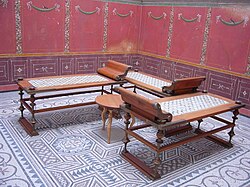
In early history, the arrangement of interiors was often an instinctive part of the construction process. In ancient India, the roles of architect and interior designer were frequently merged, as seen in the mythology of Vishwakarma. This legacy persists in the 17th-century palaces and the havelis (traditional mansion-houses) of the Shekhawati region in Rajasthan, where approximately 2,000 structures still showcase intricate wall art paintings.
Throughout the 17th to early 19th centuries, the responsibility for interior aesthetics typically fell to the homemaker or specialized craftsmen, such as upholsterers. Architects would employ these artisans to finalize the artistic style of a building's interior.
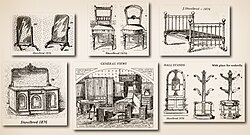
As the Industrial Revolution fostered a growing middle class in the 19th century, the desire for domestic symbols of wealth increased. Large furniture firms began offering comprehensive interior management and full house furnishings. This commercial model dominated until 1914, when independent designers began to challenge the rigid models offered by retailers.
The Influence of Owen Jones
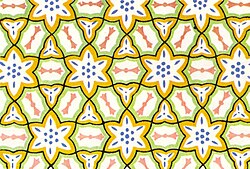
Architect Owen Jones was a pivotal figure in bringing design theory to the public. In 1851, he managed the decoration and exhibit arrangement of the Crystal Palace for the Great Exhibition. His most enduring contribution was the 1856 publication The Grammar of Ornament, which established 37 key principles of interior design and decoration.
The Transition to a Professional Discipline
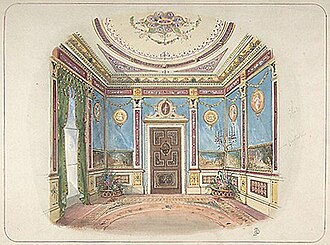
By the late 19th century, a shift occurred toward decoration as a separate artistic profession. The formation of the Institute of British Decorators in 1899, led by President John Dibblee Crace, marked a significant step toward professionalization.
Women also played a crucial role in this transition. Rhoda and Agnes Garrett were among the first to train professionally as home decorators in 1874. Their 1876 work, Suggestions for House Decoration in Painting, Woodwork and Furniture, brought artistic design concepts to a wider middle-class audience.
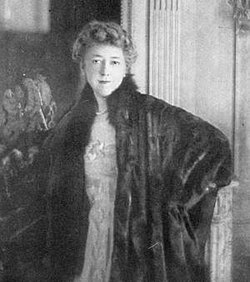
Elsie de Wolfe further revolutionized the field by rejecting the heavy, dark Victorian style—characterized by red drapes and dark wood—in favor of light colors, fresh schemes, and delicate Chinoiserie (Chinese-inspired) furnishings. Her work on the Colony Club in 1905 and her 1913 book, The House in Good Taste, cemented her status as a pioneer of modern interior design.
Modern Styles and Specializations
Art Deco
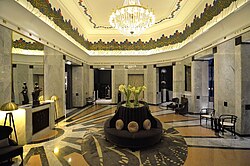
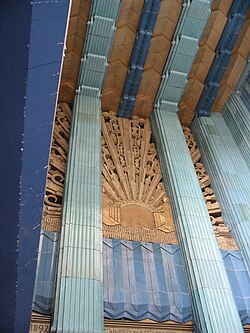
Emerging in Europe in the early 20th century, Art Deco took its name from the 1925 Exposition Internationale des Arts Decoratifs et Industriels Modernes in Paris. This style rejected classical influences in favor of streamlined geometric forms and metallic colors. It was the first major style to highlight new technologies and materials, often utilizing black and white checkerboard patterns or vibrant, bold colors.

Modern and Mid-Century Design
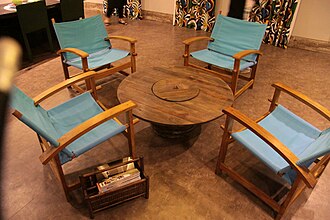
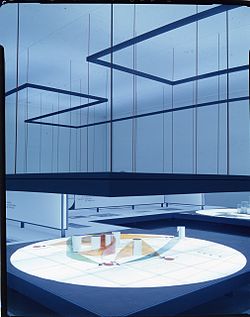
Modern design grew out of the decorative arts and Art Deco. Frank Lloyd Wright was a key early proponent, particularly with the completion of Fallingwater in the 1930s. The style peaked in the 1950s and '60s, leading many today to refer to this era as "mid-century" design. It is distinct from "contemporary" design, which refers to the ever-shifting trends of the present moment.
Professional Practice and Employment
Interior design is closely linked to architecture, industrial design, and engineering. Because of these overlaps, professional standards were initially managed by broader organizations, such as the American Designers Institute (1938) and the Chartered Society of Designers (1986). Dedicated representation arrived later with the US National Society of Interior Designers (1957) and the International Interior Design Association (1994).
Today, employment varies widely. Designers may work for large corporations, small firms, or as freelancers. In 2020, approximately 32% of interior designers were self-employed. The profession often involves high-pressure environments to meet strict budgets and client deadlines.
| Era/Style | Key Characteristics | Notable Influence/Figure |
|---|---|---|
| Traditional Indian | Wall art, sculptures in havelis | Vishwakarma |
| 19th Century Theory | Formal principles, ornamental grammar | Owen Jones |
| Early 20th Century | Light colors, Chinoiserie, decluttering | Elsie de Wolfe |
| Art Deco | Geometric forms, metallic colors, streamlined | 1925 Paris Exposition |
| Modern/Mid-Century | Functionalism, organic integration | Frank Lloyd Wright |
Frequently Asked Questions
What is the difference between an interior decorator and an interior designer?
While the terms are often used interchangeably, interior design is a broader profession that involves the science of space planning, building codes, and structural coordination, whereas decoration focuses primarily on the aesthetic surface elements of a room.
How did Art Deco change interior design?
Art Deco shifted the focus away from traditional classical influences toward streamlined geometric shapes and the use of modern materials and technologies, introducing a more industrial and futuristic aesthetic.
Who was Elsie de Wolfe and why is she important?
Elsie de Wolfe was one of the first professional interior designers. She is credited with ending the "Victorian gloom" by introducing lighter colors, more practical furniture arrangements, and a less cluttered approach to home design.
What is the role of the International Interior Design Association (IIDA)?
The IIDA, founded in 1994, serves as a professional organization that provides representation and helps govern standards for the interior design profession on a global scale.
What are the typical working conditions for interior designers?
Designers work in various settings, from corporate offices to self-employment. The role often involves significant stress due to the need to balance client desires with strict budgets and project deadlines.