Indonesian Rock: A History of Evolution and Influence
Indonesian rock is a vibrant reflection of the nation's cultural identity and its engagement with global musical trends. While it shares the foundational elements of the global rock genre, it is uniquely shaped by Indonesian perspectives on modernism, individualism, and the supernatural. From its early roots in the 1950s to the diverse subgenres of the modern era, rock music in Indonesia has evolved through various waves of influence and innovation.
Key Facts
- Origins: Rock music entered Indonesia in the 1950s during a period of Western rock fever.
- Indorock: A specific subgenre pioneered by Indonesian-Dutch bands like The Tielman Brothers.
- Golden Era: The 1980s are considered the golden age, marking the first time rock was performed live for the general public.
- Rock Kapak: A popular melodic and melancholic style of slow rock influenced by Malaysia.
- Indie Movement: The DIY (Do-It-Yourself) indie scene gained momentum in Bandung during the 1990s.
The Early Era: 1940s to 1960s
The seeds of rock in Indonesia were sown in the 1950s. However, the landscape was significantly shaped by the Tielman Brothers, founded in 1947 by youths from Kupang. Performing for audiences in the Netherlands and Germany, they are widely regarded as the founders of Indorock, a style that bridged Indonesian heritage with Western rock and roll.
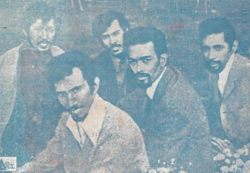
By 1967, the band The Rolles introduced jazz rock, bringing fresh concepts that resonated with music lovers and remained popular through the 1980s. Simultaneously, the 1960s saw the rise of Dara Puspita, an all-female pop rock group from Surabaya. Formed in 1964, the band not only influenced the rock scene but also left a mark on Indonesian pop music. Between 1968 and 1971, Dara Puspita toured extensively across Europe and Asia, gaining international recognition.

Expansion and the Golden Age: 1970s to 1990s
The 1970s witnessed a rapid expansion of the genre with the emergence of bands such as God Bless, Gang Pegangsaan, Shark Move, Giant Step, Abbhama, and Rawa Rontek. This period also saw the birth of the "underground" scene, characterized by progressive, extreme, and loud musical concepts.
The 1980s marked a turning point, becoming the golden era of Indonesian rock. This decade saw the rise of rock kapak (Malay slow rock), popularized by the Malaysian band Search and their hit "Isabella." In Indonesia, musicians like Deddy Dores became icons of this melodic and melancholic style, with his works performed by artists such as Nike Ardilla and Poppy Mercury.
A pivotal figure during this time was the promoter Log Zhelebour. From 1984 to 2004, he organized the Djarum-sponsored Indonesian Rock Festival, launching the careers of numerous influential acts, including Slank, Dewa 19, Gigi, Jamrud, and Boomerang.
The Rise of Indie Rock
In the 1990s, the focus shifted toward independence. The indie movement began in Bandung, driven by a DIY ethos. PAS Band, founded in 1990, led the charge by releasing an EP on an indie label in 1993. Other notable indie pioneers included Pure Saturday, Koil, and Rumah Sakit.
Modern Diversity: 2000s and Beyond
Entering the 21st century, Indonesian rock became increasingly varied, blending local indie legacies with international trends. Pop rock dominated the mainstream, with bands like Peterpan introducing BritPop-inspired sounds. Other prominent acts of this era included Nidji, Ungu, Ada Band, and Dr PM.
The turn of the millennium also saw the success of bands like Sheila on 7, Cokelat, and Padi, who released debut albums between 1999 and 2000.

Additionally, the emo rock genre found a foothold in the mid-2000s, with bands such as Seems Like Yesterday (2003), Alone At Last (2004), Killing Me Inside (2005), and Last Child (2006) gaining popularity.
Rock Festivals in Indonesia
Rock music continues to thrive through various festivals held in major cities across the archipelago. These events range from small local gatherings to massive productions.
| City/Region | Festival Name |
|---|---|
| Jakarta | Java Rockin Land, We the Fest, Gudfest, Djarum Super Rock Festival |
| Bandung | Doomsday Open Air |
| Solo/Surakarta | Rock in Solo |
| Jogjakarta | Jogjarockarta |
| Makassar | Rock in Celebes |
| Kutai Kartanegara | Rock in Borneo |
| Bali | Soundrenaline |
| Purwokerto | Voice Hell |
Frequently Asked Questions
What is Indorock?
Indorock is a subgenre of rock music pioneered by Indonesian-Dutch bands, most notably The Tielman Brothers, who played Western-style rock for audiences in Europe during the mid-20th century.
Who was Log Zhelebour?
Log Zhelebour was a prominent promoter who significantly influenced the Indonesian rock scene from 1984 to 2004 by organizing the Indonesian Rock Festival and managing various successful bands.
What is "rock kapak"?
Rock kapak refers to a style of Malay slow rock that became highly popular in Indonesia during the 1980s and 1990s, characterized by melodic and melancholic tones.
Where did the Indonesian indie rock movement start?
The indie rock movement, characterized by a DIY (Do-It-Yourself) approach, primarily emerged from Bandung in the 1990s, with PAS Band being one of its key initiators.
Which bands defined the pop rock era of the 2000s?
Mainstream pop rock in the 2000s was defined by bands such as Peterpan, Sheila on 7, Padi, Cokelat, Nidji, and Ungu.