Indigenous Territories in Brazil: Rights, Demarcation, and Challenges

Indigenous Territories in Brazil: Rights, Demarcation, and Challenges

In Brazil, an Indigenous territory (known in Portuguese as Terra Indígena or TI) is a specific area inhabited and exclusively possessed by Indigenous peoples. These lands are not merely plots of property but are essential to the cultural, social, and physical survival of the diverse ethnic groups that have occupied the Brazilian landscape since long before European arrival.

The legal foundation for these territories is rooted in Article 231 of the Brazilian Constitution, which recognizes the inalienable right of Indigenous peoples to the lands they traditionally occupy. This constitutional mandate automatically confers permanent possession of these lands to the respective Indigenous groups.
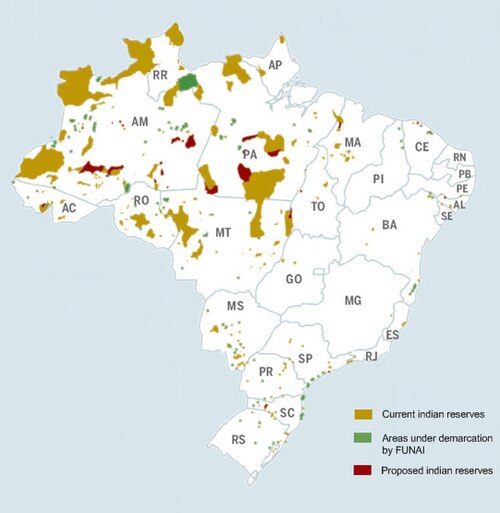
Map of Indigenous territories in Brazil as of 2008. Orange indicates demarcated lands; green shows lands under the demarcation process, and dark red marks new proposals

Key Facts

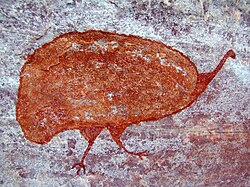
A rock painting of an animal in red paint
Rock paintings thousands of years old, found at several Brazilian archaeological sites, attest to the ancient occupation of the territory by forest peoples.[13][14] Here, a pictograph located in Morro do Chapéu, Bahia.
  • Constitutional Right: Article 231 guarantees Indigenous peoples permanent possession of traditionally occupied lands.
  • Scale: There are 805 recognized Indigenous Territories across Brazil, covering approximately 13% of the national area.
  • Demarcation: A multi-stage legal process is required to grant a TI full legal protection.
  • Urbanization: A significant portion of the Indigenous population now resides in cities, leading to the creation of urban Indigenous villages.
  • Threats: TIs frequently face illegal invasions from settlers, logging companies, and illegal mining operations.

Historical Context and Legal Evolution

Dance of the Tarairiú, oil on canvas by Albert Eckhout (17th century). The Captaincy of Pernambuco was the birthplace of Indigenous slavery in Brazil.[30]

The history of Indigenous land in Brazil is marked by a transition from violent conquest to a complex legal framework of protection. Early interactions were characterized by massacres and forced labor, as European conquerors sought to dominate the territory and its resources.
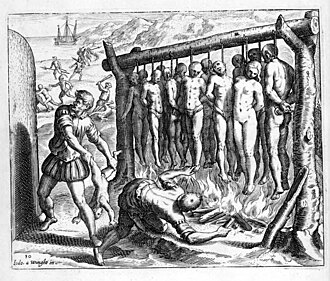
Record of one of the massacres commonly inflicted on Indigenous Americans by European conquerors. Engraving by Theodor de Bry included in Brevísima Relación de la Destruyción de las Indias (1552) by Bartolomé de las Casas.

Over time, the Brazilian state implemented various protection laws. The Indian Statute introduced the concept of reserved areas, including Indigenous Reserves, to manage the relationship between the state and Indigenous populations. However, it was the Constitution of 1988 that fundamentally shifted the paradigm by recognizing original rights to land, moving away from the idea of state-granted favors toward the recognition of inherent rights.
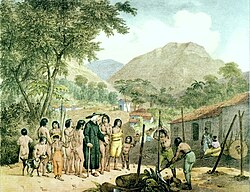
A missionary with settled Tapuia Indians, in an engraving by Rugendas from the early 19th century.

The Demarcation Process

For a territory to be fully protected, it must undergo a demarcation process. This is a multi-stage administrative and legal procedure that identifies the boundaries of traditionally occupied lands. Because this process often involves competing interests from agribusiness and mining, it frequently results in protracted legal battles.
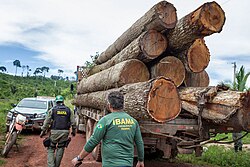
A truck carrying huge logs. Local authorities can be seen next to it.
Illegal logging in indigenous territory in Brazil

Territorial Distribution and Population
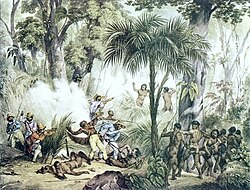
The engraving portrays a combat between the military and native peoples
Combat between militias and Indigenous peoples, engraving by Rugendas.

Indigenous territories are distributed unevenly across Brazil, with the highest concentrations in the North and Midwest regions, particularly in the Amazon basin. States like Amazonas and Roraima hold the largest proportions of their territory as TIs.

Distribution of Indigenous Territories by State (2022)
State Number of TIs Proportion of State Area
Acre 36 15.68%
Amazonas 176 29.37%
Mato Grosso 89 16.72%
Pará 68 25.17%
Rondônia 30 21.13%
Roraima 35 46.42%
Rio Grande do Sul 61 0.40%
Brazil Total 805 13%

While many remain in traditional forest settings, there has been an intensification of migration to cities. This has led to the establishment of urban Indigenous villages, which allow populations to maintain their cultural identity and community structures within urban environments.
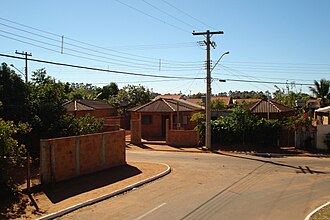
Corner of a street on an urban Indigenous village. Some houses with traditional shaped roofs can be seen.
Marçal de Souza Urban Indigenous Village, in Campo Grande

Conflicts and Modern Pressures

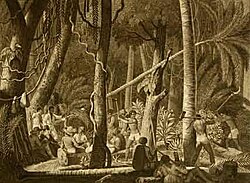
Captain Bento Lourenço opening a new road in the forests near Mucuri, engraving by Martin Esslinger, based on an original by Maximilian zu Wied-Neuwied, 1822

Despite legal protections, Indigenous territories remain flashpoints for conflict. Developmental pressures—such as the construction of hydroelectric dams (e.g., the Belo Monte Dam) and the expansion of agribusiness—often clash with the rights of forest peoples.
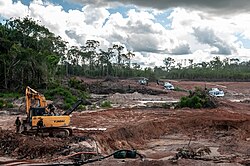
Mining on a land
Illegal mining on indigenous land

Illegal activities, including logging and mining, continue to threaten the environmental integrity of these lands. Furthermore, political controversies such as the "milestone thesis" (marco temporal) have sparked widespread protests, as Indigenous leaders fight to ensure that land rights are not limited to territories occupied specifically at the time of the 1988 Constitution.
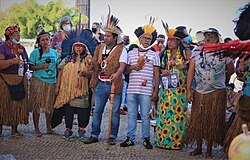
Indigenous protesters are standing wearing traditional garments along with "common" clothes
Protest against the milestone thesis, 2022

Frequently Asked Questions
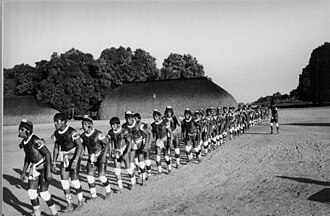
A line of several Indigenous men at a traditional ceremony
Quarup ceremony, an ancient tradition in the Xingu Indigenous Park
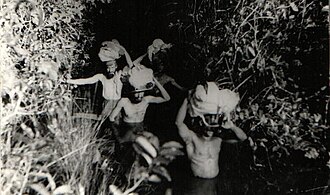
Three people are seen on the woods
Expedition of the Villas-Bôas brothers in the 1940s, seeking contact with the Kalapalo Indians
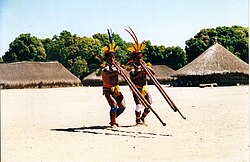
Two Indigenous people playing the flute.
Kamaiurá village at Xingu Indigenous Park. Indigenous people playing the uruá flute.
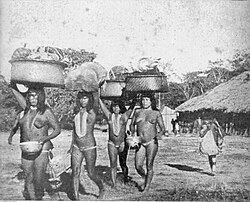
Four woman in traditional garments are seen carrying things
Xavante women in the 1960s
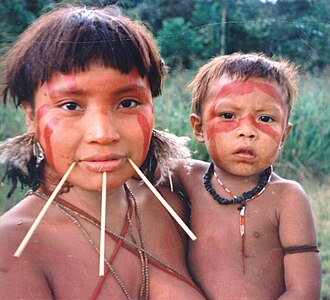
A Yanomami woman and child, adorned with traditional paint and accessories
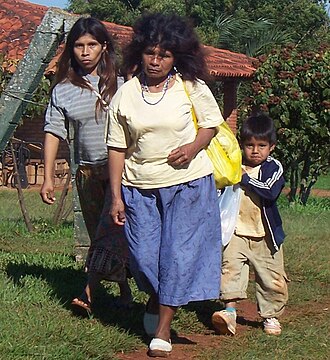
Two Guarani adults and a child
Semi-acculturated Guaraní in the Missões region
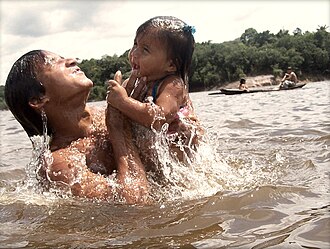
An adult and a child are seen bathing on a river
Baré people in Nova Esperança, their traditional territory
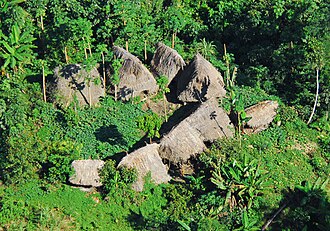
Indigenous village as seen from above. There are a lot of trees surrounding the houses
Village of isolated Indians in Acre
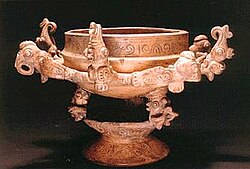
Sophisticated pottery
An example of sophisticated pottery from the Santarém Culture, pre-Cabraline. Museu Paraense Emílio Goeldi
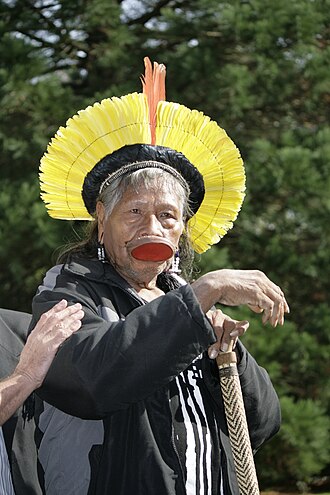
An elderly man is looking forward. He wears traditional garments on his head and lower lip
Kayapo Chief Raoni, one of Brazil's most prominent Indigenous leaders
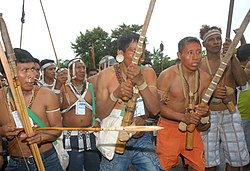
Several Indigenous protesters wearing traditional garments
Indigenous protesters from Vale do Javari
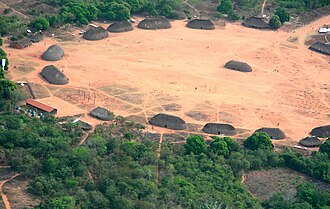
Aerial view of an Indigenous village
Indigenous village in the Xingu Indigenous Park
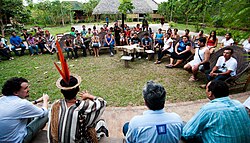
Many people are sitting on the grass, forming a circle. Most people are wearing traditional Indigenous garments
Culture Minister Juca Ferreira meeting with Acre government representatives and Indigenous leaders, 2010
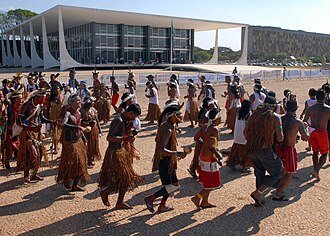
People wearing traditional Indigenous garments are forming a circle while walking outdoors
Pataxó Indians protest outside the Supreme Federal Court, demanding land regularization
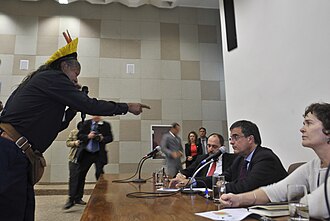
A man wearing traditional garments is standing, speaking and pointing directly at the three people sitting behind a table in front of him.
APIB leaders meet with Justice Minister José Eduardo Cardozo and other officials on 16 July 2012, protesting Portaria 303, seen as a threat to Indigenous lands
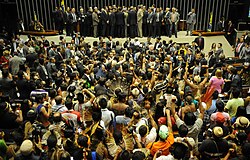
Several indigenous people protesting
Indigenous peoples invade the Chamber of Deputies' plenary session, 2013
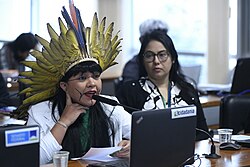
A woman is sitting behind a desk and speaking on a microphone. She is wearing a traditional head piece and there's another woman next to her.
Testimony of Deputy Célia Xakriabá at the Parliamentary Commission addressing the Yanomami humanitarian crisis, 2023
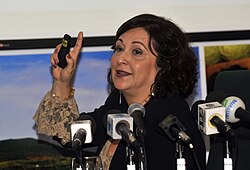
A woman is speaking at a press conference. One of her hands is pointing up.
Senator Kátia Abreu, a prominent agribusiness leader, addressing issues related to Indigenous land demarcation
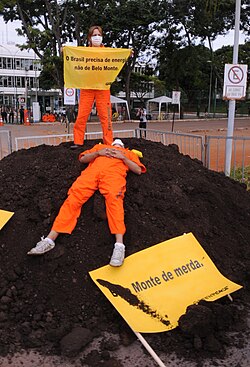
Protesters dressed in orange uniforms hold yellow signs. One of them is standing on top of a small pile of dirt and the other one is laying on it. The sign on the dirt says "pile of shit"
The environmental organization Greenpeace protests on the day of the Belo Monte Dam construction auction
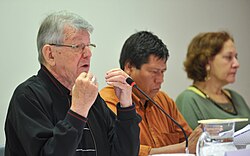
Two men and a woman are sitting behind a table at a conference. One of the men is giving a speech.
Representatives of the Indigenous Missionary Council at the launch of the report Violence Against Indigenous Peoples 2012
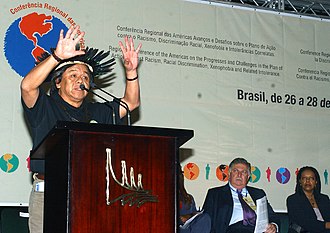
Indigenous leader speaking at a conference with his hands up
Indigenous leader Marcos Terena speaking at the opening of the Regional Conference of the Americas in 2008, attended by 33 countries with UN support, addressing the review of the World Conference against Racism.[202]
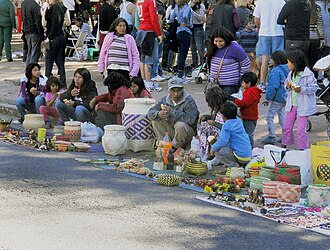
Guarani Indigenous people selling crafts on the streets
Guarani Indigenous people selling crafts on the streets of Porto Alegre
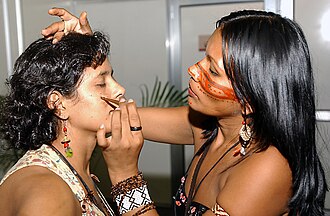
An Indigenous woman applies face paint to a non-Indigenous woman
An Indigenous woman applies face paint to a participant at the National Conference of Indigenous Peoples in 2006

What is a Terra Indígena (TI)?

A Terra Indígena is an area of land in Brazil that is inhabited and exclusively possessed by Indigenous peoples, recognized by the state as their traditional territory.

Which law protects Indigenous lands in Brazil?

The primary legal protection is found in Article 231 of the 1988 Brazilian Constitution, which recognizes the original and inalienable rights of Indigenous peoples to their traditional lands.

What is the purpose of the demarcation process?

Demarcation is the official process of identifying and marking the physical boundaries of an Indigenous territory to provide it with full legal protection against invasions and land claims.

Do Indigenous people only live in forests?

No. While many live in traditional territories, a significant number of Indigenous people live in cities, where they have established urban Indigenous villages to preserve their culture.

What are the main threats to these territories?

The main threats include illegal mining (garimpo), illegal logging, the expansion of agribusiness, and large-scale infrastructure projects like hydroelectric dams.