Indie Rock: The Evolution of an Independent Spirit
Indie rock began not as a specific sound, but as a philosophy. Rooted in the DIY (do-it-yourself) ethic, it emerged from a desire to create music outside the restrictive machinery of major corporate record labels. What started as a description of a distribution method—music released on independent labels—eventually evolved into a global musical style characterized by experimentation, raw energy, and a rejection of mainstream polish.
Key Facts
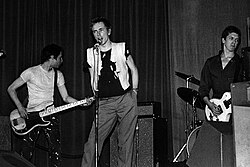
- Origins: Emerged in the early to mid-1980s across the UK, US, and New Zealand.
- Etymology: The term "indie rock" first appeared in Billboard magazine on January 15, 1983.
- Core Philosophy: Defined by a DIY attitude and association with low-budget independent labels.
- Major Shifts: Transitioned from a definition of business ownership to a specific musical aesthetic.
- Key Eras: Includes the 1980s DIY wave, the 1990s mainstream split (Grunge/Britpop), and the 2000s garage rock revival.
The Foundations of Indie Rock
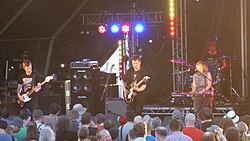
The stylistic roots of indie rock are diverse, drawing heavily from punk rock, psychedelia, and post-punk. In the late 1970s and early 1980s, the movement was fueled by a spirit of independence. In the UK, the DIY movement encouraged artists to record and distribute their own work, while in New Zealand, the "Dunedin sound" created a unique regional identity.
By 1983, writer Roman Kozak used the term "indie rock" in Billboard to describe the thriving scene of independent labels in New York. These labels focused on the emerging alternative rock scene, prioritizing artistic freedom over commercial viability.
Regional Influence and the DIY Wave
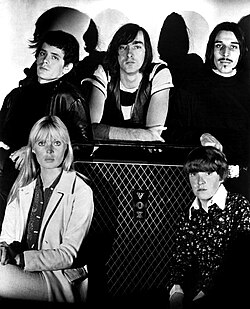
The movement was never monolithic. From the experimental underground of the UK to the collegiate scenes in the US, indie rock thrived in local hubs. The UK DIY wave and the forerunners of indie pop emphasized a lo-fi aesthetic, while the Dunedin sound in New Zealand brought a distinct melodic sensibility to the genre.
The Rise of Subgenres and Regional Scenes
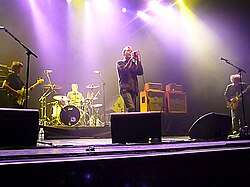
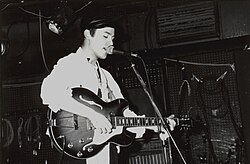
As the genre matured, it branched into numerous subgenres. Shoegaze, pioneered by bands like My Bloody Valentine, focused on ethereal walls of sound and effects pedals. Meanwhile, jangle pop and noise pop explored the contrast between melodic hooks and distorted textures.

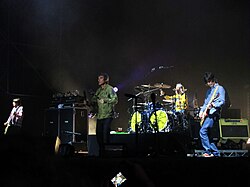
In the UK, the "Madchester" scene blended indie rock with dance music, creating a fusion known as baggy. This era peaked on May 27, 1990, with the Stone Roses' Spike Island concert. With approximately 28,000 attendees, it stood as the largest performance by an independent artist of its time.
| Era/Movement | Key Characteristics | Notable Examples/Subgenres |
|---|---|---|
| Early 1980s | DIY ethic, low-budget labels | Post-punk, Dunedin sound |
| Late 1980s/Early 90s | Mainstream breakthrough | Grunge, Britpop |
| Mid 1990s | Experimental vs. Radio-friendly | Slowcore, Slacker rock, Shoegaze |
| 2000s | Garage rock revival | Post-punk revival, Landfill indie |
The 1990s: Mainstream Success and the Great Split

The 1990s marked a turning point. The massive commercial success of grunge (led by Nirvana and Pearl Jam) and Britpop brought indie rock into the global spotlight. However, this success created a rift. One segment of the scene conformed to mainstream radio requirements, while the other pushed further into experimental territories, such as post-rock and slowcore.
During this period, the term "indie rock" shifted. It no longer strictly referred to the label a band was signed to, but rather to a specific musical style. Even bands signed to major labels could be described as "indie" if they maintained the aesthetic.
![The success of grunge allowed Sonic Youth to break through into the mainstream.[89]](/images/0e/f2/0ef29775c69270bca1874a294f537fdf0d4ca2da533f29d380b13261c3ea73f5.jpg)
The 2000s Revival and Modern Era
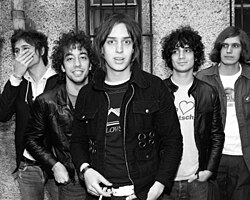
Indie rock re-entered the mainstream in the early 2000s via the garage rock and post-punk revival. The Strokes, with their 2001 debut Is This It, provided a stark contrast to the nu metal and rap rock dominating the charts. Their sound, indebted to the Velvet Underground and the Ramones, sparked a "New Rock Revolution."
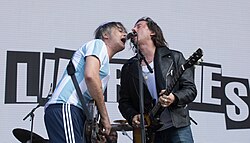
This wave was followed by the success of the White Stripes, the Libertines, and later, the Arctic Monkeys and the Killers. By the mid-to-late 2000s, the genre proliferated into the "blog rock" era and the British "landfill indie" movement—a term used to describe the saturation of similar-sounding guitar bands in the mainstream.

Frequently Asked Questions
What does "indie" actually mean in indie rock?
Originally, "indie" was short for "independent," referring to artists signed to small, independent record labels rather than major corporations. Over time, it evolved from a business description into a stylistic term describing a specific sound and DIY aesthetic.
How did grunge influence indie rock?
Grunge represented the mainstreaming of the North American indie rock ethic from the 1980s. Its success in the early 1990s brought massive attention to alternative music, allowing other indie and experimental acts to find larger audiences.
What was the "landfill indie" movement?
Landfill indie refers to a period in the mid-2000s when a large number of guitar-based indie bands achieved moderate commercial success with a similar, formulaic sound, leading to a perceived saturation of the genre.
What is the difference between indie rock and alternative rock?
While often used interchangeably, alternative rock is a broader umbrella term. Indie rock specifically grew out of the independent label scene and the DIY ethic, though the distinction blurred as indie bands signed to major labels.
What was the significance of the Spike Island concert?
The 1990 Spike Island concert, headlined by the Stone Roses, was a landmark event for the Madchester and baggy scenes. It proved that an independent act could organize and attract a massive crowd (around 28,000 people) without major corporate backing.