Indian Rock: The Evolution of a Musical Revolution
From the early beat groups of the 1960s to the thunderous roar of modern Vedic Metal, the journey of Indian rock is a story of cultural fusion and artistic rebellion. While often overshadowed by the massive machinery of the Bollywood film industry, rock music in India has carved out a distinct identity, blending Western electric instrumentation with deep-rooted Indian classical traditions.
Key Facts
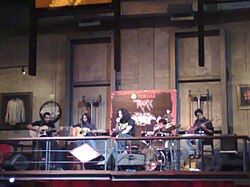
- Early Influence: The Gramophone Company of India (EMI subsidiary) was pivotal in distributing Western rock and roll in the 1950s and 60s.
- Global Icon: Freddie Mercury, lead singer of Queen, began his career in Bombay with the rock band The Hectics.
- Genre Innovation: Vedic Metal, pioneered by the band Rudra, blends heavy metal with Sanskrit lyrics and Indian classical music.
- Cultural Fusion: Raga rock emerged as a blend of Indian classical music and rock, influencing global acts like The Beatles.
- Regional Hubs: Cities like Kolkata, Mumbai, Hyderabad, and Ranchi have developed distinct underground metal and rock scenes.
The Early Era: Beat Groups and Fusion
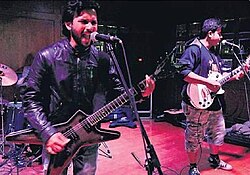
In the 1950s and 1960s, the Indian record industry, led by the Gramophone Company of India and promoter Bhaskar Menon, made LPs and EPs from US and British rock acts widely available. This era saw the rise of "beat groups"—bands influenced by the British Invasion and the psychedelic sounds of the late 60s. Notable groups included the Mystiks (Bombay), Beat-X (Madras), and Calcutta-based bands like The Cavaliers, Calcutta-16, and The Flintstones.
During this time, bands often performed on university circuits. The Thunderbirds and WAFWOT in Delhi, featuring singer Ashwani Bali, were prominent fixtures. Simultaneously, R&B singer Usha Iyer (now known as Usha Uthup) gained popularity with covers of Western hits. The 1970 compilation Simla Beat '70 captured this trend of covering Western hard rock, a practice that dominated until the 1980s when original compositions became more common.
Fusion began early; for example, The Cavaliers' 1967 track "Love is A Mango" blended Beatles-style songwriting with the sitar. While independent rock grew, filmi songs (music produced for Bollywood films) often dominated the mainstream. However, Bollywood itself experimented with funk, psychedelic, and raga rock, seen in the works of Mohammed Rafi, Kishore Kumar, and Asha Bhosle.
Indian Influence on Global Rock
The relationship between Indian music and rock was reciprocal. In the 1960s, Western legends like The Rolling Stones, The Doors, and The Byrds looked to Indian classical music to enhance their psychedelic sound. George Harrison of The Beatles was a key figure in this movement, inspired by Ravi Shankar to create raga rock, most notably in the 1965 song "Norwegian Wood (This Bird Has Flown)."
This cross-pollination extended to the artists themselves. Farrokh Bulsara, later known as Freddie Mercury, was influenced by Bollywood singer Lata Mangeshkar. Before moving to England to form Queen in 1971, he performed in Bombay with The Hectics, a band founded in 1958 that covered artists like Little Richard.
The Shift to Harder Sounds: 1980s to 2000s
The 1980s saw rock temporarily eclipsed by the disco craze. However, the arrival of MTV shifted tastes toward harder, underground styles. By the 1990s, bands began embracing death metal, alternative metal, and progressive rock. Rock Machine (later Indus Creed) evolved their style to incorporate newer Western techniques.
This period saw the emergence of diverse regional acts, from Axecalibre in IIT Powaii to bands like Holocaust and Morgue in Guwahati, and Drixian Empire in Manipur. In 2015, the scene continued to diversify with releases like Vivek Date's Rock & Roll album Wrapping Paper.
The Rise of Vedic Metal and Sub-genres
One of the most unique contributions to the global metal scene is Vedic Metal. Pioneered by the band Rudra in the late 1990s, this sub-genre combines heavy metal with Vedic lyrics and Indian classical music. Rudra's 2001 album The Aryan Crusade is considered a definitive work of the genre.
Vedic Metal has since expanded globally, with bands like Wingz of Vayraag (India), Aryadeva (Ukraine), and Narasimha (Singapore) contributing to the movement. This has evolved further into "Vedic-core," with bands such as Antim-Yuddha and Roktobeej pushing the boundaries of the underground culture.
Regional Rock Scenes
Hyderabad and Indore
In Hyderabad, bands like Sledge, Wreckage, and Native Tongue established a national presence through IT festivals and rock competitions. In Indore, the band Nicotine (formed in 2006) is credited as a pioneer of metal music in Central India, alongside Zero Gravity, who released Holocaust Awaits in 2014.
Kolkata and the East
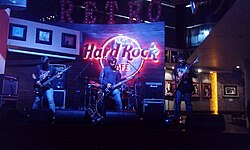
Kolkata boasts a vibrant underground scene with events like "The Pit" at Tapan Theatre and festivals organized by the Kolkata Old School Metal Association (KOSMA). The city also hosts the NH7 Weekender, one of India's premier music festivals, since 2013.
The Ranchi Scene
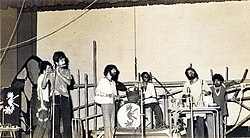
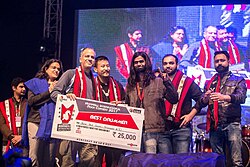
Despite facing hardships as a smaller town, Ranchi has produced significant talent. Pioneers like Genesis, Kaalmantra, and Sparsh laid the groundwork in the 1990s. More recently, Highway 69 has gained national prominence, with their drummer winning the Best Drummer award at the 2017 Hornbill International Rock Contest.
Documenting the Movement
The evolution of the genre has been captured in "rockumentaries." Filmmaker Q directed le pocha in 2004, and in 2008, Abhimanyu Kukreja released Becoming of Indian rock. The latter, produced by NewsX, traces the scene from the 1960s and features legendary bands such as Parikrama, Indus Creed, and Shiva.
| Era | Dominant Style | Key Characteristics | Notable Acts/Figures |
|---|---|---|---|
| 1960s-70s | Beat Groups / Raga Rock | British Invasion influence, Sitar fusion | The Cavaliers, The Hectics, George Harrison |
| 1980s | Pop Rock / Disco | Transition from disco to harder styles | Rock Machine (Indus Creed) |
| 1990s-2000s | Heavy Metal / Alt Metal | Underground growth, MTV influence | Rudra, Nicotine, Parikrama |
| Modern Era | Vedic Metal / Regional Scenes | Sanskrit lyrics, ethnic-folk fusion | Highway 69, Antim-Yuddha |
Frequently Asked Questions
What is Vedic Metal?
Vedic Metal is a sub-genre of heavy metal pioneered by the band Rudra. It typically features lyrics based on the Vedas and incorporates elements of Indian classical music into a heavy metal framework.
How did Freddie Mercury start his music career?
Freddie Mercury (born Farrokh Bulsara) began his career as a teenager in Bombay with a rock band called The Hectics, founded in 1958, where they performed covers of Western rock and roll artists.
What was the role of the Gramophone Company of India?
As an EMI subsidiary, the Gramophone Company of India was essential in the 1950s and 60s for making Western rock and roll records available to the Indian public and promoting local pioneering bands.
Which city is known for pioneering metal in Central India?
Indore is widely credited as a hub for metal in Central India, with the band Nicotine being recognized as one of the primary pioneers of the genre in that region.
How did Indian music influence The Beatles?
The Beatles, particularly George Harrison, were heavily influenced by Indian classical music and Ravi Shankar, leading to the creation of raga rock and the use of instruments like the sitar in their songs.