Indian Rhinoceros: The Resilient Giant of the Indian Subcontinent
The Indian rhinoceros (*Rhinoceros unicornis*), also widely known as the greater one-horned rhinoceros, is a magnificent megaherbivore native to the Indian subcontinent. As the largest rhinoceros in Asia and the second largest living rhinoceros species in the world, this animal commands respect through its sheer size and prehistoric appearance. Despite facing near extinction in the early 20th century, the species has become a symbol of successful wildlife conservation efforts.
Key Facts
- Scientific Name: Rhinoceros unicornis
- Conservation Status: Vulnerable (IUCN Red List)
- Size: Adult males weigh between 2.07–2.2 tonnes; females weigh approximately 1.6 tonnes.
- Distinctive Feature: A single horn on the snout, growing up to 61.6 cm.
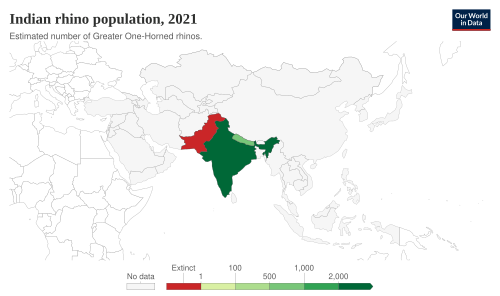
- Primary Habitat: Fragmented populations in India and Nepal.
- Population Trend: Increasing from fewer than 1,900 in the 1990s to an estimated 4,075 by March 2025.
Physical Characteristics and Appearance
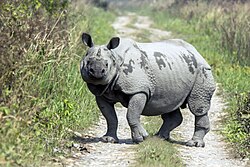
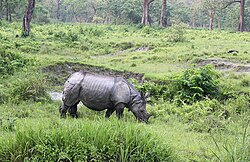
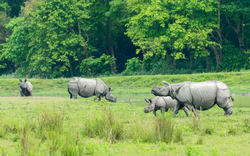
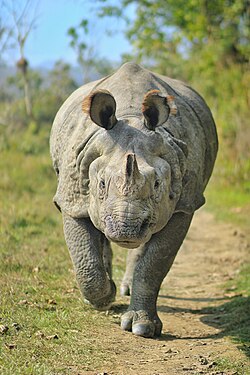
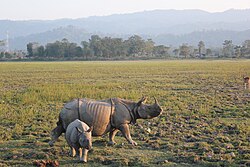
The Indian rhinoceros is easily identified by its unique physical traits. Its skin is a thick, grey-brown color characterized by prominent pinkish skin folds. This armor-like skin is accented by wart-like bumps covering the upper legs and shoulders. Unlike many other mammals, the rhino is nearly hairless, possessing only eyelashes, ear fringes, and a tail brush.
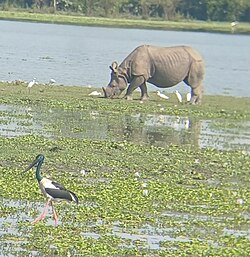
In terms of dimensions, a bull typically reaches a shoulder height of 163–193 cm and a body length of up to 380 cm. Females are slightly smaller, with a shoulder height of 147–173 cm. While the average horn length is significant, some individuals have been recorded with massive proportions, contributing to their reputation as one of Asia's most formidable terrestrial mammals.
Anatomy and Defense
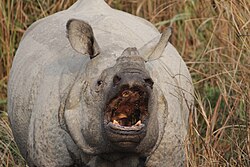
The single horn on the snout is a defining feature of the species. Beyond its appearance, the rhinoceros possesses specialized anatomy; for instance, their lower incisor teeth are notably sharp and can be used during confrontations.
Evolutionary History
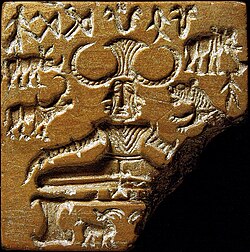
The lineage of the rhinoceros dates back to the Late Miocene, approximately 8 to 9 million years ago. The specific divergence between the Indian and Javan rhinoceros is estimated to have occurred roughly 4.3 million years ago. During the Early Pleistocene (2.6 to 0.8 million years ago), the ancestors of the modern Indian rhinoceros occupied a much broader range, including mainland Southeast Asia, South China, and the island of Java.
Distribution and Habitat
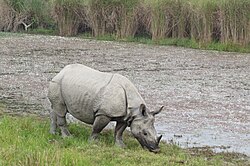
Today, the habitat of the Indian rhinoceros is highly fragmented, restricted to less than 20,000 km². The population is primarily concentrated in India and Nepal. As of March 2025, the estimated population of 4,075 individuals includes 3,323 in India and 752 in Nepal.
Regional Populations
- India: Major populations reside in Assam, particularly within Kaziranga National Park and Pobitora Wildlife Sanctuary. Reintroduction efforts have also seen success in Dudhwa National Park.
- Nepal: Rhinos are found within the Terai Arc Landscape, including Parsa, Chitwan, Bardia, and Shuklaphanta National Parks.
- Bhutan: While there is no permanent population, rhinos occasionally migrate from India's Manas National Park or Buxa Tiger Reserve.
Conservation Challenges and Successes
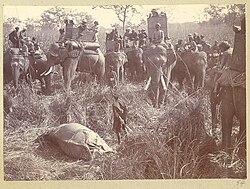
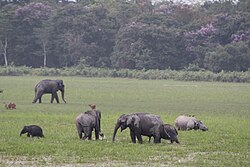
The history of the Indian rhinoceros is a story of dramatic decline and gradual recovery. In the late 19th and early 20th centuries, relentless sport hunting pushed the species to the brink of extinction. By 1908, the population in Kaziranga National Park had plummeted to just 12 individuals.
Following the prohibition of rhino hunting in India in 1910, conservation measures began to take hold. However, new threats emerged. Poaching for the rhino's horn, used in traditional Chinese medicine, remains a critical threat. Between 1980 and 1993, hundreds of rhinos were lost to poachers in India, including the near-total extirpation of the population in Laokhowa Wildlife Sanctuary.
Despite these threats, the population has seen a significant upward trend due to government intervention and support from organizations like the World Wide Fund for Nature (WWF). Programs such as Indian Rhino Vision 2020 (IRV 2020) focus on reintroduction and habitat management to ensure long-term survival.
Captive Breeding and Global Presence
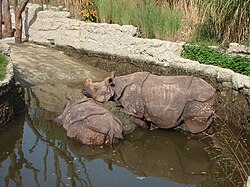
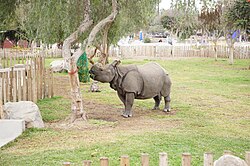
While initially difficult to breed in captivity, zoos have become highly successful in managing the species. Zoo Basel in Switzerland has played a pivotal role, maintaining the International Studbook since 1972 and coordinating the European Endangered Species Programme to ensure genetic diversity.

Summary of Population and Status
| Metric/Region | Details |
|---|---|
| IUCN Status | Vulnerable |
| CITES Status | Appendix I |
| Total Population (March 2025) | 4,075 individuals |
| India Population | 3,323 individuals |
| Nepal Population | 752 individuals |
Frequently Asked Questions
How big is an Indian rhinoceros?
Adult males typically weigh between 2,070 and 2,200 kg, while females weigh approximately 1,600 kg. They can reach shoulder heights of up to 193 cm.
What is the main threat to their survival today?
Poaching for the use of their horns in traditional Chinese medicine remains one of the most significant continuous threats to the species.
Where can you find Indian rhinoceroses in the wild?
They are primarily found in protected areas within India (such as Kaziranga and Dudhwa National Parks) and Nepal (such as Chitwan and Parsa National Parks).
Is the Indian rhinoceros extinct in any areas?
While the species is recovering, they were previously extirpated (locally extinct) in certain areas, such as the Laokhowa Wildlife Sanctuary, due to heavy poaching.
How many horns does an Indian rhinoceros have?
Unlike some other rhino species, the Indian rhinoceros has only a single horn located on its snout.