Impeachment: Legal Processes and Global Applications
Impeachment is a formal process by which a legislative body or a legally constituted tribunal initiates charges against a public official for misconduct. While it can apply to various roles, it is most frequently used for ministerial officials. This is often because the unique nature of high-ranking positions may place these individuals beyond the reach of standard criminal prosecution, or their misconduct may not be codified as a crime except through the specific expectations of their high office.
The scale of this process globally is significant. Between 1990 and 2020, there were at least 272 impeachment charges brought against 132 different heads of state across 63 countries. Latin America has seen a particularly high frequency of these proceedings; between 1978 and 2019, ten presidents from seven countries were removed from office via impeachment or declarations of incapacity.
Key Facts
- Purpose: To hold high-ranking public officials accountable for misconduct that may fall outside standard legal prosecution.
- Global Frequency: 132 heads of state in 63 countries faced impeachment charges between 1990 and 2020.
- Regional Trends: Latin America accounts for nearly 40% of the world's presidential systems and has a high rate of legislative removals.
- Outcomes: Depending on the jurisdiction, impeachment can lead to provisional suspension, permanent removal from office, or disqualification from future public service.
Impeachment Frameworks by Jurisdiction
Brazil
In Brazil, impeachment is viewed as the definitive removal from office. The process involves two stages: the Chamber of Deputies may provisionally remove the president, followed by a trial in the Federal Senate for definitive removal. Both bodies require a two-thirds majority vote to proceed. Under the "Law of Impeachment" (Law no. 1.079 of 1950), crimes—even if only attempted—can result in the loss of office and disqualification from public functions for up to five years. This process also extends to state governors and municipal mayors.
South Korea
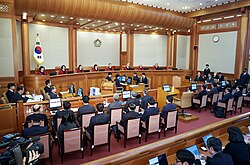
The South Korean Constitution allows for the impeachment of the President, Prime Minister, State Council members, and various judges and commission heads if they violate the Constitution or statutory duties. A proposal requires one-third of the National Assembly's members, while passage requires an absolute majority. However, impeaching a president requires an absolute majority to propose and a two-thirds supermajority to pass.
Once passed by the National Assembly, the case is reviewed by the Constitutional Court of Korea, and the official is suspended from power during the review. Since 1948, three presidents have been impeached: Roh Moo-hyun (2004), Park Geun-hye (2016), and Yoon Suk Yeol (2024). While Roh's impeachment was rejected, Park and Yoon were removed from office by the court.
Romania
In Romania, the Parliament can impeach the president, leading to an immediate suspension. The final decision on removal is then put to a public referendum. For example, President Traian Băsescu was impeached twice; a 2007 referendum saw the electorate vote against his removal, while a 2012 referendum approved his impeachment but was later invalidated due to low voter turnout.
Norway
Under the Constitution of 1814, members of the government, the national assembly (Stortinget), and Supreme Court judges can be impeached for criminal offenses committed in office. These proceedings are handled by an appointed court known as the Riksrett. While the rules were modeled after the U.S. system, the process has fallen into desuetude, with the last instance occurring in 1927.
South Africa
The scope of impeachment in South Africa has expanded over time. Initially limited to the chief justice and Supreme Court judges in 1910, it grew to include the state president in 1961, the vice state president in 1981, and executive deputy presidents, the public protector, and the Auditor-General in 1994. Since 1997, members of certain constitutional commissions have also been eligible.
Comparative Summary of Impeachment Processes
| Country | Initiating Body | Final Deciding Authority | Key Requirement/Outcome |
|---|---|---|---|
| Brazil | Chamber of Deputies | Federal Senate | Two-thirds majority for removal |
| South Korea | National Assembly | Constitutional Court | Two-thirds majority for President |
| Romania | Parliament | Public Referendum | Suspension followed by popular vote |
| Norway | Stortinget | Riksrett (Special Court) | Criminal offenses tied to duties |
Historical Examples and Precedents
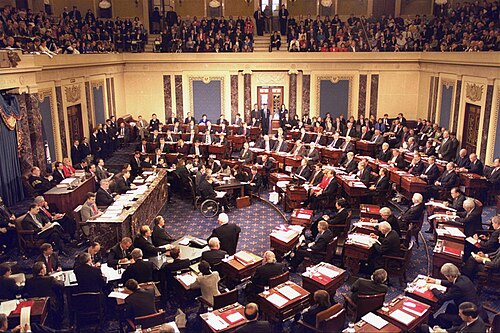
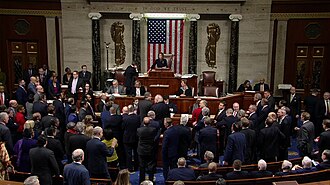
Impeachment has been a tool for political and legal accountability across various regimes. In the United States, the process has been used against several presidents, including Andrew Johnson, Bill Clinton, and Donald Trump.
Other global examples include Lithuania, where President Rolandas Paksas became the first European head of state to be impeached.

In Peru, the process has seen multiple applications, including cases involving Pedro Pablo Kuczynski and his successor, Martín Vizcarra.

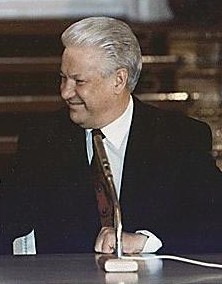
Conversely, some leaders have survived these attempts. Boris Yeltsin, as president of Russia, survived several impeachment efforts during his tenure.
Frequently Asked Questions
What is the difference between impeachment and removal?
Impeachment is the formal act of bringing charges against an official. Removal is the actual loss of office, which typically occurs only after a trial or a vote following the impeachment.
Can any public official be impeached?
No, impeachment is generally reserved for high-ranking ministerial or judicial officials whose positions may otherwise place them beyond the reach of standard legal prosecution.
How does the process work in South Korea?
The National Assembly proposes and passes the impeachment motion, but the final decision to remove the official from office is made by the Constitutional Court of Korea.
What happens to an official during the impeachment process?
In many jurisdictions, such as South Korea and Romania, the official is suspended from exercising their powers while the legal or legislative review is ongoing.
Is impeachment a criminal trial?
It is a quasi-legal process. While it involves charges and trials, it is often conducted by legislative bodies to determine fitness for office rather than to impose criminal penalties, though some systems (like Norway's) specifically target criminal offenses committed in office.