Hyrcanian Forests: The Temperate Deciduous Flora of Northern Iran
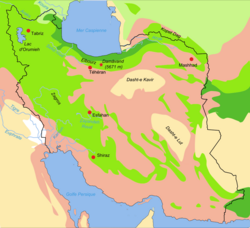
The Hyrcanian forests represent a unique ecological treasure, characterized primarily as temperate deciduous broadleaved forests. These lush woodlands are defined by their rich biodiversity and a distinct lack of conifers, with only a few relic species remaining. The region's vegetation is intricately tied to its geography, spanning from the coastal plains of the Caspian Sea to the high peaks of the Alborz and Talysh Mountains.
Across the landscape, the distribution of plant life is heavily influenced by elevation, soil moisture, and depth, creating a complex mosaic of forest subcommunities.
Key Facts
- Dominant Species: Oriental beech (Fagus orientalis) makes up 32.7% of the forest volume.
- Endemic Flora: The Persian ironwood (Parrotia persica) is endemic to northern Iran and the Talysh Mountains.
- Conifer Status: Conifers are largely absent, existing only as relics such as the European yew and Mediterranean cypress.
- Elevation Zones: Vegetation shifts from humid forests below 700m to beech-dominated zones up to 1,500m, and finally to alpine tundra at the highest peaks.
- Environmental Loss: Much of the original coastal plain forest has been converted to agricultural and urban land.
Vegetation by Elevation and Zone
Caspian Coastal Plains
Historically, the coastal plains were home to a diverse array of species, including the chestnut-leaved oak, European box, black alder, Caucasian alder, Caspian poplar, and Caucasian wingnut. Unfortunately, these habitats have been almost entirely replaced by urban development and farming.
Lower Slopes (Below 700 Metres)
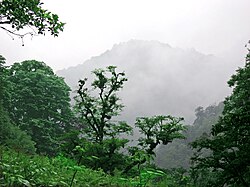
The lower reaches of the Talysh and Alborz Mountains support humid forests. These areas are rich in species such as the European hornbeam, Caucasian zelkova, Persian silk tree, and date-plum. The understory is populated by shrubs like holly and Atropa pallidiflora, as well as lianas (woody climbing plants) such as Smilax excelsa.
A standout feature of this zone is the Persian ironwood. In nearly pure stands, these trees create dramatic landscapes with twisting, lichen-covered branches. Their foliage is particularly striking, with yellow leaves that transition to a faint lilac during the autumn season.
Medium Elevations (700 to 1,500 Metres)
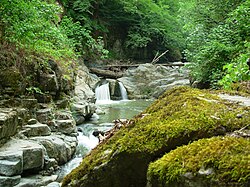
This cloudy zone is dominated by the oriental beech, which grows in both pure and mixed stands. It is often found alongside other noble hardwoods, including the Caucasian oak, sweet chestnut, and both European and Oriental hornbeams. Floristically, these forests share strong affinities with the beech forests of the Balkans and other European woodlands.
Upper Mountain and Subalpine Zones
As elevation increases beyond 1,500 metres, the landscape shifts. The upper mountain zones are characterized by Caucasian oak, Oriental hornbeam, and various shrublands and steppes. At the highest altitudes, the forest gives way to alpine tundra and meadows.
Diverse Native Tree Species
Beyond the dominant beech and oak, the region supports a wide variety of native trees that contribute to its ecological richness. These include:
- Maples: Velvet maple and Cappadocian maple.
- Hardwoods: European ash, Wych elm, and lime tree.
- Fruit and Ornamental: Wild cherry and wild service tree.
- Specialized Species: Caspian locust.
Summary of Hyrcanian Forest Zonation
| Zone | Elevation | Dominant/Key Species |
|---|---|---|
| Coastal Plains | Sea Level | Chestnut-leaved oak, Caspian poplar (mostly converted) |
| Lower Slopes | < 700m | Persian ironwood, European hornbeam, Caucasian zelkova |
| Medium Elevation | 700m - 1,500m | Oriental beech, Caucasian oak, Sweet chestnut |
| Upper/Subalpine | > 1,500m | Caucasian oak, Oriental hornbeam, Steppes |
| Alpine | Highest Peaks | Alpine tundra and meadows |
Frequently Asked Questions
What is the most dominant tree in the Hyrcanian forest?
The oriental beech (Fagus orientalis) is the most dominant species, accounting for 32.7% of the forest's total volume.
Are there many conifers in this region?
No, a defining feature of the region is the lack of conifers. Only a few relic species remain, such as the European yew, junipers, Mediterranean cypress, and Chinese arborvitae.
What makes the Persian ironwood unique?
The Persian ironwood is endemic to northern Iran and the Talysh Mountains. It is known for its twisting, lichen-covered branches and leaves that turn from yellow to a faint lilac in the fall.
How has human activity affected the coastal plains?
The forests of the Caspian Sea coastal plains, which once featured species like the Caucasian wingnut and chestnut-leaved oak, have been almost entirely converted into agricultural and urban land.
How does the forest change at the highest elevations?
At the highest elevations, the dense deciduous forests disappear, replaced first by shrublands and steppes, and eventually by alpine tundra and meadows.