Hydroxyl Radical: The Atmospheric Cleaner and Interstellar Tracer
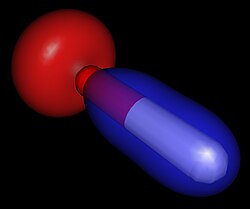
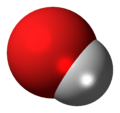
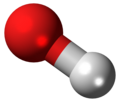
The hydroxyl radical, scientifically known as oxidanyl, is one of the most reactive and influential species in both our planet's atmosphere and the vast reaches of interstellar space. Despite its fleeting existence, this diatomic molecule plays a critical role in cleaning the air we breathe and serving as a vital diagnostic tool for astronomers studying the cosmos.
In organic synthesis, these radicals are frequently generated through the photolysis—the chemical breakdown of molecules by light—of 1-Hydroxy-2(1H)-pyridinethione. Once formed, the radical initiates a chain of oxidation reactions, often reacting with hydrocarbons to form alkyl radicals, which subsequently react with oxygen to create peroxy radicals.

Key Facts
- Chemical Formula: HO
- IUPAC Name: Oxidanyl (substitutive) or Hydridooxygen(•) (additive)
- Primary Role: Major oxidizing agent in the Earth's troposphere.
- Atmospheric Production: Primarily via ozone photolysis and hydrogen peroxide photolysis.
- Astronomical Use: Acts as a tracer for shock conditions and molecular cloud density.
- CAS Number: 3352-57-6
Chemical and Physical Properties
The hydroxyl radical is characterized by its high reactivity and specific thermochemical profile. As a diatomic molecule, its electronic structure is complex due to orbit-spin coupling, which splits its energy levels into Π 1/2 and Π 3/2 states. This splitting is further influenced by lambda doubling and hyperfine interactions with the proton's spin.
| Property | Value |
|---|---|
| Molar Mass | 17.007 g·mol |
| Acidity (pKa) | 11.8 to 11.9 |
| Standard Molar Entropy (S 298) | 183.71 J K mol |
| Standard Enthalpy of Formation (Δf H 298) | 38.99 kJ mol |

The Earth's Atmospheric Detergent
In the Earth's troposphere, the hydroxyl radical acts as a primary "detergent." It is responsible for destroying approximately 3.7 gigatonnes of trace gases every year, including methane (CH₄) and various hydrofluorocarbons (HFCs) and hydrochlorofluorocarbons (HCFCs).
Production Pathways
The main production pathway in the troposphere involves the photolysis of ozone at wavelengths shorter than 320 nm. This process creates excited atomic oxygen, O(D), which reacts rapidly with water vapor (H₂O) to produce two hydroxyl radicals. Another significant source is the photolysis of hydrogen peroxide (H₂O₂), which occurs most efficiently at wavelengths below 300 nm.
Atmospheric Stability and Detection
Because the lifetime of •OH radicals is extremely short, their concentrations in the air remain very low. This makes direct detection difficult, requiring highly sensitive techniques. Scientists often estimate global concentrations indirectly by analyzing methyl chloroform (CH₃CCl₃) levels. Research indicates that global •OH concentrations are well-buffered, showing an interannual variability of less than 2%.
Hydroxyl in the Interstellar Medium
Beyond Earth, the hydroxyl radical is a cornerstone of astrochemistry. Since its first detection in the radio absorption spectrum of Cassiopeia A in 1963, it has provided astronomers with deep insights into the composition and physical state of interstellar clouds.
Tracing Molecular Clouds
Astronomers distinguish between diffuse clouds (lower temperature and density) and dense clouds. In dense gas, such as that found in the Taurus Molecular Cloud-1, •HO is primarily formed through dissociative recombination—a process where a molecular ion (like H₃O⁺) recombines with an electron and breaks into neutral fragments.
The hydroxyl radical is particularly useful for studying these regions because it can be observed through its 18-cm emission lines. Unlike atomic hydrogen, which can be difficult to distinguish in certain thermal widths, molecular line observations of •HO allow for more precise modeling of molecular regions and shock conditions.
Frequently Asked Questions
How is the hydroxyl radical produced in the atmosphere?
It is primarily produced when ultraviolet light breaks down ozone (photolysis), creating excited oxygen atoms that react with water vapor. It can also be produced through the photolysis of hydrogen peroxide.
Why is the hydroxyl radical important for the environment?
It acts as a major oxidizing agent that cleans the atmosphere by breaking down trace gases like methane and various pollutants, preventing their accumulation.
What is the difference between the hydroxyl radical and a hydroxyl ion?
The hydroxyl radical (•OH) is a neutral species with an unpaired electron, making it highly reactive, whereas the hydroxyl ion (OH⁻) is a negatively charged ion.
How do astronomers use hydroxyl to study space?
Astronomers use the specific radio and far-infrared wavelengths emitted by the hydroxyl radical to map the density, temperature, and magnetic fields of interstellar molecular clouds.
What is dissociative recombination?
It is a chemical process where a molecular ion captures an electron and subsequently splits into smaller, neutral fragments. This is a key formation mechanism for •HO in dense interstellar clouds.