Hydrangea: The Science and Art of Colorful Blooms
The Hydrangea is a diverse genus of more than 70 species of flowering plants native to the Americas and Asia. While they are widely recognized as stunning ornamental shrubs, these plants exhibit a fascinating range of biological forms, from small trees to lianas—climbing vines—that can reach heights of up to 30 meters by scaling other trees. Although the genus was first described in North America, the highest species diversity is found in eastern Asia, particularly in Japan, Korea, and China.
Key Facts
- Species Diversity: Over 70 species exist, with 98 currently accepted.
- Growth Habit: Mostly shrubs (1–3 m tall), but includes small trees and climbing lianas.
- Color Chemistry: Flower color in certain species is determined by soil pH and aluminum availability.
- Native Range: Primarily eastern Asia and the Americas.
- Cultural Use: Used in traditional Japanese and Korean herbal teas.
Botanical Characteristics and Life Cycle
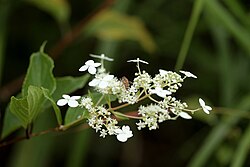
Hydrangeas typically bloom from early spring through late autumn. Their flowers are arranged in corymbs or panicles (flat-topped or cone-shaped flower clusters) usually located at the ends of the stems.
A unique feature of the hydrangea flowerhead is the presence of two distinct flower types. In the center are small, non-showy fertile flowers. Surrounding these are larger, sterile flowers characterized by colorful sepals (or tepals) that provide the plant's visual appeal. While wild populations often have few sterile flowers, cultivated varieties have been specifically bred to maximize these showy blooms.
The Chemistry of Color and Soil pH
One of the most captivating traits of the hydrangea, particularly in H. macrophylla and H. serrata, is the ability to change flower color based on the environment. This phenomenon is driven by the availability of aluminum ions in the soil, which is directly influenced by the soil's pH level.
In acidic soils (pH below 7), aluminum ions are available for the plant to absorb, typically resulting in blue to purple flowers. In alkaline soils (pH above 7), aluminum ions are tied up and unavailable, leading to pink or red blooms. White hydrangeas are the exception; because they lack the necessary pigments, their color cannot be manipulated by soil chemistry.
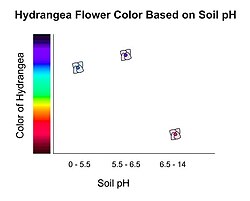
Color Transition Summary
| Soil pH Level | Resulting Flower Color | Aluminum Availability |
|---|---|---|
| 5.5 or lower | Blue | High |
| 5.5 to 6.5 | Purple | Moderate |
| 6.5 or higher | Pink | Low |
Cultivation and Gardening Tips
Hydrangeas are prized as ornamental plants, with Hydrangea macrophylla (bigleaf hydrangea) being the most popular. This species is often categorized into two forms: the mophead and the lacecap. With over 600 named cultivars, gardeners have a vast array of choices for their landscapes.
Proper pruning is essential for maintaining plant health. Some varieties require annual pruning as new leaf buds appear to prevent the plant from becoming "leggy," where stems grow too long and sag under their own weight. However, gardeners must be cautious, as some species only flower on "old wood," meaning pruning at the wrong time will remove the flower buds for the following season.
To encourage blue flowers, gardeners often add organic materials like citrus peel or coffee grounds to increase soil acidity.
Cultural Significance and History
Beyond the garden, hydrangeas hold deep cultural value. In Japan, Hydrangea serrata is used to create ama-cha (sweet tea). The leaves contain phyllodulcin, a substance that provides a sweet taste. This tea is central to the kan-butsu-e (Buddha bathing ceremony) held every April 8th.
Similarly, in Korea, H. serrata is used to produce herbal teas known as sugukcha or isulcha. In the United States, Hydrangea quercifolia (oakleaf hydrangea) was designated as the official state wildflower of Alabama in 1999.
Fossil Record
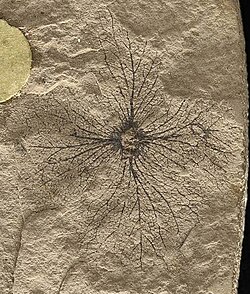
The genus has a documented prehistoric presence. Fossil evidence includes Hydrangea alaskana from the Paleogene strata in Alaska and Hydrangea knowltoni from the Miocene Latah Formation in the Pacific Northwest of the United States.
Frequently Asked Questions
Can I change the color of a white hydrangea?
No. White hydrangeas do not produce the pigments required for color change, so they remain white regardless of the soil pH.
How do I make my hydrangea flowers blue?
You can turn hydrangea flowers blue by increasing the acidity of the soil (pH 5.5 or lower), which makes aluminum ions available to the plant. Adding organic materials like coffee grounds or citrus peel can help achieve this.
What is the difference between mophead and lacecap hydrangeas?
These are two main categories of Hydrangea macrophylla. Mopheads feature large, dense, rounded flowerheads of sterile flowers, while lacecaps have a more open structure with a center of fertile flowers surrounded by a ring of larger sterile flowers.
Why aren't my hydrangeas blooming after pruning?
Some hydrangea species only flower on "old wood." If you prune these plants late in the season or early in the spring, you may accidentally remove the flower buds developed during the previous year.
What is ama-cha?
Ama-cha is a traditional Japanese sweet tea made from the leaves of Hydrangea serrata, which contain the sweet-tasting compound phyllodulcin.