Hurricane Maria: The Devastating Impact and Legacy of a Category 5 Storm
In September 2017, the Atlantic hurricane season produced one of the most powerful and destructive tropical cyclones in modern history. Hurricane Maria, a catastrophic Category 5 major hurricane, tore through the Caribbean, leaving a trail of unprecedented destruction across the Lesser Antilles, the Greater Antilles, and the United States. With peak sustained winds reaching 175 mph (280 km/h) and a minimum central pressure of 908 mbar, the storm's physical force reshaped landscapes and challenged the limits of disaster response.
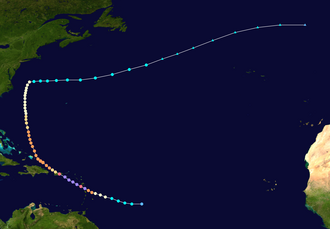
Meteorological History and Intensity
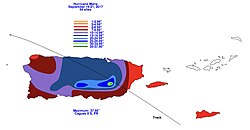
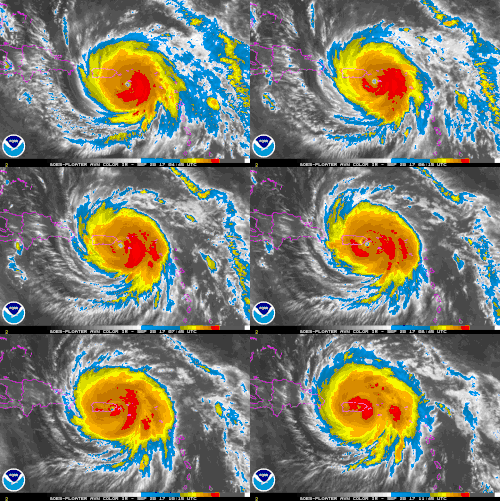
Hurricane Maria began its life on September 16, 2017. As it moved through the Atlantic, it rapidly intensified, eventually reaching Category 5 status on the Saffir–Simpson Hurricane Wind Scale—the highest classification for tropical cyclones. The storm reached its peak intensity southeast of Puerto Rico in the early hours of September 20.
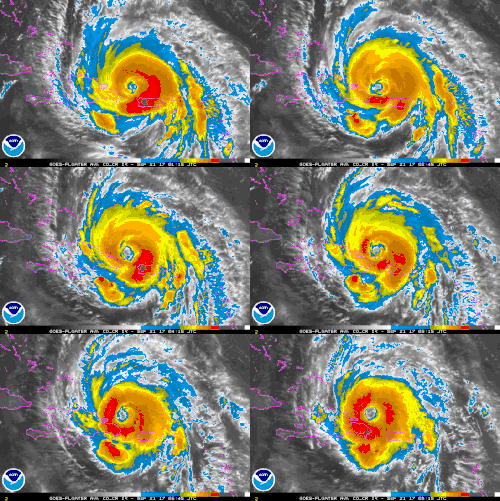
The storm's path was characterized by extreme wind speeds and immense rainfall. After making landfall in Puerto Rico, the system continued to move through the region, eventually becoming extratropical on September 30 before dissipating on October 2, 2017.
Regional Impact and Devastation
The Lesser Antilles: Dominica and Guadeloupe
The Windward Islands bore the initial brunt of Maria's fury. Dominica suffered catastrophic damage, with the storm turning much of the island into a debris field. The loss of life and infrastructure in Dominica was profound, with 65 recorded fatalities and an estimated $1.37 billion in damages.
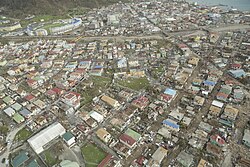
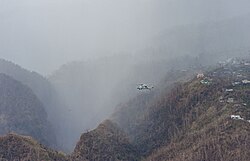
In Guadeloupe, the storm caused significant structural damage and resulted in four fatalities, with economic losses totaling approximately $120 million. The mountainous terrain of these islands often complicated relief efforts, as landslides and debris-clogged roads hindered access to remote communities.
Puerto Rico: A Humanitarian Crisis
Puerto Rico experienced the most significant impact of the hurricane. The storm's violent winds and torrential rains caused widespread destruction to homes, vegetation, and critical infrastructure. Thousands of residents were left without power, and the island's electrical grid was almost entirely decimated.
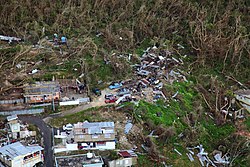
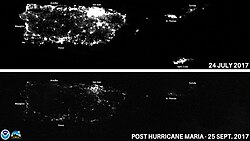
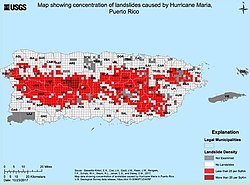
The physical landscape was altered by intense rainfall and wind. Landslides were widespread, and in some areas, such as Villalba, entire mountainsides were impacted by the combination of wind and rain. The storm also destroyed vital communication and monitoring tools, including the US NWS NEXRAD radar in Puerto Rico.
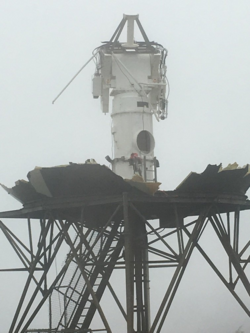
![Mountain melted down by winds and heavy rain in Villalba.[190]](/images/9b/46/9b460219ada8e32b418c6d0e206944de9f612245f12a7f01c8c152a03744f687.jpg)
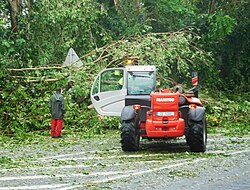
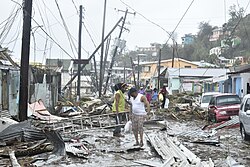
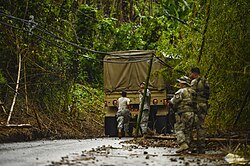
Logistical challenges were compounded by the sheer volume of debris. Roads were blocked by downed power poles, fallen trees, and structural wreckage, making it difficult for rescue crews to reach those in need.
The U.S. Virgin Islands and Other Regions
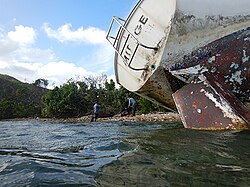
The U.S. Virgin Islands also faced significant challenges, reporting three fatalities and several missing persons. In the broader Caribbean, the Dominican Republic and Haiti were impacted, with the Dominican Republic reporting five fatalities and $63 million in damages.
Key Facts
- Peak Wind Speed: 175 mph (280 km/h).
- Lowest Pressure: 908 mbar (hPa).
- Total Fatalities: 3,059.
- Total Estimated Damage: $91.6 billion.
- Most Impacted Territory: Puerto Rico ($90 billion in damages).
- Hurricane Category: Category 5.
Summary of Regional Damage and Fatalities
| Territory | Fatalities | Missing | Damage (USD) |
|---|---|---|---|
| Dominica | 65 | 0 | $1.37 billion |
| Dominican Republic | 5 | 1 | $63 million |
| Guadeloupe (France) | 4 | 0 | $120 million |
| Haiti | 3 | 0 | N/a |
| Martinique (France) | 0 | 0 | $42 million |
| Saint Kitts and Nevis | 0 | 0 | $12.8 million |
| Puerto Rico | 2,975 | 60 | $90 billion |
| U.S. Virgin Islands | 3 | 4 | N/a |
Recovery and Controversy
The aftermath of Hurricane Maria was marked by a long and difficult recovery process. In Puerto Rico, the reconstruction of the power grid and public works required billions of dollars in assistance. Between 2018 and 2019, significant funding was allocated, including $9.5 billion for power grid reconstruction and $23.6 billion for permanent public works.
![More than a week after Hurricane Maria struck, residents of Ponce, Puerto Rico wait in long lines at an ATM to withdraw cash.[172]](/images/5f/3f/5f3fd479b7bb693e109d7f4dc104f2b9ca9b119ee7042671fe44579bfefdc722.jpg)
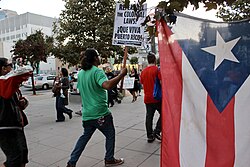
However, the recovery was marred by political controversy. A 2021 report from the U.S. Department of Housing and Urban Development's Office of Inspector General found that over $20 billion in federal aid for Puerto Rico was purposefully delayed by the Trump administration, despite being approved by Congress. This delay, along with criticisms from local leaders like San Juan Mayor Carmen Yulín Cruz, added significant hardship to the population.
![A 2021 report from the U.S. Department of Housing and Urban Development's Office of Inspector General[257] found that 45th U.S. president Donald Trump purposefully delayed over $20 billion in federal aid for Puerto Rico, despite that aid being appropriated and approved by Congress.[258]](/images/d3/4a/d34a34b49e8e012cbcc53fcdf16550de6452a05875c5e4e3aa211b2d717e25a3.jpg)

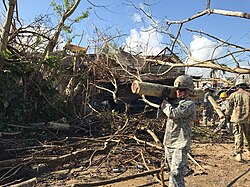
National Guard units from various states, including South Carolina, Connecticut, Iowa, Illinois, New York, and others, were deployed to assist with cleanup and relief efforts across Puerto Rico.
In the United States, the storm's effects were felt in the Southeastern and Mid-Atlantic states, though the primary devastation remained in the Caribbean.
Frequently Asked Questions
How many people died as a result of Hurricane Maria?
The total number of fatalities attributed to Hurricane Maria is 3,059, with the vast majority of these deaths occurring in Puerto Rico.
What was the maximum wind speed of Hurricane Maria?
Hurricane Maria reached peak sustained winds of 175 mph (280 km/h) as a Category 5 hurricane.
What was the total economic damage caused by the storm?
The total estimated damage across all affected areas was approximately $91.6 billion, with Puerto Rico accounting for $90 billion of that total.
How much federal aid was allocated for Puerto Rico's recovery?
Significant government-to-government assistance included $28.9 billion, which covered debris removal, emergency protective measures, public works, and power grid reconstruction.
What were the main challenges faced during relief operations?
Relief efforts were hindered by destroyed infrastructure, including collapsed roads clogged with debris, downed power lines, and the loss of critical communication and radar systems.