Hungarian Rock Music: A History of Rebellion and Evolution
Since the early 1960s, rock music has been a cornerstone of Hungary's popular culture. From its beginnings as a forbidden art form under strict political surveillance to its modern diversification into indie and metal, the genre has mirrored the country's social and political transformations. What started as a clash between youth expression and state control evolved into a sophisticated music scene with significant international reach.
Key Facts
- Early Pioneers: Illés, Metró, and Omega were the first major bands to shape the scene in the 1960s.
- Political Tension: During the Communist era, the Song Committee inspected lyrics for ideological disobedience.
- Supergroups: Locomotiv GT emerged as a powerhouse supergroup in the 1970s.
- Genre Shifts: The scene progressed from classic rock and progressive rock to punk, new wave, alternative, and indie rock.
- Global Reach: Bands like Omega (Germany), The Moog (USA), and FreshFabrik (International) achieved success outside Hungary.
The Formative Years: 1960s and 1970s
The 1960s saw the rise of foundational bands such as Illés, Metró, and Omega. However, this era was marked by friction with Hungarian Communist authorities. While the band Illés dominated the prestigious Táncdalfesztivál in 1968, the subsequent decade brought a harsh crackdown on subversives. Illés was eventually banned from recording and performing, and other bands were forced to leave the country.
In the wake of these restrictions, some musicians formed Locomotiv GT, a supergroup that became immensely famous. Meanwhile, Omega found significant stardom in Germany. By the late 1970s, the state maintained control through the Record Company and the Song Committee, which vetted all songs for political compliance.
This period saw a divide in styles. While LGT, Illés, Bergendy, and Zorán played classic rock, others produced state-sanctioned pop. The electronic disco scene produced acts like Neoton Familia, Beatrice, and Szűcs Judit, while the progressive rock scene—characterized by complex compositions—featured bands like East, V73, Color, and Panta Rhei.
The Era of Disillusionment: 1980s and 1990s
The early 1980s were defined by economic and cultural depression, creating a fertile ground for punk and new wave music. This era spoke to alienated youth through raw energy and theatricality. Notable bands included Beatrice (who transitioned from disco to punk/folk rock), P. Mobil, Bikini, the Hobo Blues Band, A. E. Bizottság, Európa Kiadó, Sziámi, and Edda Művek.
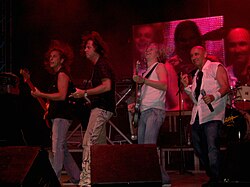
The authorities eventually realized that banning rock was ineffective and attempted to co-opt the genre by encouraging musicians to sing about Communist principles. Despite this, subversion continued; members of the punk band CPg were even sentenced to two years in prison for political incitement. By the 1990s, the collapse of the Communist government removed these barriers, allowing the Hungarian scene to align more closely with European musical trends.
Modern Evolution: 2000s and Beyond
The 21st century brought a diversification of genres. While classic rock remained, metal bands such as FreshFabrik, Blind Myself, and Superbutt achieved international acclaim. The era also saw a surge in alternative and indie rock.
The Alternative Scene
The 1990s and 2000s were dominated by alternative acts. Kispál és a Borz became one of the most successful bands, noted for the unique lyrical style of singer András Lovasi. Other influential groups included Pál Utcai Fiúk, Quimby, and the underground fusion of tribal rhythms and hardcore punk by Vágtázó Halottkémek (Galloping Coroners).
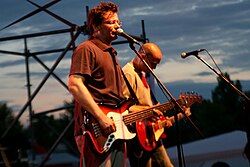
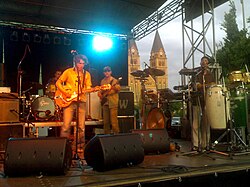
The scene further expanded with the arrival of electro-influenced artists like Yonderboi and the international success of The Idoru. By 2012, new acts like Ivan & The Parazol continued to push the genre forward.
The Rise and Fall of Indie Rock
The global indie revival of the early 2000s hit Hungary strongly. The Puzzle was a pioneer, becoming the first Hungarian indie band to release a record (Dream Your Life) via an international label, PolyGram, in 2000.
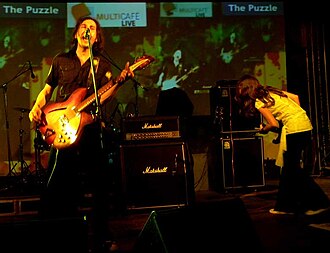
The mid-2000s saw peak success for bands like Amber Smith and The Moog. The Moog achieved international recognition with the song "I Like You" and later toured the US with the B-52s. However, the indie scene declined in the 2010s due to a global shift in musical tastes and the diversification of key artists into side projects.

Summary of Key Eras and Styles
| Era | Dominant Styles | Key Artists/Bands | Political Context |
|---|---|---|---|
| 1960s-70s | Classic Rock, Progressive, Disco | Omega, Locomotiv GT, Illés | Communist censorship; Song Committee |
| 1980s | Punk, New Wave, Blues Rock | Beatrice, P. Mobil, Edda Művek | Economic depression; youth alienation |
| 1990s-2000s | Alternative, Metal, Electro | Kispál és a Borz, Quimby, Yonderboi | Post-Communist liberalization |
| 2000s-2010s | Indie Rock | The Moog, Amber Smith, The Puzzle | Globalized music market |
Frequently Asked Questions
Who were the first major rock bands in Hungary?
The first major bands to emerge in the early 1960s were Illés, Metró, and Omega.
How did the Communist government control music?
The government used the Record Company and a specific body called the Song Committee to inspect lyrics and ensure there was no ideological disobedience or subversion.
What was the significance of Locomotiv GT?
Locomotiv GT was a prominent supergroup formed in the 1970s by members of earlier bands, becoming one of the most famous classic rock acts in the country.
Which Hungarian indie bands achieved international success?
The Puzzle was the first to sign with an international label (PolyGram). Later, Amber Smith and The Moog gained recognition in Germany and the United States.
Why did the Hungarian indie scene decline in the 2010s?
The decline was caused by a global downturn in the indie rock genre and the fact that key musicians, such as Amber Smith's Imre Poniklo, shifted their focus to various side projects.