Understanding the Hundred Family Surnames: A Classic of Chinese Literacy
In the study of Chinese culture and language, few texts are as foundational as the Hundred Family Surnames (Chinese: 百家姓; pinyin: Bǎijiā Xìng). More than just a list of names, this classic text has served for centuries as a vital educational tool, helping generations of students master the complexities of Chinese characters.
Compiled by an unknown author during the Song dynasty (960–1279), the text is a rhyming poem composed of lines containing eight characters each. While the title suggests a limited scope, the work is actually a comprehensive collection of common Chinese surnames, providing a window into the social and familial structures of historical China.
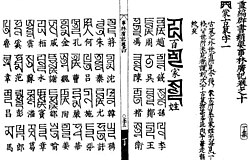
Key Facts
- Origin: Compiled by an unknown author during the Song dynasty (960–1279).
- Content: Lists 504 surnames, consisting of 444 single-character names and 60 double-character names.
- Educational Role: Part of the "San Bai Qian" (Three, Hundred, Thousand) trio of essential instructional books for children.
- Structure: A rhyming poem written in eight-character lines.
- Legacy: Approximately 800 modern names have been derived from the original surnames listed.
The Educational Legacy of the "San Bai Qian"
For centuries, the Hundred Family Surnames was a cornerstone of early education. It was often grouped with two other classic texts to form the San Bai Qian (Three, Hundred, Thousand): the 13th-century Three Character Classic and the 6th-century Thousand Character Classic.
These books were nearly universal introductory literary texts. They were used by students from elite backgrounds as well as ordinary villagers to build a foundation in literacy. Because Chinese does not use an alphabet, memorizing these texts was a primary method for learning character recognition—the ability to identify written symbols—before progressing to complex reading and writing. A student who had mastered all three texts would possess a working knowledge of roughly 2,000 characters.
Structure and Historical Significance of the List
Although the surnames are presented in a rhyming poetic form, they are not listed in order of how common they are today. Instead, the arrangement reflects the political and social landscape of the Song dynasty. According to the scholar Wang Mingqing, the first four surnames represent the most influential families of that era, particularly in the Jiangnan Region:
- Zhao (趙): The surname of the Song dynasty emperors.
- Qian (錢): The surname of the kings of Wuyue.
- Sun (孫): The surname of Queen Sun Taizhen, wife of the Wuyue king Qian Chu.
- Li (李): The surname of the kings of Southern Tang.
The subsequent four surnames—Zhou (周), Wu (吳), Zheng (鄭), and Wang (王)—were the surnames of the other wives of Qian Chu, the last king of Wuyue.
Summary of Surname Composition
| Category | Count |
|---|---|
| Single-character surnames | 444 |
| Double-character surnames | 60 |
| Total Surnames | 504 |
Modern Prevalence and Rankings
While the Hundred Family Surnames was a definitive guide in antiquity, the frequency of these names has shifted over time. A 2013 study by the Fuxi Institution, which ranked the 400 most common surnames in China, shows that many names from the classic text are now quite rare.
For example, several names from the text fall outside the top 300 most common surnames, such as Yōng (雍), Píng (平), Mǐ (米), and Zhàn (湛). Many other names, including various double-syllable names (with the exception of Ōuyáng), do not appear within the top 400 most common surnames in modern China.
Frequently Asked Questions
What is the difference between single and double-character surnames?
In Chinese, most surnames consist of a single character (e.g., Li or Wang). However, some are compound surnames, which consist of two characters (e.g., Ouyang or Zhuge). The Hundred Family Surnames includes 60 of these double-character varieties.
Why was this book used for teaching children?
Since Chinese writing is logographic (using characters rather than an alphabet), students must memorize the shape and meaning of each symbol. The rhyming, repetitive nature of the Hundred Family Surnames made it an effective way to build a large vocabulary of characters through memorization.
Is the order of names in the book based on popularity?
No. The order is based on the political importance of certain families during the Song dynasty, specifically highlighting the imperial and royal families of the time.
How many characters can a student learn from the "San Bai Qian"?
A student who successfully memorizes the Three Character Classic, the Hundred Family Surnames, and the Thousand Character Classic will have acquired a knowledge of approximately 2,000 characters.
Are all the names in the book still common today?
Not all of them. While many remain very common, a 2013 study indicated that many surnames listed in the text have become relatively rare, falling outside the top 300 or 400 most common names in China.