Humidity Science: How Water Vapor Affects Weather, Comfort, and Health
Humidity refers to the concentration of water vapor—the gaseous state of water—present in the air. While water vapor is generally invisible to the naked eye, its presence is a critical driver of environmental conditions, indicating the likelihood of precipitation, dew, or fog. Because humidity is deeply intertwined with temperature and pressure, understanding its mechanics is essential for everything from weather forecasting to maintaining indoor comfort.
![Global distribution of relative humidity at the surface averaged over the years 1981–2010 from the CHELSA-BIOCLIM+ data set[1]](/images/29/bc/29bc5a2d02004b58224343b571bf40b3a114de86042a0f311263f126218ec1b9.png)
Core Concepts of Humidity Measurement
![Paranal Observatory on Cerro Paranal in the Atacama Desert is one of the driest places on Earth.[6]](/images/c1/e4/c1e4daa16cf4f028245189870e51804a8ca5800ae976300dbadbf113651a376e.jpg)
To accurately describe the moisture in the air, scientists and meteorologists use three primary metrics. Each provides a different perspective on how much water is present in a given space.
- Absolute Humidity: The actual mass of water vapor per unit volume of air, typically measured in grams per cubic meter (g/m³).
- Relative Humidity: Expressed as a percentage, this indicates the current absolute humidity relative to the maximum amount of water vapor the air could hold at that specific temperature.
- Specific Humidity: The ratio of the mass of water vapor to the total mass of the moist air parcel.
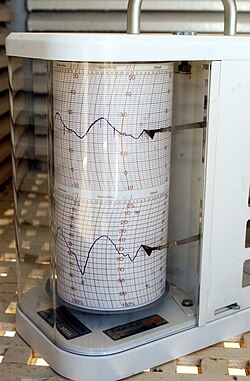
The Role of Temperature and the Dew Point
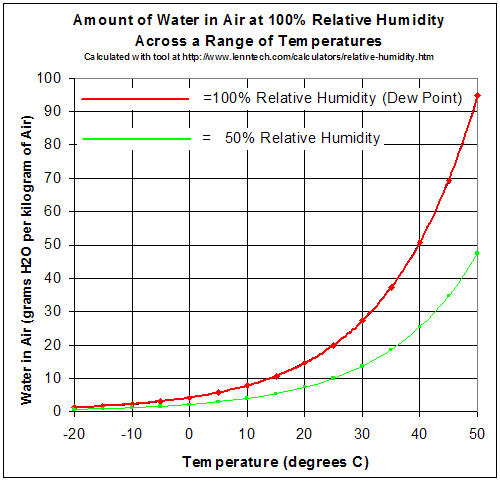
Temperature is the most significant factor influencing humidity. Warm air has a much higher capacity to hold water vapor than cool air. For instance, a parcel of air near saturation might contain only 8 g of water per cubic meter at 8 °C (46 °F), but that same volume could hold 28 g of water per cubic meter at 30 °C (86 °F).
As air cools, its ability to hold moisture decreases. If the temperature drops without any water being added or removed, the air will eventually reach its saturation point. The temperature at which this occurs is known as the dew point. At this stage, the relative humidity reaches 100%, and excess moisture may condense into liquid water.
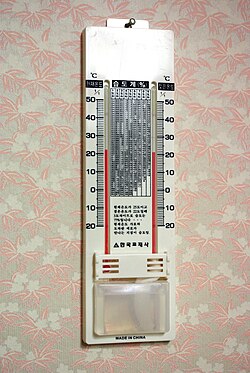
Humidity and Human Comfort
Humidity plays a vital role in how humans perceive temperature. In hot summer weather, high relative humidity can make the air feel much warmer than the actual thermometer reading. This happens because high moisture levels hinder the evaporation of perspiration from the skin, which is the body's primary method of cooling itself. For example, at an air temperature of 80.0 °F (26.7 °C), a relative humidity of 75% results in a heat index of approximately 83.6 °F (28.7 °C).
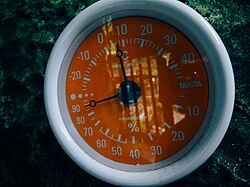
For optimal thermal comfort, the recommended indoor relative humidity range is generally between 30% and 60%. While humans can tolerate a wider range (30% to 70%) depending on temperature, staying within the 40% to 60% range is often considered ideal. Air conditioning systems help manage this by reducing both temperature and humidity.
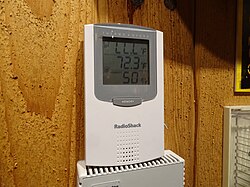
Impact on Health and Buildings
Humidity levels also have significant implications for health and structural integrity:
- Human Health: Higher humidity levels have been shown to reduce the infectivity of aerosolized influenza viruses. Conversely, very low humidity (often caused by heating indoor air during winter) can lead to dry skin and itchy eyes.
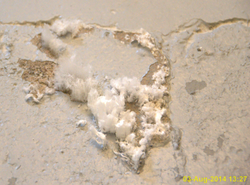
- Building Construction: Excessive moisture can lead to structural issues, such as primary efflorescence.
- Electronics and Storage: Controlling humidity is vital for protecting sensitive electronics and preserving items like cigars, often using tools like desiccants or humidors.


Summary of Humidity Relationships
| Metric/Factor | Definition/Effect | Key Characteristic |
|---|---|---|
| Absolute Humidity | Mass of water vapor per volume | Measured in g/m³ |
| Relative Humidity | Current moisture vs. maximum capacity | Expressed as a percentage (%) |
| Dew Point | Temperature where saturation occurs | Triggers condensation/fog |
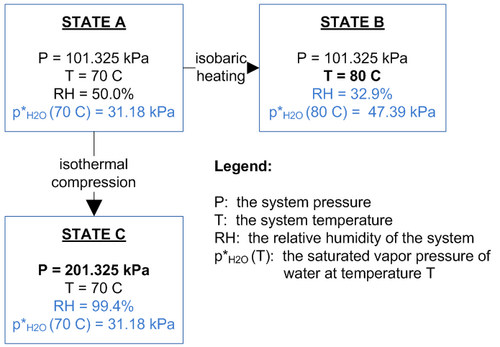
| Temperature Increase | Increases moisture capacity | Lowers relative humidity if mass is constant |
| Air Density | Humid air vs. Dry air | Humid air is less dense than dry air |
Key Facts
- Temperature Correlation: The maximum absolute humidity roughly doubles for every 20 °F (11 °C) increase in temperature.
- Air Density: Humid air is less dense than dry air because water molecules are less massive than nitrogen or oxygen molecules.
- Indoor Standards: ASHRAE Standard 55-2017 suggests a relative humidity range of 30–60% for air-conditioned buildings.
- Winter Effects: Heating cold outdoor air can drop indoor relative humidity below 30%, causing dryness.

Frequently Asked Questions
Why does high humidity make it feel hotter?
High humidity slows down the evaporation of sweat from your skin. Since evaporation is the body's way of releasing heat, a lack of evaporation makes you feel warmer than the actual air temperature.
What is the difference between absolute and relative humidity?
Absolute humidity measures the actual weight of water vapor in a specific volume of air, whereas relative humidity compares that amount to the maximum amount of water the air could hold at its current temperature.
How does temperature affect relative humidity?
If the amount of water vapor stays the same but the temperature increases, the relative humidity will decrease because the air's capacity to hold moisture has grown. If the temperature decreases, the relative humidity increases.
What is the dew point?
The dew point is the specific temperature at which air becomes saturated with water vapor. If the temperature drops to this point, water vapor will begin to condense into liquid droplets, forming dew, fog, or clouds.
Why is indoor air so dry in the winter?
When cold outdoor air is brought indoors and heated, its capacity to hold moisture increases significantly. This causes the relative humidity to drop, often resulting in very dry indoor environments.