Humanoid Robots: From Science Fiction to Industrial Reality
A humanoid robot is a machine designed to resemble the human body in shape. While some designs focus on functional purposes—such as interacting with human tools and environments or working alongside people—others are built for experimental research, such as studying bipedal locomotion (the ability to walk on two legs).
Most humanoid robots feature an anthropomorphic design, meaning they mimic human form through a torso, a head, two arms, and two legs. However, some models may only include a subset of these components. Within this field, specific terms are often used to describe appearance: an android refers to a robot designed to closely resemble the human physique, while a gynoid is a term sometimes used for robots with a feminine appearance.
![Valkyrie (R5), a humanoid robot[1] from NASA](/images/f4/81/f4811d5375ca7f1c0d1bc7b659bdac2b353f8a6925b026ec299130cf1c59a9b0.jpg)
Key Facts
- Design: Typically includes a torso, head, two arms, and two legs.
- Core Components: Rely on sensors (proprioceptive and exteroceptive), actuators (electric, hydraulic, or pneumatic), and complex planning and control systems.
- Market Growth: Goldman Sachs projects the humanoid robot market could reach $38 billion by 2035.
- Industrial Milestone: 2025 marked the first year of mass industrial deployment for humanoid robots.
The Anatomy of a Humanoid
To function effectively in a human world, these machines require a sophisticated array of internal systems. These systems can be categorized into several critical groups:
Sensors and Perception
Robots use various sensors to understand their surroundings. Proprioceptive sensors allow the robot to sense its own internal state (like joint position), while exteroceptive sensors allow it to perceive the external environment. These inputs are vital for balance and interaction.
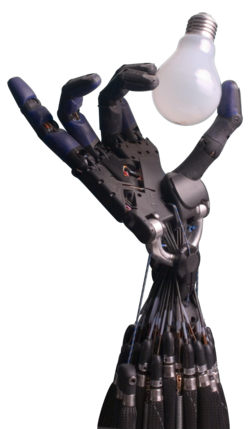
Actuators and Movement
Movement is driven by actuators, which act as the "muscles" of the robot. These can be electric, hydraulic, or pneumatic (using compressed air). The precision of these actuators, combined with advanced planning and control algorithms, allows robots to perform complex tasks ranging from walking to delicate manipulation.
Applications and Evolution
Humanoid robots are no longer confined to laboratories. Their applications have expanded into several distinct sectors:
- Medical and Research: Studying movement and assisting in healthcare.
- Entertainment: Performing in shows or interacting with the public.
- Demonstrative: Showcasing new technological capabilities.
- Industrial: Assisting in manufacturing and logistics.

The journey from early concepts to modern machines has been long. Early milestones include the 1939 Elektro robot and the development of the Three Laws of Robotics in the 1940s. By the year 2000, Honda's ASIMO demonstrated significant progress in bipedal movement. Today, we see highly advanced models like Ameca, which focuses on expressive capabilities.
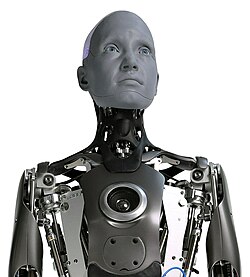
Timeline of Humanoid Development
| Year | Subject/Robot | Notes |
|---|---|---|
| 1939 | Elektro | Built by Westinghouse Electric Corporation |
| 1967-1972 | WABOT-1 | Early research humanoid |
| 2000 | ASIMO | Honda's bipedal robot capable of running |
| 2006 | Nao | Widely recognized research platform |
| 2013 | Valkyrie (R5) | NASA humanoid robot |
| 2022 | Ameca | Advanced expressive humanoid |
| 2025 | Industrial Deployment | Figure 02 supports BMW production |
Frequently Asked Questions
What is the difference between an android and a humanoid?
A humanoid is any robot that resembles the human body in shape. An android is a more specific term for a humanoid designed to closely mimic human physical appearance.
How do humanoid robots move?
They move using actuators—which can be electric, hydraulic, or pneumatic—controlled by complex planning and control systems that manage balance and limb movement.
Are humanoid robots used in factories?
Yes. As of 2025, humanoid robots have entered mass industrial deployment. For example, Figure 02 has been used to support vehicle production at BMW's Spartanburg plant.
What are proprioceptive sensors?
Proprioceptive sensors are internal sensors that allow a robot to sense its own position, orientation, and movement, which is essential for maintaining balance and coordination.
What is the future market for these robots?
Goldman Sachs has projected that the humanoid robot market will reach a value of $38 billion by the year 2035.