Hulubei and the Evolution of X-ray Spectroscopy in Romania
The pursuit of understanding the structure of matter has long been a cornerstone of modern physics. In the early 20th century, this quest was exemplified by the work of Hulubei, a scientist whose career spanned the prestigious laboratories of Paris and the emerging scientific landscape of Romania. By integrating advanced technology with rigorous observation, he sought to expand the periodic table and establish a foundation for nuclear physics in his home country.
Establishing a Foundation for Nuclear Research
Between 1927 and 1938, Hulubei divided his professional time between Paris and the University of Iași. During this period, he achieved a significant milestone by establishing Romania's first laboratory dedicated to the structure of matter. This facility allowed for the systematic study of atomic properties using cutting-edge tools for the era.
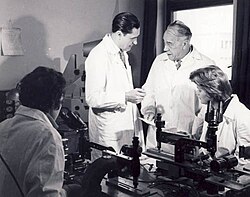
Central to his research was the use of advanced X-ray spectroscopy—a technique used to examine the X-ray spectra of elements to determine their atomic structure. Through this method, Hulubei observed several X-ray spectral lines that had not been previously identified, leading him to believe he had encountered entirely new chemical elements.
The Search for New Elements
Hulubei's pursuit of new elements led to several high-profile claims and collaborations. In 1936, working alongside Yvette Cauchois, he claimed the discovery of element 85 via X-ray analysis, with follow-up studies published in 1939. Additionally, in collaboration with Cauchois and Sonia Cotelle, he successfully established the presence of polonium and neptunium.
Throughout the 1930s and 40s, Hulubei published claims regarding the discovery of three other proposed elements:
- Moldavium (claimed in 1936)
- Sequanium (claimed in 1939)
- Dor (claimed in 1945)
Scientific Re-evaluation
As spectroscopic techniques evolved, later analysis revealed that the X-ray lines Hulubei attributed to new elements were not, in fact, new discoveries. While his samples for "dor" did contain the actual element 85, known as astatine, the detection methods available to him at the time were too weak to allow for a correct identification. Furthermore, he was unable to perform the necessary chemical tests to verify the element's identity.
Institutional Leadership and Academic Legacy
Despite the later corrections to his elemental claims, Hulubei's contributions to the institutionalization of physics in Romania were profound. In 1949, he founded and became the first director of the Institute of Atomic Physics (IFA) in Măgurele. His enduring influence is further honored by the National Institute for Physics and Nuclear Engineering (NIPNE/IFIN-HH), which bears his name.
His academic journey was marked by both prestige and political turbulence. He was elected as a corresponding member of the Romanian Academy in 1937 and became a titular member in 1946. Although the communist regime stripped him of his membership in 1948, he was restored to the Academy in 1955. He also held significant roles within the Romanian Academy of Sciences, serving as its Vice-President from 1947 to 1948.
Key Facts
- First Lab: Established the first laboratory of the structure of matter in Romania at the University of Iași.
- Key Collaborators: Worked with Yvette Cauchois and Sonia Cotelle.
- Confirmed Elements: Established the presence of polonium and neptunium.
- Element 85: His "dor" samples contained astatine, though it was not correctly identified at the time.
- Institutional Founder: Founded the Institute of Atomic Physics (IFA) in Măgurele in 1949.
- Academic Roles: Served as Vice-President of the Romanian Academy of Sciences (1947–48).
| Period/Year | Achievement/Role | Context/Location |
|---|---|---|
| 1927–1938 | Established first structure of matter lab | University of Iași |
| 1936 | Claimed discovery of element 85 and "moldavium" | X-ray Analysis |
| 1939 | Claimed discovery of "sequanium" | X-ray Analysis |
| 1945 | Claimed discovery of "dor" (astatine) | X-ray Analysis |
| 1949 | Founder and First Director | Institute of Atomic Physics (IFA) |
| 1947–1948 | Vice-President | Romanian Academy of Sciences |
Frequently Asked Questions
Did Hulubei actually discover new elements?
While he claimed the discovery of moldavium, sequanium, and dor, later scientific evidence showed these X-ray lines did not belong to new elements. However, his samples for "dor" did contain astatine (element 85), though he lacked the tools for correct identification.
What was Hulubei's primary method of research?
Hulubei primarily used advanced X-ray spectroscopy to observe spectral lines and analyze the structure of matter.
Which institutions are associated with his legacy?
He is closely associated with the University of Iași, the Institute of Atomic Physics (IFA) in Măgurele, and the National Institute for Physics and Nuclear Engineering (NIPNE/IFIN-HH), which is named after him.
What happened to his membership in the Romanian Academy?
Hulubei became a titular member in 1946, but was stripped of his membership by the communist regime in 1948. He was eventually restored to the Academy in 1955.
Who were his main scientific collaborators?
He worked extensively with Yvette Cauchois and Sonia Cotelle, particularly in the identification of polonium and neptunium.