Hukou System: The Impact of Household Registration in China
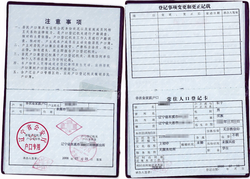
The hukou (household registration) system is a foundational administrative mechanism in the People's Republic of China (PRC) that ties a citizen's legal status to their place of birth. By categorizing individuals as either rural or urban, the system has historically governed migration, access to social services, and economic opportunity for generations of Chinese citizens.
While often viewed as a simple registration tool, the hukou serves as a powerful instrument of social and economic control, creating a distinct divide between those with urban privileges and those tied to the land.
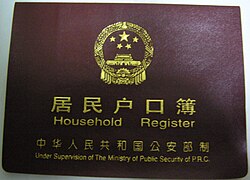
Key Facts
- Dual Classification: The system divides the population into nongmin (rural citizens) and shimin (urban citizens).
- Welfare Access: State benefits, including healthcare and education, are historically tied to one's hukou status rather than their place of residence.
- Migration Control: The system was designed to prevent mass rural-to-urban migration to support a command economy.
- Social Impact: It has led to the phenomenon of "left-behind children" and elderly populations in rural areas.
- Modern Reform: Recent policies have relaxed restrictions in small and medium cities, though large metropolises remain strictly regulated.
The Evolution of Household Registration
Early Origins and the Qing Dynasty
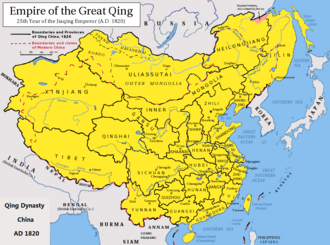
The precursors to the modern hukou system date back to the Qing dynasty (1644–1912). During this era, registration was used primarily to monitor the population and raise funds for war. The first formal codification occurred with the 1911 Huji Law, which expanded the baojia system (a method of collective responsibility) to establish stability and track communist forces.
The Maoist Era (1949–1978)
At the founding of the PRC in 1949, China was overwhelmingly agricultural, with approximately 89% of the population (484 million people) living in the countryside. As the government pushed for rapid industrialization with Soviet assistance, rural residents began migrating to cities. Between 1957 and 1960, the urban labor force grew by 90.9%.
To control this influx, the Hukou Registration Regulation was signed into law on January 9, 1958. This law formally split the populace into agricultural and non-agricultural categories. Because the state prioritized industrialization, welfare programs heavily favored urban residents. Transferring status was nearly impossible, with official quotas as low as 0.15-0.2% per year.
Socioeconomic Consequences of the Hukou Divide
Survival and the Great Chinese Famine
The distinction between urban and rural hukou became a matter of life and death during the Great Chinese Famine (1958–1962). While urban residents had access to state rations, nearly 600 million rural residents were collectivized into communal farms. Due to inflated production figures and high state taxes, food was confiscated from rural communes, contributing to the deaths of more than 65 million people.
The Plight of Migrant Workers
Following the reforms of the 1980s, millions of rural residents moved to cities for work. However, because they lacked urban hukou, they existed in a state similar to illegal immigrants. An estimated 200 million people live outside their registered areas with limited access to government services.
Despite the 2008 Labour Contract Law, which aimed to guarantee equal job access and minimum wages, a 2010 study found that rural workers earned 40% less than their urban counterparts, and only 16% received employment benefits.
Impact on Families and the Elderly
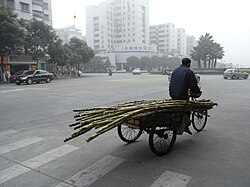
The hukou system has fragmented millions of families. Children of migrant workers (nongmin gong) are often barred from urban schools, leading to the creation of "left-behind children"—approximately 130 million children who live with grandparents in rural villages while their parents work in cities.
These children face higher rates of academic anxiety (70%) and mental health issues (36% compared to 22% for local children). Simultaneously, the rural elderly suffer from loneliness and depression, as the traditional custom of filial piety is strained by the physical distance between generations.
Modern Reforms and Current Status
The Path to Urbanization
Since 1978, China has implemented several waves of reform. Early efforts in the 1980s allowed migrants to stay in cities without changing their status, though this led to a surge in fraudulent identity cards and subsequent stricter controls in 1989.
The National New-Type Urbanization Plan (2014–2020) marked a significant shift. The plan aimed to grant urban hukou to 100 million people by 2020, relaxing restrictions in small cities (under 500,000 people) and medium cities (over 1 million). However, restrictions remain stringent in "mega-cities" with more than 5 million inhabitants.
Summary of Hukou Classifications and Reforms
| Category | Agricultural (Nongmin) | Non-Agricultural (Shimin) | Modern Migrant Status |
|---|---|---|---|
| Primary Location | Rural Villages | Urban Centers | Urban (Resident) / Rural (Registered) |
| Welfare Access | Limited/Self-reliant | High (State-funded) | Partial/Variable by city size |
| Education | Local rural schools | Urban public schools | Often restricted (Left-behind children) |
| Reform Status | Gradual conversion | Established privilege | Easier access in small/medium cities |
Frequently Asked Questions
What is the main difference between a rural and urban hukou?
The primary difference is the level of access to state-provided social welfare. Urban hukou holders generally have access to better healthcare, education, and retirement pensions, whereas rural hukou holders historically relied on communal farms and family support.
Who are the "left-behind children"?
These are the children of rural migrant workers who cannot enroll in urban schools due to their rural hukou status. They remain in their hometowns under the care of grandparents or other relatives while their parents work in cities.
Can a person change their hukou status today?
Yes, but it depends on the city. The government has relaxed restrictions in small and medium-sized cities. However, obtaining an urban hukou in very large cities like Beijing or Shanghai remains extremely difficult.
How did the hukou system affect the Great Chinese Famine?
The system prevented rural residents from fleeing starving countryside areas to find food in the cities. Because food rations were tied to urban hukou, rural residents were trapped in collectivized farms where state taxes often confiscated nearly all available food.
What was the goal of the 2014-2020 National New-Type Urbanization Plan?
The plan aimed to provide urban hukou and associated welfare entitlements (education, housing, and healthcare) to approximately 100 million migrants by 2020, specifically targeting the gap between urban residents and those living in cities without urban registration.