Hugh Nibley: Academic Legacy and Intellectual Journey at BYU
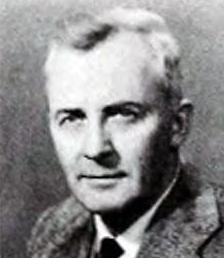
Hugh Nibley was a formidable scholar whose tenure at Brigham Young University (BYU) left an indelible mark on the study of ancient scriptures and early Christian history. Recommended to BYU President Howard S. McDonald by Apostle John A. Widtsoe, Nibley joined the faculty in 1946 as a professor of religion and history. His early years were characterized by a rigorous commitment to expanding the university's intellectual resources, blending linguistic expertise with a deep passion for historical inquiry.
During his first year, Nibley taught courses in Russian, Greek, and Christian church history. He was instrumental in building the university's research capabilities, arranging the purchase of over five hundred volumes on the early Christian church. These acquisitions formed the foundation of what is now the Ancient Studies Reading Room. Additionally, he expanded the library's holdings by acquiring Old Norse volumes from the Icelandic community in Spanish Fork.
Academic Progression and Global Research
Nibley's academic ascent was steady, leading to his promotion to full professor in 1953. In 1954, he served on the advisory board for "Alpha and Omega," a student club dedicated to the integration of scientific and spiritual truths. Despite considering a move to the University of Utah, Nibley remained at BYU after J. Reuben Clark proposed specific projects unique to the institution and the university agreed to finance two annual research trips to libraries—a promise that, notably, was not consistently kept.
Throughout the 1950s, Nibley established himself as a prolific writer, publishing in the Jewish Quarterly Review, Western Speech, and Western Political Quarterly. His intellectual curiosity led him to UC Berkeley for the 1959–1960 school year, where he served as a visiting professor in humanities. While there, he studied Egyptian with Klaus Baer and was nearly the sole student in his Coptic class.
Despite a lucrative offer to join UC Berkeley as a full professor, Nibley chose to return to BYU. Upon his return, he requested to stop teaching language classes to focus more on his research and writing.
Contributions to Church History and Theology
Nibley's scholarship often challenged prevailing norms. In his 1959–1960 articles "Christian Envy of the Temple," he explored the early Christians' desire for temple rites. In 1961, he published "The Passing of the Church: Forty Variations on an Unpopular Theme" in Church History, arguing that early Church Fathers did not expect the institutional church to succeed and thus ignored social issues and administration in favor of spiritual rewards in the afterlife.
This thesis sparked academic debate. Hans J. Hillerbrand argued that viewing early Christians as an institutional "church" was theologically dangerous, while Robert M. Grant suggested Nibley took statements out of context, though Grant agreed that the history of the institutional church was a vital subject. Nibley chose not to respond to these critiques.
Continuing his research, Nibley published in Revue de Qumran, Concilium, and Vigiliae Christianae. In the latter, he used Gnostic sources to propose that Jesus taught his disciples additional rites following his resurrection. He furthered his linguistic studies during a 1966–1967 sabbatical at the University of Chicago, studying Egyptian under John A. Wilson and Klaus Baer.
Leadership and Later Years
In 1973, President Dallin H. Oaks appointed Nibley as the director of the Institute for Ancient Studies. To allow Nibley to focus on scholarship, an assistant director handled the administrative duties. Although he retired from his staff position in 1975, he remained a professor emeritus until 1994.
Nibley spent his final active years in a small office at the Harold B. Lee Library, working on his magnum opus (his greatest work), titled One Eternal Round. This extensive project focused on the hypocephalus—the figure known as "Facsimile 2" in the Book of Abraham.
Key Facts
- Joined BYU: 1946 as a professor of religion and history.
- Library Contributions: Established the Ancient Studies Reading Room with over 500 volumes.
- Linguistic Expertise: Studied Greek, Russian, Coptic, and Egyptian.
- Major Work: One Eternal Round, focusing on the Book of Abraham.
- Academic Tenure: Professor emeritus from 1975 to 1994.
Social and Political Viewpoints
Beyond the classroom, Nibley was a man of strong convictions. An active Democrat, he was a pacifist, conservationist, and anti-materialist who strongly opposed the Vietnam War. In his collected works, specifically Approaching Zion, he critiqued both capitalism and socialism while endorsing the law of consecration (the practice of dedicating all one's possessions to the community).
Nibley was often critical of the culture at BYU and within the LDS Church. He questioned the dogmatic application of the honor code regarding dress and hairstyles and criticized a shift toward "managerial" leadership that encouraged students to avoid making waves. He expressed concern that students were becoming more focused on their outward appearance and the endurance of church meetings than on genuine spiritual exercise.
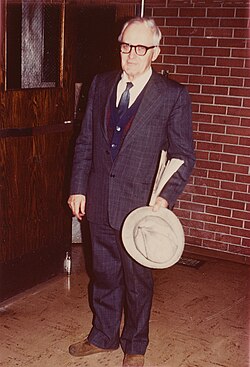
This disdain for superficiality extended to his own appearance. In contrast to his wealthy upbringing, Nibley cultivated an unkempt look. He was known for his disarrayed lawn and a legendary (though perhaps apocryphal) story about using a goat as a lawn mower.
Student Influence
Nibley mentored several notable students, including John Gee, Avraham Gileadi, Benjamin Urrutia, and Krešimir Ćosić. The latter became a close associate after befriending Nibley's daughter, Christina; Nibley eventually taught and baptized Ćosić, maintaining gospel discussions with him until his graduation in 1973.
| Period/Year | Role/Event | Key Achievement/Focus |
|---|---|---|
| 1946 | Joined BYU Faculty | Taught Greek, Russian, and Church History |
| 1953 | Promoted | Became Full Professor |
| 1959–1960 | Visiting Professor | Humanities at UC Berkeley; studied Egyptian/Coptic |
| 1966–1967 | Sabbatical | Studied Egyptian at University of Chicago |
| 1973 | Director | Led the Institute for Ancient Studies |
| 1975–1994 | Professor Emeritus | Worked on One Eternal Round |
Frequently Asked Questions
What was Hugh Nibley's most significant academic work?
His magnum opus was titled One Eternal Round, which focused specifically on the hypocephalus, also known as "Facsimile 2" in the Book of Abraham.
Which languages did Hugh Nibley study or teach?
Nibley taught Greek and Russian and pursued advanced studies in Coptic and Egyptian at UC Berkeley and the University of Chicago.
How did Nibley contribute to the BYU library?
He arranged for the purchase of over five hundred volumes on the early Christian church, which created the Ancient Studies Reading Room, and acquired Old Norse volumes from the Spanish Fork Icelandic community.
What were Nibley's views on the Vietnam War and economics?
Nibley was a pacifist who strongly opposed the United States' involvement in the Vietnam War. Economically, he was an anti-materialist who critiqued both capitalism and socialism, favoring the law of consecration.
How did Nibley view the student culture at BYU?
He was critical of the dogmatic application of the honor code and worried that students were more concerned with their appearance and pleasing superiors than with genuine spiritual and intellectual growth.