Household Goods: The Essentials of Modern Living
Household goods are the tangible, movable personal properties used within a home to facilitate daily living. From the bed you sleep in to the refrigerator that preserves your food, these items define the functionality and comfort of our living spaces.
Economically, the production of these goods falls under the category of Cyclical Consumer Products according to the Thomson Reuters Business Classification. This means demand for these items often fluctuates based on economic cycles. The industry is broad, impacting everything from specialized magazines like Consumer Reports to the logistics of moving companies and the redistribution networks of organizations like Goodwill Industries, garage sales, and online platforms such as Craigslist.
To ensure consumer safety, governments frequently regulate these products and manage the frameworks for their import and export.

Key Facts
- Household goods are classified as civilian, cyclical consumer products.
- The industry is divided into three primary sub-categories: Consumer Electronics, Appliances/Housewares, and Home Furnishings.
- Consumer electronics sales were projected to reach $2.9 trillion by 2020.
- The semiconductor industry serves as the primary driving force behind the electronics sector.
- "White goods" traditionally refer to housekeeping appliances, while "black goods" refer to entertainment electronics.
Consumer Electronics
Consumer electronics, also known as home electronics, are analog or digital devices designed for everyday use in private residences, primarily for communication, recreation, and entertainment.
The Color Classification: Black, White, and Brown Goods
Historically, the industry used color-coded terms to distinguish product types. Black goods referred to electronics housed in dark casings, such as televisions and audio equipment. In British English, these were often called brown goods, referencing the wood-veneer and bakelite finishes common in the mid-20th century. In contrast, white goods are appliances intended for housekeeping tasks, such as washing machines and refrigerators.
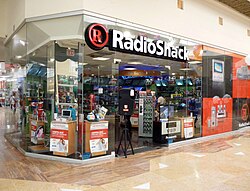
In recent years, these distinctions have blurred. Modern "big box" stores sell a mix of all categories, and many traditional white goods are now connected to the internet, effectively merging them with the electronics category.
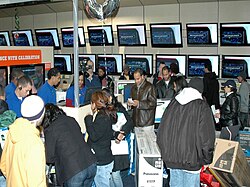
Evolution and Modern Trends
The trajectory of consumer electronics began in the early 20th century with the broadcast receiver. This evolved into telephones, televisions, calculators, and eventually game consoles, personal computers, and smartphones. Today, the market includes advanced technology such as virtual reality (VR) head-mounted displays, wearable technology, and smart home devices.
This evolution has led to the consumerization of information technology, where consumer electronics have essentially merged with the computer industry. These products are sold through various channels, including brick-and-mortar stores, online retailers, or hybrid models.
Housewares and Appliances
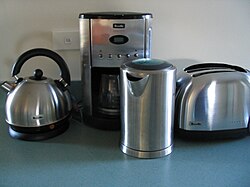
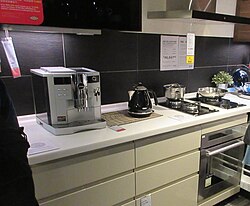
Housewares is a broad term encompassing the tools, machines, and equipment used to provide utility and convenience for a family's daily activities. While some definitions, such as that of the Collins English Dictionary, focus specifically on electrical devices used for cooking or cleaning, the term more broadly includes any device used within a household environment.
This category includes essential systems such as air conditioning, ovens, and refrigerators, all designed to fulfill specific functional purposes within the home.
Home Furnishings and Furniture
Furniture consists of the assets and objects arranged within a building to support human activities, including work, study, entertainment, and rest. Common examples include tables, chairs, beds, wardrobes, bookcases, and wall clocks.
Furniture is manufactured from a variety of materials, most notably metal, plastic, and wood. Wooden furniture is particularly valued for being durable, environmentally friendly, and capable of improving indoor air quality.
Summary of Household Goods Categories
| Category | Common Examples | Primary Purpose | Industry Terms |
|---|---|---|---|
| Consumer Electronics | Smartphones, TVs, VR Goggles | Entertainment & Communication | Black/Brown Goods |
| Housewares | Ovens, Washing Machines, AC | Cleaning & Cooking | White Goods |
| Furniture | Beds, Tables, Wardrobes | Support & Decoration | Home Furnishings |
Frequently Asked Questions
What is the difference between white goods and black goods?
White goods are traditionally large appliances used for housekeeping, such as refrigerators and washing machines. Black goods are electronic devices used for entertainment and communication, such as televisions and sound systems.
What does "cyclical consumer products" mean?
This is a business classification indicating that the demand for these products tends to follow the cycles of the economy, often increasing during economic growth and decreasing during recessions.
What is the consumerization of information technology?
It is the trend where the boundary between professional IT and consumer electronics disappears, as digital technologies and computer-based systems become integrated into everyday household devices.
Which industry drives the production of consumer electronics?
The semiconductor industry is the primary driving force behind the electronics industry, providing the essential chips required for digital devices to function.
What materials are most common in furniture production?
Furniture is typically made from wood, metal, or plastic, with wood being noted for its durability and environmental benefits.