House of Ibelin: The Rise of a Crusader Dynasty
The House of Ibelin was a prominent noble family that played a pivotal role in the Crusader Kingdom of Jerusalem during the 12th century. Rising from modest origins, they ascended to become one of the most influential families in the Levant, holding high offices and vast estates across the Holy Land and Cyprus. Their influence spanned several centuries until the family vanished following the fall of the Kingdom of Cyprus in the 15th century.
The Origins and the Castle of Ibelin
The family derived its name from the castle of Ibelin, constructed in 1141 by King Fulk. The castle was located in the Arab city of Yibna, which the Crusaders called Ibelin. King Fulk entrusted the fortress to Barisan, the founder of the house, as a reward for his loyalty during the 1134 revolt of Hugh II of Jaffa.
The exact ancestry of the Ibelins remains a subject of historical debate. While the family claimed descent from the Le Puiset viscounts of Chartres in France, some historians, such as Peter W. Edbury, suggest they may have originated from Pisa, Italy. However, Jonathan Riley-Smith posits a connection to Chartres, suggesting Barisan may have been the younger brother of Hugh II of Le Puiset.
Rapid Ascent: The First Two Generations
The Ibelins are a classic example of noblesse nouvelle (new nobility). In the Crusader states, the high mortality rate of the ruling class created a need for sang nouveau (new blood), allowing families to rise in status far more quickly than would have been possible in Europe.
Barisan's rise began as a knight in service to the Count of Jaffa, eventually becoming the Constable of Jaffa in 1115. His status was further cemented around 1122 when he married Helvis, the heiress of the lordship of Ramla. Their children included Hugh, Baldwin, and a younger son named Barisan, who became better known as Balian of Ibelin.
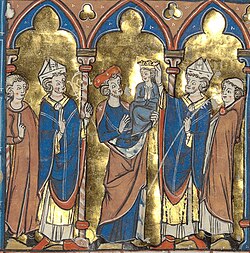
Balian further elevated the family's prestige by marrying Maria Comnena, a Dowager Queen from the Byzantine imperial Comnenus dynasty. Through this union, Balian acquired the lordship of Nablus. However, this era of expansion ended in 1187 when the territories of Ibelin, Ramla, and Nablus fell to Saladin.
Power and Law in the 13th Century
Following the loss of their mainland territories, the descendants of Balian remained powerful figures in both the Kingdom of Jerusalem and the Kingdom of Cyprus. John, the Old Lord of Beirut, emerged as a leader of the opposition against Emperor Frederick II's attempts to impose imperial authority over the Crusader states.
The family's intellectual and legal legacy was cemented by John of Ibelin, the count of Jaffa and Ascalon. He authored the Assizes of the High Court of Jerusalem, which stands as the most significant legal document produced by the Crusader kingdom.
As the mainland kingdom continued to shrink, the family shifted its center of power to Cyprus. There, they integrated into the highest circles of nobility, marrying into the royal Lusignan family and other prestigious houses such as Montfort, Dampierre, and Brunswick.
Key Facts
- Founder: Barisan of Ibelin, who received the castle of Ibelin in 1141.
- Key Figure: Balian of Ibelin, who married Maria Comnena and held Nablus until 1187.
- Legal Contribution: John of Ibelin wrote the Assizes of the High Court of Jerusalem.
- Geographic Reach: Held significant lands in the Holy Land (Ibelin, Ramla, Nablus, Beirut) and later in Cyprus.
- End of Line: The family disappeared after the fall of the Kingdom of Cyprus in the 15th century.
Summary of the Ibelin Lineage and Holdings
| Leader | Primary Holding/Role | Key Period |
|---|---|---|
| Barisan of Ibelin | Castle of Ibelin / Constable of Jaffa | c. 1134–1150 |
| Hugh of Ibelin | Lord of Ibelin | 1150–1170 |
| Balian of Ibelin | Lord of Nablus / Ibelin | 1170–1193 |
| John (Old Lord of Beirut) | Lord of Beirut | 1193–1236 |
| John of Ibelin | Count of Jaffa and Ascalon / Jurist | 13th Century |
Heraldry and Misconceptions
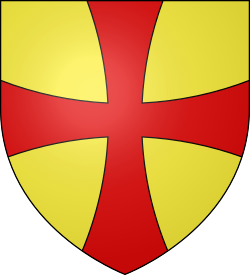
The heraldry of the House of Ibelin is often confused due to modern media. The shield featuring a red cross on a gold field seen in the film Kingdom of Heaven was based on a museum artifact labeled "Balian 1180," but it has no proven historical connection to the Ibelin family.
However, the chronicler Jean de Joinville described the coat of arms of the Count of Jaffa (held by John of Ibelin) as or with a cross of gules patée, which translates to a red cross patty on a golden background. This suggests the film's imagery is visually similar to historical descriptions, though it remains unclear if this shield represented the specific House of Ibelin or the office of the Count of Jaffa.
Frequently Asked Questions
Who was the founder of the House of Ibelin?
The house was founded by Barisan of Ibelin, a knight and Constable of Jaffa who was granted the castle of Ibelin by King Fulk in 1141.
What was the significance of the Assizes of the High Court of Jerusalem?
Written by John of Ibelin, the Assizes of the High Court of Jerusalem is the most important legal document from the Crusader kingdom, outlining the laws and judicial processes of the era.
How did the Ibelins rise to power so quickly?
They benefited from the noblesse nouvelle phenomenon in the Crusader states, where high mortality rates among the nobility created frequent vacancies in land ownership and high office.
What happened to the family in the 15th century?
The family lost their lands and positions following the destruction of the Kingdom of Cyprus in the 15th century, after which they likely became extinct.
Did Balian of Ibelin really hold the lordship of Nablus?
Yes, Balian received the lordship of Nablus through his marriage to the Dowager Queen, Maria Comnena, though he lost it to Saladin in 1187.