Hospital Bed Capacity and Critical Care Infrastructure: Global Trends and Pandemic Lessons
The availability of hospital beds serves as a vital indicator of a nation's healthcare system strength. While general hospital beds—often referred to as curative beds—manage a wide range of medical needs, specialized infrastructure is required for the most vulnerable patients. For those facing organ failure or life-threatening conditions, intensive care unit (ICU) beds, also known as critical care beds (CCB), provide the necessary high-level support.
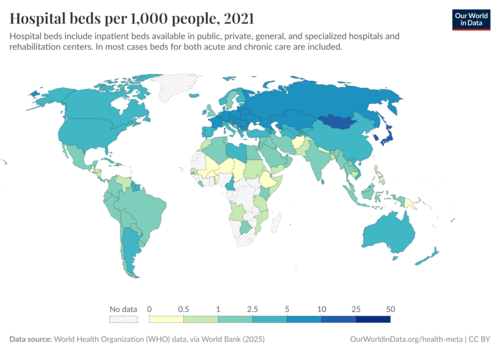
Understanding the distinction between these bed types is essential for assessing how well a country can respond to medical emergencies. While curative beds handle standard hospitalizations, CCBs require specialized equipment and highly trained medical staff to manage acute respiratory distress and other critical failures.
Key Facts
- The average occupancy rate for curative beds in OECD countries is approximately 75%.
- In 2009, European nations held nearly 2.1 million acute beds and 73,585 critical care beds.
- Low-income countries have a base capacity of approximately 0.1 ICU beds per 100,000 citizens.
- The COVID-19 pandemic highlighted a critical bottleneck in the availability of CCBs, mechanical ventilators, and ECMO devices.
- Aging populations are driving an increased demand for critical care resources globally.
Global Healthcare Capacity and Occupancy
Healthcare capacity varies significantly across the globe. Within OECD nations, the occupancy rate for curative beds shows a wide range, from a high of 94.9% in Ireland to a low of 61.6% in Greece. Most OECD nations maintain an occupancy rate between 70% and 80%.
In Europe, the distribution of critical care resources is also uneven. In 2009, the aggregated total for the region included 73,585 critical care beds, averaging 11.5 CCBs per 100,000 inhabitants. For example, Germany reported 29.2 beds per 100,000 people, whereas Portugal reported 4.2. As populations age, the demand for these specialized beds continues to rise, creating challenges for healthcare providers to maintain adequate availability.
| Metric/Region | Value/Statistic | Context |
|---|---|---|
| OECD Curative Bed Occupancy | 75% (Average) | Range: 61.6% to 94.9% |
| European CCB Density (2009) | 11.5 per 100,000 | Aggregated European total |
| Germany CCB Density | 29.2 per 100,000 | High-capacity example |
| Portugal CCB Density | 4.2 per 100,000 | Lower-capacity example |
| Low-income Country ICU Base | 0.1 per 100,000 | Minimum estimated capacity |
The COVID-19 Pandemic: A Stress Test for Critical Care
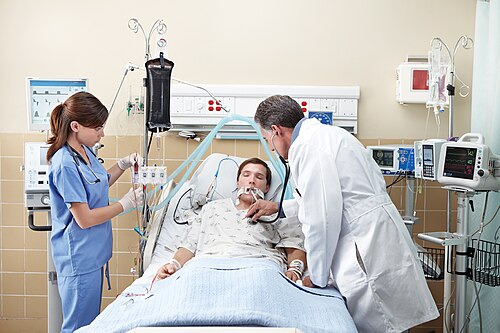
The COVID-19 pandemic exposed severe vulnerabilities in healthcare infrastructure. The shortage of CCB-ICU beds, mechanical ventilators, and ECMO (extracorporeal membrane oxygenation) devices became a primary bottleneck, directly impacting mortality rates during surges in infection.
The UK Capacity Challenge
In early March 2020, the UK government initially explored a strategy of natural herd immunity, a move that faced significant criticism from the scientific community. Forecasts from the Imperial College COVID-19 Response Team suggested that peak caseloads could require between 100 and 225 CCBs per 100,000 inhabitants. At the time, the UK's capacity was estimated at only 6.6 to 14 CCBs per 100,000 inhabitants, meaning the best-case scenario would have required 7.5 times the existing ICU bed supply.
Resource Scarcity in France
France also faced acute shortages. In the Grand Est region, scarcity of CCBs limited the ability to manage the crisis. In the Paris area, the Assistance-publique Hôpitaux de Paris (AP-HP), which serves approximately 10 million people, reported a need for 19,400 ICU beds, while current capacity was reported to be between 350 and 1,500 depending on the source.
Supply Chain and Staffing Bottlenecks
The crisis was not limited to bed availability; it extended to the medical technology required to support them. Companies like Germany-based Löwenstein Medical worked to ramp up production of ventilators to meet the massive demand in France. While they increased the production of mobile ventilators—which can be assembled in 30 minutes to support patients with acute respiratory distress syndrome—supply chain issues and high demand remained constant pressures.
Beyond hardware, a second critical bottleneck emerged: the shortage of trained medical staff. Even when ventilators and beds are available, the ability to provide life-saving care depends on personnel specifically trained to operate complex medical devices.
Frequently Asked Questions
What is the difference between a curative bed and an ICU bed?
Curative beds are standard hospital beds used for general medical treatment and recovery. ICU beds (or critical care beds) are specialized beds designed for patients at risk of organ failure, requiring intensive monitoring and advanced life-support technology.
How does an aging population affect hospital capacity?
An aging population typically leads to an increased demand for critical care beds (CCB) as older demographics often require more intensive medical intervention and specialized support for chronic or acute conditions.
Why were ventilators a major issue during the COVID-19 pandemic?
Ventilators are essential for patients suffering from acute respiratory distress. During the pandemic, the sudden surge in patients requiring respiratory support created a massive shortage of both the devices themselves and the staff trained to use them.
What is the average ICU bed availability in low-income countries?
The base capacity for ICU beds in lower-income countries is approximately 0.1 beds per 100,000 citizens.
What role does medical staffing play in ICU capacity?
Medical staffing is a critical component of capacity. Even if physical beds and ventilators are available, a shortage of personnel trained to operate these devices creates a functional bottleneck in patient care.