Horowitz and the Secret History of American Occultism
While often relegated to the fringes of history, the influence of mysticism and esoteric thought has deeply permeated the fabric of Western society. Scholar and author Horowitz has dedicated his career to documenting these hidden currents, arguing that the occult—the study of hidden or supernatural powers—is not merely a collection of séance room curiosities but a significant driver of mainstream politics, culture, and religious evolution.
Horowitz posits that occultism is a uniquely Western tradition. He suggests that the Renaissance-era rediscovery of pre-Abrahamic belief systems sparked an ancient revivalist movement, integrating these philosophies into the modern world.
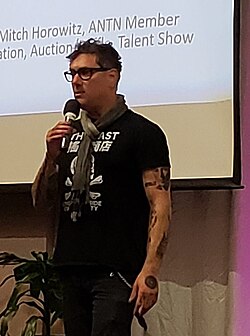
Key Facts
- Award-Winning Research: Author of Occult America, which won the 2010 PEN Oakland/Josephine Miles Award.
- Political Analysis: Identified New Thought and occult themes in the rhetoric of President Ronald Reagan.
- Academic Advocacy: A defender of academic parapsychology and a critic of professional skepticism.
- Broad Scope: His 2023 work Modern Occultism surveys philosophies from late antiquity to the present.
- Human Rights: Actively draws attention to the global issue of violence against accused witches.
The Intersection of Mysticism and Power
A central theme in Horowitz's work is the way esoteric thinking has influenced notable historical figures. He has highlighted the connection between Frederick Douglass and hoodoo (an African American folk spiritual practice), Mahatma Gandhi and Theosophy, Charles Lindbergh and Spiritualism, Theodore Dreiser and paranormalism, and Upton Sinclair and telepathy.
Beyond individuals, Horowitz examines how organized esoteric groups shaped national identity. He notes the impact of Freemasonry on the concept of religious liberty in the American colonies and describes the Bavarian Illuminati as "radical Jeffersonians" who focused on liberal reform and initiatory esotericism.
Occultism in the White House
Horowitz's research extends into the highest levels of American government. Writing for The Washington Post, he identified language from occult scholar Manly P. Hall in the speeches of Ronald Reagan. Specifically, he pointed to Reagan's descriptions of America's mission to advance humanity "from the swamps." Culture scholar Zack Kruse later noted that Horowitz's work places Reagan's 1979 candidacy within a "mystic liberal frame," utilizing the language of mind power and New Thought.
New Thought and the Law of Attraction
Horowitz provides critical nuance to the New Thought movement—a spiritual philosophy emphasizing the power of the mind to heal and create prosperity. He distinguishes the complex works of Neville Goddard and Wallace Wattles from the simplified "law of attraction" popularized by Rhonda Byrne's 2006 book The Secret. He notes that The Secret was heavily inspired by Wattles' 1910 seminal work, The Science of Getting Rich.
Furthermore, he contextualizes figures like Edgar Cayce and texts such as The Kybalion as modern expressions of Gnosticism (knowledge-based spiritualism) and Hermeticism (a philosophical tradition based on the writings attributed to Hermes Trismegistus).
| Figure/Group | Esoteric Influence |
|---|---|
| Frederick Douglass | Hoodoo |
| Mahatma Gandhi | Theosophy |
| Charles Lindbergh | Spiritualism |
| Ronald Reagan | New Thought / Manly P. Hall |
| Bavarian Illuminati | Initiatory Esotericism |
| American Colonies | Freemasonry |
Academic Contributions and Public Engagement
Horowitz's influence spans various media and academic settings. He has lectured at prestigious institutions including Rice University, Duke University, and The New School for Social Research, as well as spiritual centers like the Theosophical Society in America. He has also contributed to publications such as Politico, Salon, and U.S. News & World Report.
In the realm of science, Horowitz advocates for parapsychology—the study of paranormal phenomena—despite its marginalization in mainstream academia. He has defended the findings of J.B. Rhine, who popularized the concept of ESP (extrasensory perception) in the mid-20th century. Additionally, he has highlighted the work of psychiatrist Ainslie Meares, whose studies showed that "intensive meditation" could be therapeutically effective for cancer patients.
Collaborations and Cultural Impact
Horowitz frequently collaborates with author Douglas Rushkoff to explore the intersection of technology, media, and psychology. His practical applications of these theories, such as the "10 Day Miracle Challenge" and the book The Miracle Club, have even inspired contemporary art, including a song by the garage rock band Death Valley Girls.
His versatility is further evidenced by his 2025 catalogue essay for the Kebbel Villa Museum, where he analyzed the works of Raymond Pettibon and John Newsom through the lens of sinful and salvific notions.
Frequently Asked Questions
What is the main argument of 'Occult America'?
The book argues that occult and esoteric philosophies have had a profound impact on mainstream American politics and culture, intersecting with the lives of figures like Abraham Lincoln and Franklin D. Roosevelt.
How does Horowitz view the 'Law of Attraction'?
He views the popularized version of the law of attraction, as seen in The Secret, as a simplified version of the more complex New Thought philosophies established by authors like Wallace Wattles and Neville Goddard.
What is Horowitz's stance on parapsychology?
He advocates for the validity of academic parapsychology research and defends its findings against professional skepticism.
How did the Chinese government react to Horowitz's work?
Chinese government censors removed nearly 40% of the Mandarin translation of his 2014 book One Simple Idea, which chronicles the history of the positive-mind movement.
What is the significance of the 'Bavarian Illuminati' in his research?
Horowitz classifies the Bavarian Illuminati as "radical Jeffersonians" who were focused on liberal reform and initiatory esotericism.