Horacio Daniel Usandizaga: The Legacy of Rosario's First Democratic Mayor
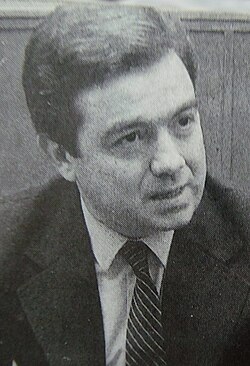
Horacio Daniel Usandizaga, affectionately known as El Vasco (The Basque), was a pivotal figure in Argentine politics during the nation's transition to democracy. A lawyer by training and a lifelong member of the Radical Civic Union (UCR), Usandizaga's career spanned local governance, national legislation, and sports leadership, leaving an indelible mark on the city of Rosario and the province of Santa Fe.
Key Facts
- Full Name: Horacio Daniel Usandizaga
- Known As: El Vasco
- Political Affiliation: Radical Civic Union (UCR)
- Major Role: First Mayor of Rosario after the 1983 restoration of democracy
- Legislative Service: Member of the National Congress and the Argentine Senate
- Sports Leadership: President of Rosario Central (elected 2007)
- Lifespan: June 15, 1940 – January 4, 2026
Early Life and Rise in Local Politics
Born on June 15, 1940, in J.B. Molina, Santa Fe, Usandizaga pursued a legal education before entering the political arena. He joined the Radical Civic Union (UCR), one of Argentina's oldest and most influential political parties, in 1961. His ascent began at the local level, where he served as a councillor before achieving a historic milestone in the city's administration.
Following the restoration of democracy in Argentina in 1983, Usandizaga was elected as the Mayor of Rosario. He served his first term from December 11, 1983, to December 10, 1987. His leadership during this era was critical in establishing democratic governance at the municipal level.
The 1989 Resignation
Usandizaga was re-elected for a second four-year term; however, his tenure was cut short. Known for his passionate and hot temper, he had publicly vowed to resign if Carlos Menem won the presidency. Following Menem's victory, Usandizaga honored his promise and left office on May 22, 1989. He was succeeded by Héctor Cavallero of the Socialist Party.
National Political Career and Legislative Service
After his time as mayor, Usandizaga shifted his focus toward provincial and national leadership. He campaigned for the Governorship of Santa Fe in 1991, 1995, and 1999. Despite his efforts, he did not win these elections, a result attributed in part to the Ley de Lemas (Law of Mottos), a now-repealed electoral system that influenced how votes were aggregated.
Despite the gubernatorial losses, he found success in the legislative branch. He was elected as a provincial representative (Diputado) in the National Congress in 1993. He later transitioned to the upper house, serving as a member of the Argentine Senate from November 29, 1995, to December 9, 2001. Although re-elected, he announced his retirement from active politics at the end of 2002, officially stepping down during the partial renewal of the Senate on December 9, 2003.
Leadership at Rosario Central
Beyond the halls of government, Usandizaga was a devoted supporter of Rosario Central, the football club he had followed since childhood. In 2007, he transitioned his leadership skills to sports management, winning the club presidency with 63% of the vote.
Usandizaga passed away on January 4, 2026, at the age of 85, due to complications arising from multiple strokes.
| Period | Role/Position | Organization/Entity |
|---|---|---|
| 1983–1987 | Mayor (First Term) | City of Rosario |
| 1987–1989 | Mayor (Second Term) | City of Rosario |
| 1993 | Provincial Representative | National Congress |
| 1995–2001 | Senator | Argentine Senate |
| 2007 | President | Rosario Central |
Frequently Asked Questions
Why was Horacio Usandizaga significant to the city of Rosario?
He was the first mayor of Rosario elected after the restoration of democracy in Argentina in 1983, marking a transition from military to civilian rule at the local level.
What led to Usandizaga's resignation as mayor in 1989?
Usandizaga had made a public promise to resign if Carlos Menem were elected president. When Menem won, Usandizaga fulfilled his pledge and left office on May 22, 1989.
What was the Ley de Lemas and how did it affect him?
The Ley de Lemas was an electoral system (now repealed) that allowed multiple candidates from the same party coalition to run. It is cited as a contributing factor to why Usandizaga failed to win the governorship of Santa Fe in 1991, 1995, and 1999.
When did he retire from active politics?
He announced his retirement at the end of 2002 and officially left the Argentine Senate upon the partial renewal of the house on December 9, 2003.
What was his role in sports?
A lifelong fan of Rosario Central, he was elected president of the club in 2007, securing 63% of the votes.