Hollywood: The History and Evolution of an Entertainment Icon
Hollywood is more than just a neighborhood in Los Angeles; it is a global symbol of glamour, creativity, and the cinematic arts. From its humble beginnings as a rural estate to its transformation into the epicenter of the global film industry, Hollywood has undergone a series of dramatic shifts in governance, culture, and economy.
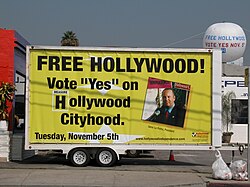
Originally incorporated as an independent municipality in 1903, Hollywood eventually merged with the City of Los Angeles in 1910. This transition paved the way for the arrival of the American film industry, which would define the area's identity for over a century.
Key Facts
- Incorporation: Established as a municipality on November 9, 1903; merged with Los Angeles on February 7, 1910.
- Naming: Named after an estate in Brookfield, Illinois, chosen by Daeida Wilcox.
- Population: 73,747 residents as of 2020.
- Climate: Mediterranean style with an all-time record high of 112°F (44°C).
- Industry Shift: While historically the movie capital, recent years have seen a decline in local scripted and reality TV production.
The Early Days of Hollywood
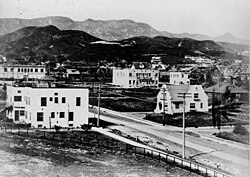
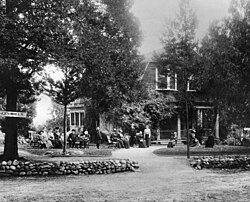
The story of Hollywood began with Harvey H. Wilcox, who purchased 120 acres of land on February 1, 1887. The name "Hollywood" was suggested by his wife, Daeida Wilcox, who had an acquaintance with an estate of the same name in Illinois. Daeida noted that she chose the name because it sounded pleasant and because she believed holly brought good luck.
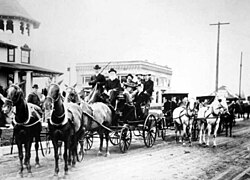
By the turn of the century, the area was a developing community with its own post office, newspaper, and hotel. However, transportation was a challenge; a single-track streetcar line to Los Angeles—located 10 miles to the east—could take up to two hours. To improve mobility, a former citrus fruit-packing house was converted into a livery stable.
Incorporation and the Prohibition Era
Hollywood officially became a municipality on November 9, 1903. Shortly after, the community took a strict moral turn; on January 30, 1904, voters banned the sale of liquor, except for medicinal purposes, prohibiting hotels and restaurants from serving alcohol.
The Merger with Los Angeles
The need for reliable infrastructure led Hollywood to vote for a merger with the City of Los Angeles in 1910. This consolidation was primarily driven by the desire for a secure water supply and access to the city's sewer system. Following the merger on February 7, 1910, Prospect Avenue was renamed Hollywood Boulevard, and street numbering was reorganized to align with the larger city grid.
The Rise of the Motion Picture Industry
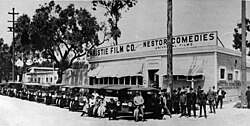
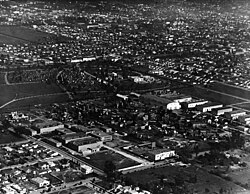
Following its annexation, Hollywood became a magnet for the American film industry. The area's geography and climate provided an ideal backdrop for early cinema. This era saw the establishment of pioneering facilities, including Nestor Studios, the first movie studio in Hollywood, founded in 1912.
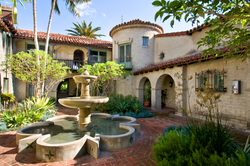
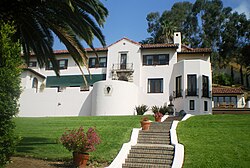
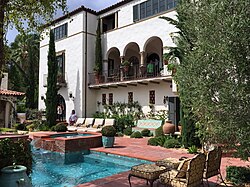
As the industry grew, the landscape was dotted with studios and estates. Notable architectural landmarks from this period include Villa Las Colinas, built by Charles E. Toberman in 1922, and the Spanish Colonial Revival landmark El Cabrillo, built by Cecil B. DeMille in 1928.
Modern Development and Revitalization
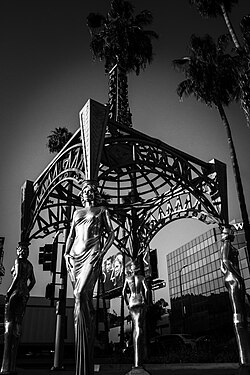
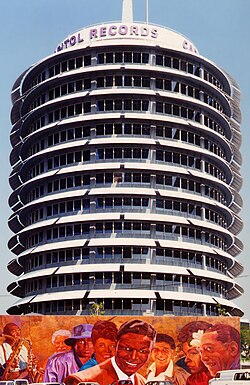
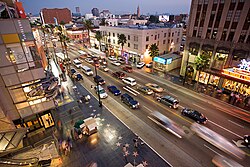
In the mid-20th century, Hollywood continued to evolve. The Capitol Records Building was constructed in 1956, and the Hollywood Walk of Fame—a tribute to entertainment industry contributors—was created in 1958 and officially opened on February 8, 1960.
Since 2000, the neighborhood has experienced significant gentrification. Private enterprises and public planners have focused on revitalization, adding over 1,200 hotel rooms between 2001 and 2016. By 2019, thousands of new apartments and dozens of low-to-mid-rise projects had been approved.
Current Industry Challenges
Despite its legacy, Hollywood has faced a decline in local filming, particularly in scripted television and reality programming. Data from Otis College of Art and Design indicates that shooting days in Los Angeles County dropped 40% in 2024 compared to 2022. In response, the California State Legislature passed Assembly Bill 132 in June 2025, increasing the annual cap for the California Film & Television Tax Credit Program to $750 million to incentivize local production.
Geography, Climate, and Demographics
Hollywood is situated at an elevation of 354 feet (108 m). Its climate is characterized by warm temperatures and low precipitation during the summer months. The record high temperature was recorded on June 26, 1990, at 112°F, while the record low was 24°F, occurring in both 1978 and 1990.
Demographically, the neighborhood is highly diverse. According to the 2000 census, the population included 42.2% Latino or Hispanic and 41% Non-Hispanic White residents. A significant portion of the population (53.8%) was born abroad, with Mexico and Guatemala being the most common countries of origin.
| Category | Detail |
|---|---|
| Incorporated | 1903 (Merged with LA in 1910) |
| 2020 Population | 73,747 |
| Area Code | 323 |
| Record High Temp | 112°F (44°C) |
| Primary Industry | Entertainment / Film / Television |
Community and Education
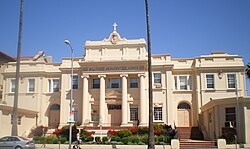
Hollywood hosts a wide array of educational institutions, ranging from public schools like Hollywood High School and Vine Street Elementary to specialized colleges such as the AFI Conservatory and the Los Angeles Film School.
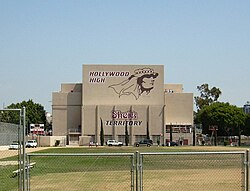
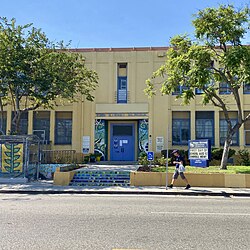
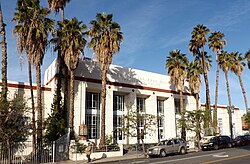
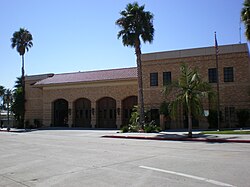
The neighborhood is also home to various civic services, including the Hollywood Post Office and Fire Station 27, and is governed through various neighborhood councils.
Frequently Asked Questions
How did Hollywood get its name?
The name was chosen by Daeida Wilcox, who was inspired by an acquaintance's estate in Brookfield, Illinois. She believed the name sounded nice and that holly was a symbol of good luck.
Why did Hollywood merge with the City of Los Angeles?
Hollywood voted to merge in 1910 primarily to secure a reliable water supply and to gain access to the Los Angeles sewer system.
What is the current state of the film industry in Hollywood?
While it remains a global hub, there has been a decline in local production for scripted and reality TV. This has led to government interventions, such as increasing tax credits to keep production within California.
When was the Hollywood Walk of Fame established?
The Walk of Fame was created in 1958 and officially opened to the public on February 8, 1960.
What are some of the most notable landmarks in Hollywood?
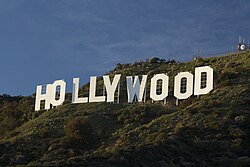
Key landmarks include the Hollywood Sign, the Dolby Theatre (home of the Academy Awards since 2002), Grauman's Chinese Theatre, and the Capitol Records Building.